
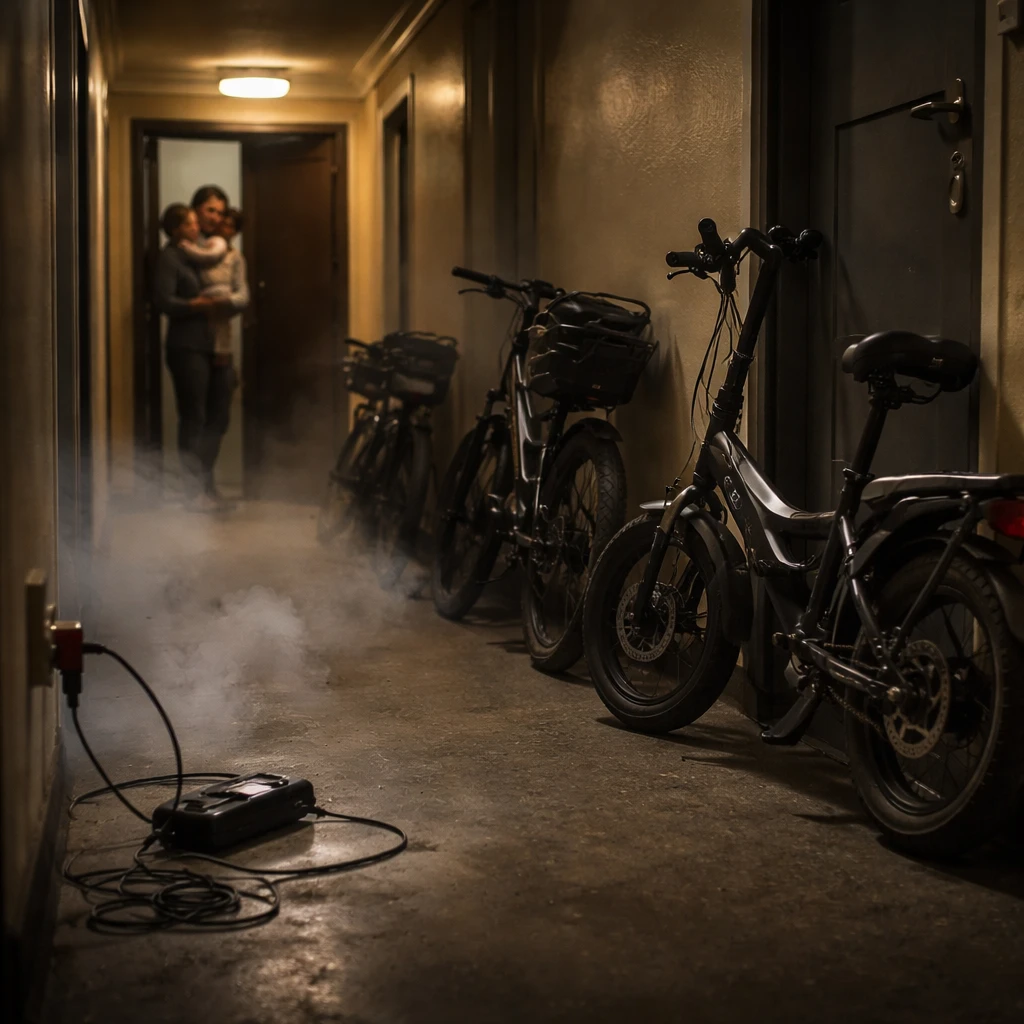
Electric bicycles have become ubiquitous in New York City - propped in building corridors, charged overnight in bedrooms and used to ferry a large share of the city's food deliveries. But a sharp increase in fires linked to aging or substandard lithium-ion batteries has turned the devices into a growing public-safety concern.
The deaths of 10 people in two recent residential fires, with at least one blaze determined to have been caused by an e-bike battery, prompted the New York City Council to convene an emergency hearing on Friday to consider a package of stricter rules on e-bike storage and battery safety.
The three-hour meeting focused attention on a marked rise in lithium-ion battery fires citywide - up roughly 70% compared with a year earlier - and on a set of proposed legal changes intended to curb risks tied to malfunctioning or unsafe batteries.
Among the measures under consideration is legislation that would make possession or use of batteries that fail to meet defined safety standards a criminal offense, and a provision that would prohibit residents from storing batteries inside apartments. Council members said the proposals were aimed at preventing further tragedies.
It remains unclear whether the proposed restrictions will move forward toward enactment. Officials from the administration of Mayor Zohran Mamdani, including representatives of the New York City Fire Department, expressed strong reservations at the hearing and warned that the measures could create harmful side effects for ordinary riders and low-income delivery workers.
Fire Department Commissioner Lillian Bonsignore said the administration had "significant concerns of unintended consequences that would most heavily impact delivery workers, many of whom are immigrants, with limited English proficiency." She added that delivery workers "could face losing their livelihoods and having their lives upended through the confiscation of the device they use every day to make a living."
Lithium-ion battery fires are a global concern that intensified as e-bikes and e-scooters proliferated during the COVID-19 pandemic. Fire officials have pointed to the aging of a large number of batteries as a likely contributor to the recent increase in fires.
Different governments have pursued different remedies. Authorities in Britain have emphasized accountability for those who sell batteries and the devices that use them. In that case, a government spokesperson said: "Unsafe e-bike and e-scooter batteries pose a serious fire risk, which is why we’re strengthening the responsibility of online marketplaces and working with local authorities to remove unsafe products from sale."
At the federal level in the United States, lawmakers from New York secured unanimous Senate approval this week for legislation that would direct the Consumer Product Safety Commission to establish mandatory safety standards for lithium-ion batteries used in e-bikes and other micromobility devices. The Senate bill, sponsored by New York senators Chuck Schumer and Kirsten Gillibrand, follows a CPSC proposal in June to set such mandatory standards after a public meeting in 2023. The House of Representatives has already passed the bill.
A commission staff report published in April documented 45 deaths nationwide from 2017 through 2024 that were linked to lithium-ion battery fires involving micromobility devices: 19 deaths tied to e-bikes, 15 tied to e-scooters and 11 tied to self-balancing scooters or hoverboards.
The problem has been particularly pronounced in New York. City Council-cited Fire Department figures show that there were 406 lithium-ion battery fires through early November this year, compared with 241 in the same period last year, marking a record level for the city.
Two recent, high-casualty fires have crystallized the debate. On October 28, an e-bike battery ignited in an apartment in a public housing complex in the Bronx, killing four people, including an 11-year-old boy. Commissioner Bonsignore said the e-bike was positioned near the doorway and blocked the family's escape.
About a week later, a fire in Sunset Park, a working-class neighborhood in Brooklyn, killed six people and injured at least seven. Investigators have not determined the cause of that blaze, though fire officials reported that two charred e-bikes were removed from the building and that batteries were discovered in debris.
City Council Speaker Julie Menin described the two fatal fires as "heartbreaking tragedies that underscore the urgent need for action to prevent further loss of life."
The emergency hearing brought into sharp relief competing priorities: immediate actions to limit fire hazards, and concerns about imposing penalties that could disproportionately affect low-income delivery workers who rely on these devices to earn a living. As the City Council weighs specific restrictions, federal steps to codify safety standards and international regulatory responses will continue to shape the policy environment.
Context and next steps
Council deliberations will determine whether the criminalization of noncompliant batteries and the apartment-storage ban advance. City officials have urged caution, citing possible adverse consequences for vulnerable workers. At the same time, federal momentum toward mandatory battery safety standards for micromobility devices is building following recent congressional action and the CPSC's own regulatory proposals.