
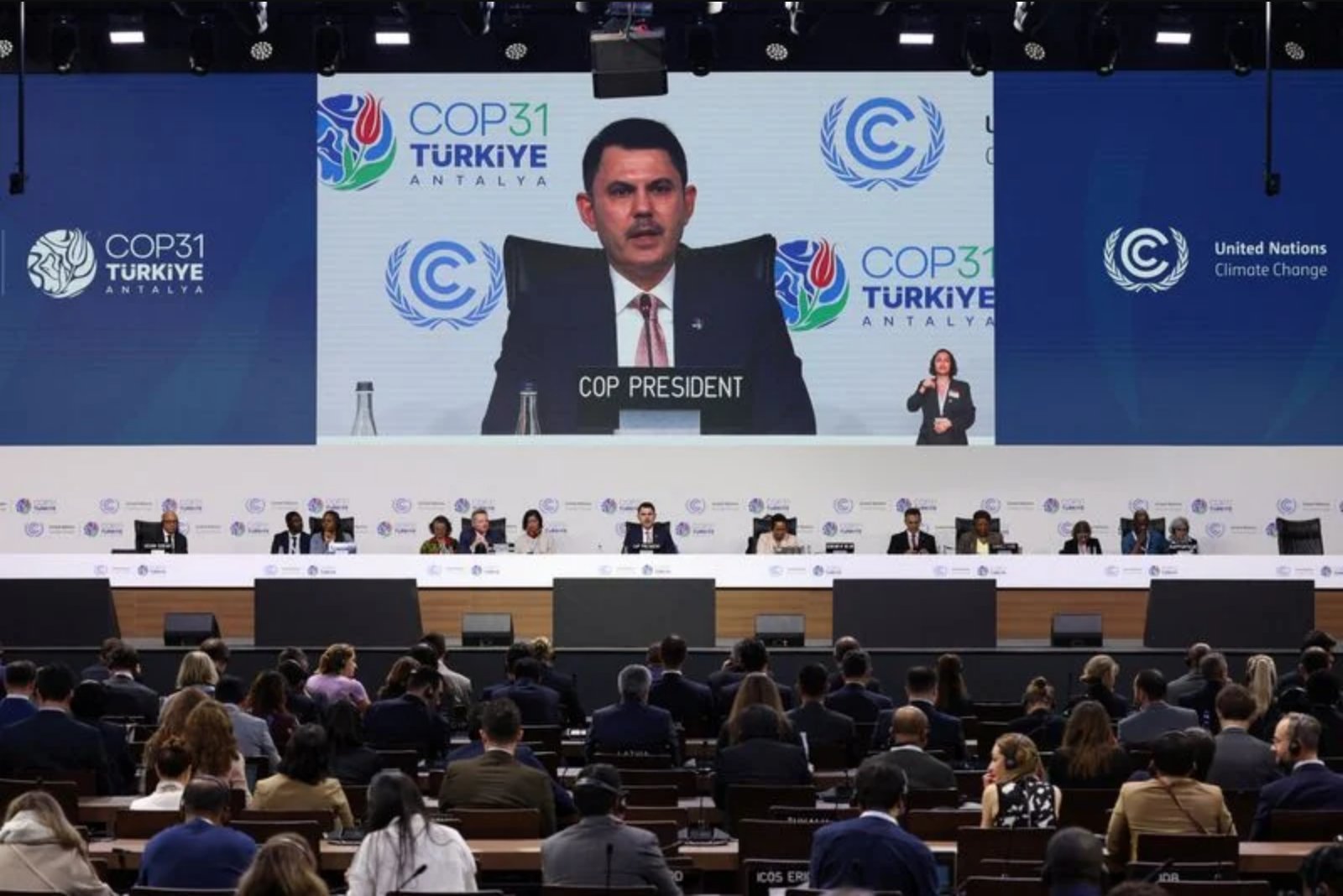
ANTALYA, Turkey - The COP31 climate conference entered extended overtime on Saturday, with delegates from nearly 200 countries struggling to bridge deep divides on fossil fuels, adaptation finance and the use of carbon-removal technologies.
What had been a two-week meeting scheduled to conclude on Friday remained unresolved as negotiators awaited a new version of the negotiating text. The European Union's climate commissioner summed up the moment bluntly: "It's either going to be a good deal or it's going to be no deal." Asked about the possibility of no deal, he added: "We will find out."
Throughout the venue, workers dismantled catering stands and exhibition areas even as delegations moved between meeting rooms to discuss tactics or rested while awaiting updated language. Turkey's COP31 President met with officials from the EU, Australia and Saudi Arabia in a bid to break the impasse, but acknowledged that a deal might prove hard to secure. He appealed to delegates to avoid stalling over wording, telling reporters: "I call on every country to act responsibly. There is no benefit for anyone to ruin this process by getting hung up on words, phrases."
Main points of contention
At the center of the deadlock are two connected questions: whether the final agreement should explicitly name fossil fuels as drivers of global warming, and whether the pact should reinstate a finance target to help poorer countries adapt to climate impacts.
A draft released on Thursday had removed earlier references to ending fossil fuel use. Observers said Saudi Arabia and other major oil and gas producers had opposed that language. The draft also dropped a previously proposed $120 billion target for adaptation finance to support developing countries.
Negotiators had anticipated a revised draft on Friday, but by Saturday afternoon no new text had been tabled. With no fresh wording to negotiate, hopes for substantive changes had dimmed and frustration among delegations was rising.
Delay, tactics and fatigue
Overruns are not new at UN climate summits; recent meetings have stretched beyond scheduled finish times and still produced agreements. Yet some delegates see strategy in the delay. Gambia's finance negotiator warned that some countries may be employing delay tactics to pressure others into accepting a weaker outcome through exhaustion, saying: "This delay strategy which has been used at previous COPs could be so at the end when things are put on the table you accept because you are fed up, exhausted, and want to go home."
Complicating negotiations this year, delegates and observers noted, are competing global concerns such as ongoing wars and rising living costs, which have diverted political focus and public attention away from the summit.
Absent participants and scientific warnings
The United States, described in the talks as the world's largest historical greenhouse gas emitter, was absent from COP31 for a second consecutive year after President Donald Trump ended U.S. cooperation on climate policy and characterized global warming as a hoax. That absence remained a factor in the dynamics of multilateral engagement at the summit.
A United Nations report released the previous month, referenced during negotiations, found that the world is on track to exceed 1.5 degrees Celsius above pre-industrial levels, the threshold governments agreed in 2015 to try to avoid breaching. The draft agreement acknowledges that projected overshoot and calls for faster deployment of technologies that remove greenhouse gases from the atmosphere to bring temperatures back down.
However, inclusion of carbon-removal technologies in the text is contested. Some delegations argued against naming such approaches on the grounds that doing so could create a pathway for continued fossil fuel use rather than driving reductions, a concern raised in negotiations.
Voices from the floor
Voices from delegations reflected the scale of unfinished business. Malawi's loss and damage negotiator said: "The fact there is loads of unfinished business at this COP shows there's a big problem here. The question is are we in a leadership crisis? Was there really a vision for this COP?"
With the conference extended and a revised text still awaited, negotiators faced the choice laid out by senior EU officials: push through language that might satisfy enough parties to form a meaningful agreement, or risk ending without a consensus outcome.
What to watch next
- Whether a new negotiating text is produced that restores or clarifies language on fossil fuels and adaptation finance.
- How objections from major oil and gas-producing countries influence final wording, particularly regarding references to fossil fuel use.
- Delegations' responses to proposals on carbon-removal technologies and whether those remain in or are removed from final language.
As the conference stretched into overtime, the clearing of exhibition spaces stood in contrast to the stalled negotiating rooms, underscoring the uncertainty over whether COP31 will conclude with a substantive multilateral agreement or end without consensus.