
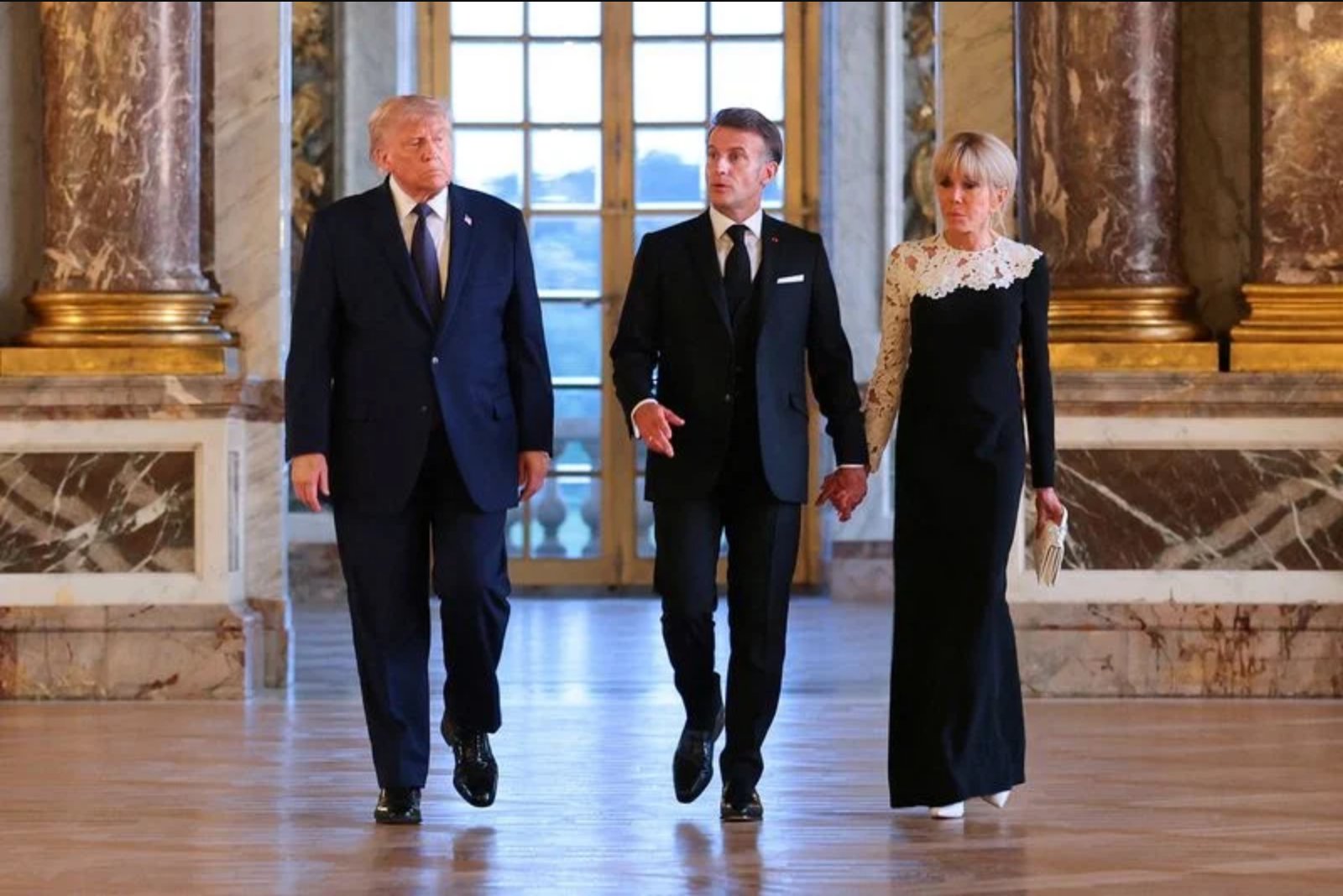
When Donald Trump placed his signature on an Iran memorandum at the Palace of Versailles, the scene was the kind of theatrical diplomacy that Emmanuel Macron has favoured throughout his presidency - an appeal to history, ceremony and spectacle intended to bind a reluctant counterpart to a common outcome. The lakeside G7 summit in eastern France culminated in a Versailles dinner meant to persuade Trump to remain through the summit and to nudge him toward a more conciliatory posture on issues such as trade and Ukraine.
French officials hailed the G7 as a success, describing it as "a clean sweep" after Trump joined other leaders in publicly recognising Ukraine’s improved battlefield position and in agreeing to further sanctions on Russia. Yet observers caution that the test of Versailles’ impact will be whether the impressions formed there endure once leaders return home and policy pressures mount.
Versailles as an instrument of influence
Macron has openly framed Versailles as an "instrument for influence," deploying the palace’s grandeur to signal France’s centrality on the world stage. But the device has not uniformly produced the strategic outcomes he seeks. Domestic politics have also eroded his standing; his second and final term ends next year and he is widely seen at home as weakened after losing his parliamentary majority, a factor that treaties observers argue limits his room for manoeuvre internationally.
Past episodes illustrate the limits of ceremonial diplomacy. In 2017, early in his first term, Macron hosted Russian President Vladimir Putin at Versailles with a similar message: that France and its leader deserve a place at the core of global affairs. That summit, however, generated no lasting breakthrough with Putin. The Russian invasion of Ukraine occurred five years later - and took place just two weeks after Macron had visited Moscow in an attempt to dissuade the Russian leader from military action.
Symbolism versus sustained leverage
Commentators note that Macron often combines striking symbolism with personal diplomacy, yet the symbolic victories have not always converted into durable strategic leverage. Rym Momtaz, a geopolitical consultant at Carnegie Europe, summed up the tension by saying that while Macron possesses "thought leadership," he lacks consistent "action leadership." Momtaz told reporters that France’s strained public finances and limited industrial base have constrained the president’s ability to project hard power. "They have made up for their very limited concrete means by being intellectually, politically courageous, but that doesn’t make a power," she said. "France has not been capable of shaping its strategic environment."
The gap between rhetoric and concrete action is particularly visible in the response to the war in Ukraine. In February 2024 Macron surprised NATO partners by suggesting Western troops could be sent to Ukraine, an assertion he argued would introduce strategic ambiguity to complicate Russian decision-making. Lithuania’s former foreign minister Gabrielius Landsbergis described the proposal as bold and politically costly, but said the initiative ultimately faded amid successive summits and video calls without any deployment of troops.
Still, France did take steps that influenced others: it was the first Western country to provide armoured vehicles to Ukraine, a move that helped spur Germany and other states to supply heavier Leopard tanks. At the same time, critics have pointed to France’s deteriorating budget deficit as a factor limiting its capacity to supply the same level of financial support to Kyiv as other major Western nations. A former EU official remarked that Macron had "intuition, a way with words, a form of panache, but that’s incomplete when you haven’t got financial solidity."
Enduring influence within Europe
Analysts suggest Macron’s most lasting imprint may be inside the European Union. His advocacy for a more autonomous Europe - a bloc capable of acting independently of the United States or China - has gathered support among European capitals, according to Max Bergmann, director of the Europe, Russia, and Eurasia Program at CSIS. Bergmann observed that despite Macron’s low domestic approval, his ideas about Europe’s strategic trajectory are gaining ground.
Policies that once seemed marginal in Paris have been taken up across the EU in some form during Macron’s tenure, including joint European borrowing, a carbon border adjustment mechanism, and proposals to steer defence procurement toward European manufacturers rather than U.S. suppliers. Macron’s push to involve European partners more directly in nuclear deterrence operations has also prompted unexpectedly positive responses, in part due to doubts sown by past U.S. rhetoric about strategic commitments.
"What we are increasingly seeing is Europeans beginning to think about a life with less America," Bergmann said, reflecting a shift in European defence and strategic planning that Macron has advocated.
Assessment
Macron’s diplomatic playbook relies heavily on spectacle and personal diplomacy. That approach has produced moments of cohesion at high-profile summits and helped advance some of his ideas within the EU. Yet the limits of French hard power - constrained by fiscal pressures and a modest industrial base relative to larger powers - have hindered his capacity to convert symbolic success into long-term strategic control over international outcomes. The coming months will indicate whether recent demonstrations of unity at the lakeside summit and at Versailles translate into durable policy shifts or remain memorable, but fleeting, diplomatic pageantry.