
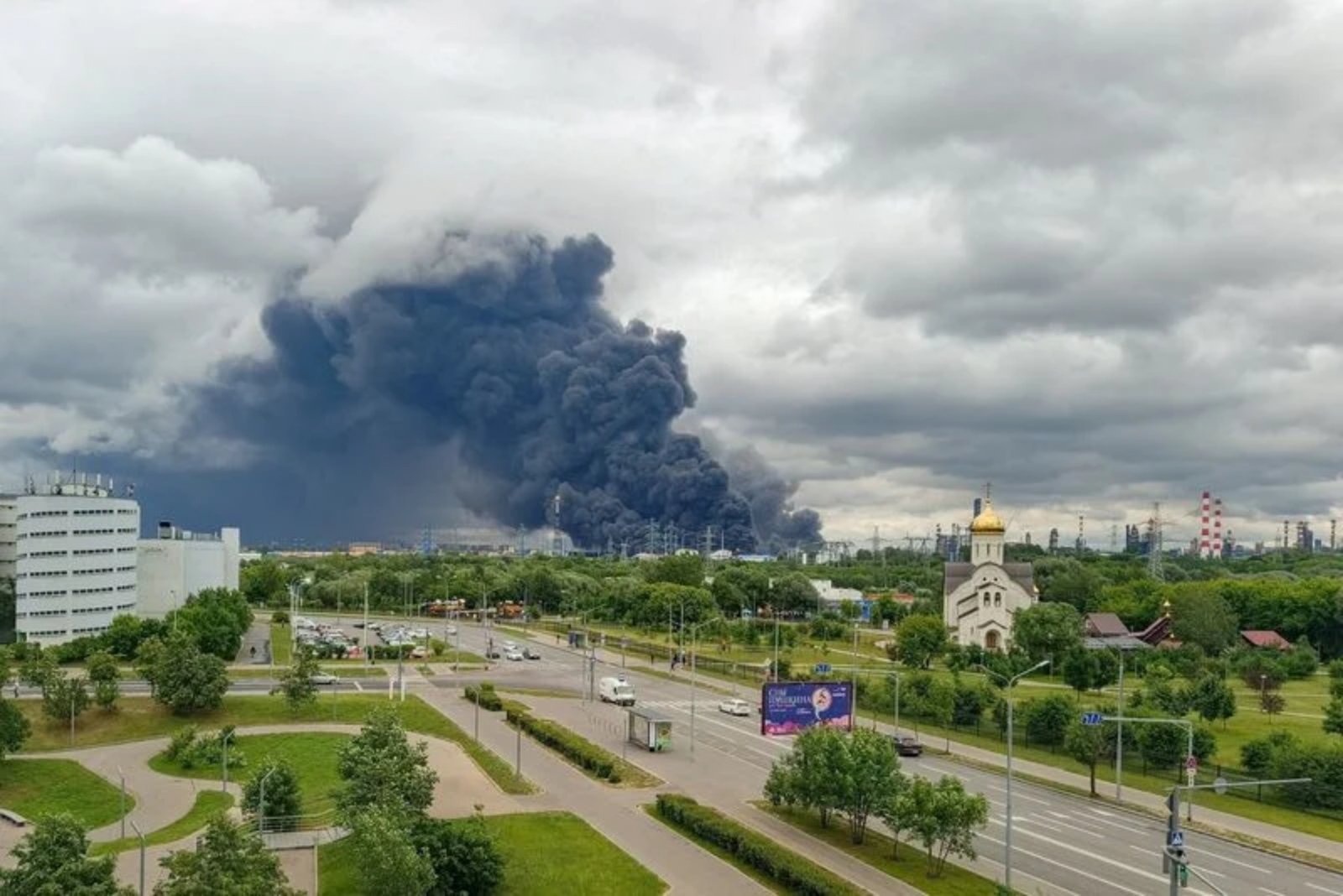
MOSCOW, June 18 - A powerful blast at an oil facility in southeast Moscow sent the disc-shaped lid of a storage tank flying into the air, in an attack Ukraine says was carried out by drones. The strike, the second on the same refinery within three days, ignited large fires and produced dense black smoke visible across the city.
Ukrainian forces have been conducting operations aimed at damaging elements of Russia’s oil sector, which Kyiv says provides revenue that underpins Moscow’s war effort. By targeting infrastructure located within Moscow’s ring road - around 16 km (10 miles) from the Kremlin - the strikes also carry a public dimension, bringing the conflict into the daily life of the capital.
Ukraine’s foreign minister, Andrii Sybiha, posted on X: "One of the most popular questions asked by Muscovites this morning is 'What is going on?' I can answer. Your country started a war of aggression against ours. For years, it has been killing our people. Now that you know what's going on, ask Putin when he is planning to end it."
Kyiv presents these deeper strikes as evidence of shifting momentum on the battlefield, a narrative President Volodymyr Zelenskiy communicated this week to U.S. President Donald Trump and other G7 leaders at a summit in France. A Kremlin aide dismissed the idea that the battlefield situation had turned in Ukraine’s favour and said that Trump had been "pumped up" with what the aide described as harmful ideas at the meeting.
There was no immediate public comment from President Vladimir Putin, who was hosting leaders from Southeast Asia in Kazan at the time of the attack.
Immediate disruption in Moscow
The strike triggered substantial disruption throughout the capital. Authorities suspended flights at all Moscow airports and halted traffic on the ring highway near the refinery. Sheremetyevo, the city’s busiest airport, was evacuated. In some online communities residents expressed frustration with a lack of warning - reporting that no sirens sounded prior to the incident.
Local reports said suburban residents noticed a rain-like shower that left spots and smears of oil on cars and window sills. The visual spread of fire and smoke across the city was quickly disseminated online, where footage of the damage circulated widely.
Fuel market effects and retail response
The strikes come amid emerging signs of strain in Russia’s fuel supply chain. In recent weeks some parts of the country have experienced gasoline shortages. Industry sources have told Reuters that Russia, a major global oil producer and exporter, is set to import fuel by sea this month. Moscow officials said petrol supplies in and around the capital were "normal," even as the federal anti-monopoly watchdog sought an explanation from a major retailer after it raised prices by 19% in the past week for the most popular grade of gasoline.
For Kyiv, the attacks carry symbolic weight as well as practical aims. Images of flames engulfing a facility inside the Russian capital spread rapidly and were often accompanied online by mocking commentary directed at Moscow. The public dissemination of such footage also drew criticism from pro-government figures. Andrei Medvedev, a pro-government blogger and TV host, argued on Telegram that those who posted the videos should be prosecuted, saying that footage could aid the enemy and amounted to "pure treason."
Context within a sustained campaign
The Kremlin has long described the conflict as a "special military operation," and many Russians have sought to carry on with daily life despite the war. Moscow has experienced periodic drone activity dating back to at least May 2023, including instances in which drones reached the Kremlin without causing damage. Until recently, such events had rarely intruded on the routine of a city of roughly 13 million people. This latest assault, however, had tangible effects on transport and fuel availability and broadened the reach of strikes into densely populated urban areas.
The operational and economic consequences of the campaign are evident in the closure of major transport hubs and in consumer-facing market reactions, including inventory disruptions and retailer price actions. While Moscow officials publicly downplayed supply problems near the capital, authoritative oversight bodies have begun to question retail price movements.
Implications and outlook
The strikes underline the vulnerability of energy infrastructure even within the political and geographic heart of a major oil producer. They also illustrate how attacks on logistics and refining capacity can quickly ripple into civilian life through airport closures, traffic stoppages, and fuel availability. Kyiv’s stated objective of degrading revenues that support military operations informs the selection of targets, while the visible effects inside Moscow amplify the psychological and political dimension of those operations.
How sustained this level of disruption will be, and the extent to which it will affect longer-term fuel availability or pricing inside Russia, remains dependent on developments not detailed in available reports. Officials and industry participants have signalled both the presence of emerging supply pressure and efforts to explain or mitigate price volatility.