
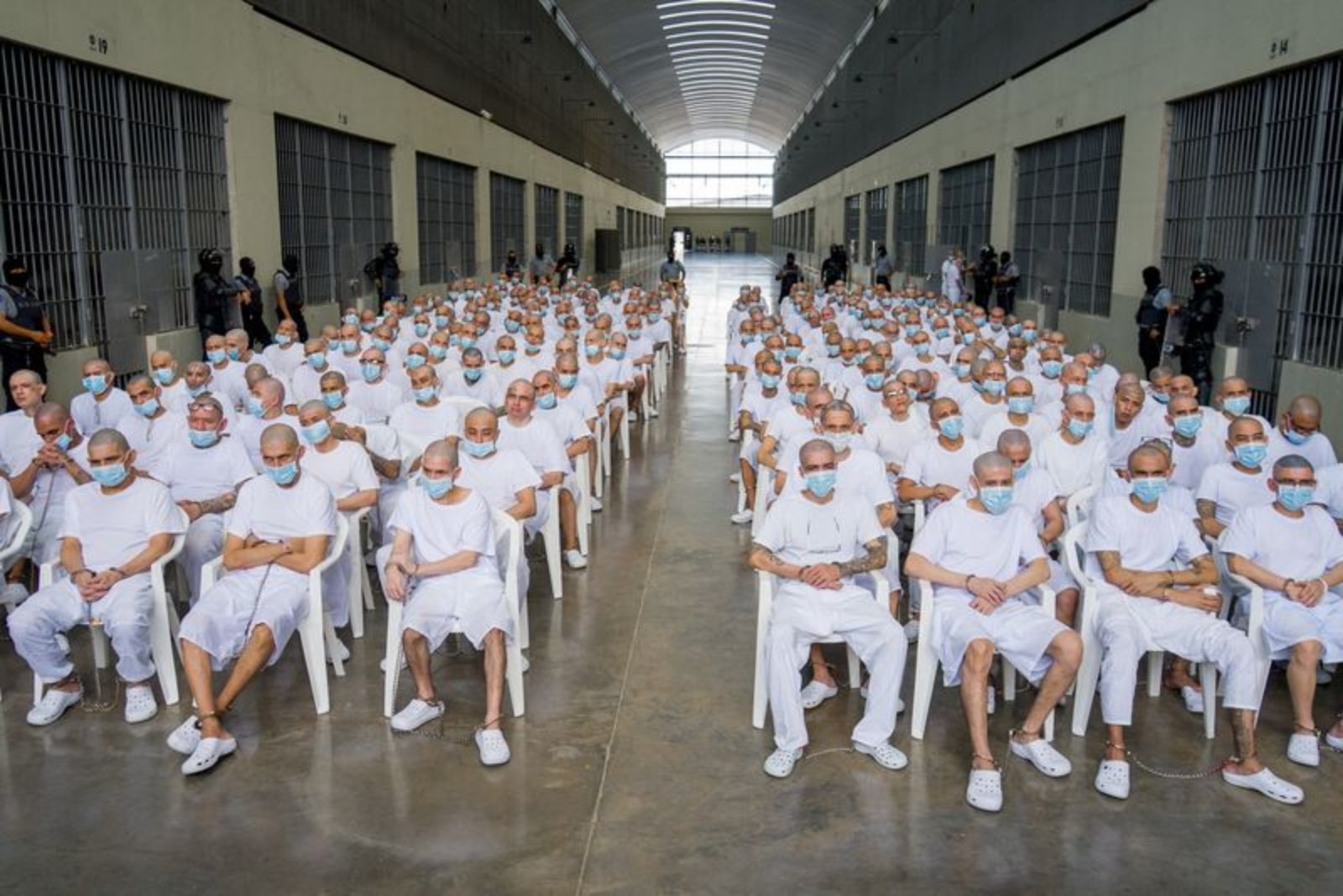
SAN SALVADOR, April 21 - A Salvadoran court on Tuesday began hearing the mass case against 486 individuals accused of leadership roles in the Mara Salvatrucha gang, commonly known as MS-13, in a prosecution that alleges more than 47,000 crimes occurred from 2012 to 2022.
Prosecutors say the defendants ordered a range of violent and organized criminal acts, including homicides, feminicides, extortion, arms trafficking and forced disappearances. They also face charges of rebellion tied to claims they sought to create a parallel state by exerting territorial control.
Evidence and sentencing requests
Authorities presented forensic materials and testimony to the court, including autopsy reports, ballistic analyses and witness accounts. Based on the charges, the Prosecutor's Office has asked the judge to impose the maximum prison term for each offense. Prosecutors said a single defendant convicted on all counts could receive up to 245 years behind bars.
Among the episodes cited in the indictment are orders allegedly issued to kill 86 people during the period from March 25 to March 27, 2022, an interval prosecutors described as the most violent weekend in post-war El Salvador. That surge in killings led Congress - described by officials as largely pro-government - to declare a nationwide state of emergency.
State of emergency and its consequences
The state of emergency brought measures that Salvadoran authorities say have allowed a major crackdown on gang activity. Government figures cited in the proceedings report a decline in homicides to 1.3 per 100,000 people in 2025, down from 7.8 in 2022.
Since the declaration, Congress has extended the state of emergency indefinitely on a monthly basis. The decree has enabled security forces to detain more than 91,500 people, according to official information presented in court materials.
Humanitarian organizations and rights groups have raised concerns about the effect of the emergency on detention conditions, estimating prison overcrowding at 238% and reporting 513 detainee deaths in state custody. International jurists have accused Salvadoran authorities of human rights violations during the enforcement of the emergency, including allegations of torture, murder and forced disappearances.
Detention conditions and high-security custody
The 486 defendants are being held across five prisons nationwide. Most are detained at CECOT, a maximum-security facility opened by the Bukele administration in 2023 and cited by officials as a symbol of the government's zero-tolerance approach to gang violence. Human rights organizations have described conditions at CECOT as inhumane, alleging torture, continuous surveillance and a prohibition on outside contact, including access to legal counsel.
Some accused leaders are appearing in the proceedings via virtual hearings. The roster of defendants includes long-standing MS-13 figures such as Borromeo Henriquez and Dionisio Umanzor. Prosecutors note both participated in the 2012-2014 truce between the government and the gangs during the presidency of Mauricio Funes.
What the trial covers
- Number of defendants: 486 alleged gang leaders.
- Alleged crimes: more than 47,000 acts from 2012-2022 including homicide, feminicide, extortion, arms trafficking and forced disappearances.
- Evidence presented: autopsies, ballistic analyses and witness testimony.
- Potential sentence: prosecutors seek maximum terms; up to 245 years for a defendant convicted on all charges.
The trial marks a major legal effort by Salvadoran authorities to address decades of gang-related violence while occurring within the framework of an ongoing, broadly applied emergency decree that has dramatically expanded detentions and prompted persistent human rights concerns.