
Hook & thesis
Shares of Perma-Pipe International (PPIH) pulled back from a recent run to a 52-week high of $36.72 and are trading around $30.22 after intraday weakness. That pullback creates a clearer risk/reward for traders who missed earlier strength. My thesis: PPIH's underlying business momentum - a rebound to profitability and a robust backlog - supports a tactical long on a mid-term horizon while using disciplined stops to manage microcap volatility.
This is not a buy-and-forget pick. It's a trade: buy on the current weakness at $30.00, target the prior high at $36.72 and limit downside with a stop at $27.50. The combination of an attractive EV/EBITDA (~7.9x), a trailing P/E near 15x, and modest leverage gives us a tangible, numbers-based reason to re-enter on weakness rather than chase at the top.
What the company does and why the market should care
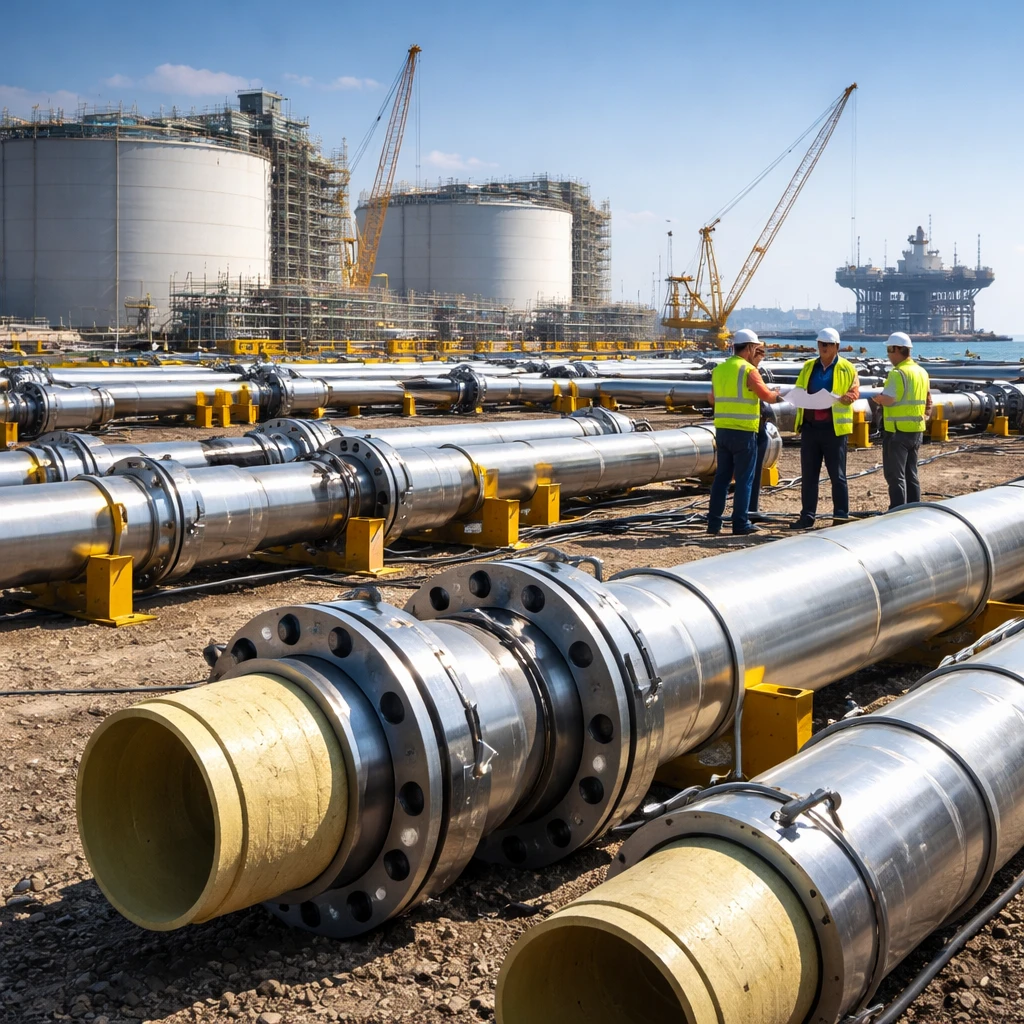
Perma-Pipe International designs and manufactures specialty piping and leak-detection systems used to handle chemicals, hazardous fluids and district heating/cooling applications. The company serves industrial end markets that are sensitive to energy infrastructure investment, petrochemical and utility spending cycles. Two structural drivers matter:
- Large, lumpy projects and backlog dynamics. Specialty piping contracts are typically project-based and can cause revenue lumpiness, but a strong backlog feeds revenue visibility when projects convert.
- Energy and industrial capex tailwinds. When oil & gas, LNG and district energy projects expand, demand for insulated, jacketed and containment piping rises.
Recent fundamentals that support the trade
Use the numbers: Perma-Pipe reports trailing earnings per share of $2.10, translating to a P/E near 15x on the current price environment. The company shows return on equity of roughly 18.8% and return on assets near 7.8% - indicators of solid operating profitability when revenues flow. The firm's balance sheet is moderate: debt-to-equity about 0.36 and current ratio ~1.79, which supports project execution without excessive financial strain.
Valuation is not frothy: enterprise value is roughly $271.9 million with EV/EBITDA about 7.9x and EV/sales ~1.29x. Those multiples sit comfortably below what we'd expect for a company with recurring project backlog and improving margins, while the small market cap (approximately $245 million) explains the stock's volatility.
| Metric | Value |
|---|---|
| Current price | $30.22 |
| Market cap | $245,079,147 |
| Trailing EPS | $2.10 |
| P/E | ~15.2x |
| P/B | ~2.85x |
| EV/EBITDA | ~7.9x |
| Free cash flow (trailing) | -$1,271,000 |
Why now - price action and technicals
PPIH recently hit $36.72 and has retraced to the low $30s. Short-interest coverage is light on a days-to-cover basis (around 1-1.1 days most recent reads), but intraday short-volume data shows periods of heavy shorting activity that can accelerate declines. Momentum indicators are mixed: 10-day and 20-day averages are close to price, and MACD shows bearish momentum reading. That argues for a cautious, rules-based entry rather than an aggressive add.
Trade plan (actionable)
Directional view: Long.
Entry: $30.00 (limit order).
Stop loss: $27.50 (hard stop, review on a daily close basis).
Target: $36.72 (first take-profit; consider trimming position). If momentum accelerates, re-evaluate a secondary target toward a premium above the prior high with tight risk controls.
Horizon: This is a mid-term trade intended to be held for roughly 45 trading days (mid term - 45 trading days). Expect to be in and out as backlog converts into revenue and as near-term catalysts play out. If price action is favorable, the position can be rolled or re-sized for a longer-term view (180 trading days) but that requires a new reassessment of cash flow trends and FCF recovery.
Alternate time buckets:
- Short term (10 trading days): Use a tighter stop and smaller size; look for a quick mean-reversion back toward $33.50 if intraday momentum flips.
- Long term (180 trading days): Only scale up if revenue conversion from backlog produces consistent free cash flow improvement and FCF turns positive; otherwise maintain conservative sizing because of lumpiness in revenue.
Catalysts (what could drive the trade)
- Backlog conversion: As project awards move to execution, reported revenue and margins could beat expectations and support multiple expansion.
- Sector tailwinds: Renewed industrial or LNG capex in key regions can increase demand for PPIH products.
- Continued profitability: Management commentary and subsequent quarters that sustain EPS above recent levels (Q1 showed a swing to positive EPS after a prior loss) would improve sentiment.
- Analyst initiation and coverage: Early coverage and positive research notes have already lifted visibility; further constructive reports could draw more institutional interest.
Risks and counterarguments
PPIH is a microcap with project-driven revenue; that brings both upside and downside. Below are the principal risks to this trade and a counterargument to the bullish case.
- Revenue lumpiness and FCF volatility - Project timing can compress revenue into a few quarters. The company reported negative free cash flow trailing at roughly -$1.27M, which highlights potential operational cash volatility even as GAAP EPS is positive. If projects are delayed or margins compress, the stock can re-rate downward quickly.
- Small float and higher intraday volatility - With roughly 7.6M float and market cap near $245M, PPIH can move abruptly on relatively modest flows. Short-volume readings show episodic shorting activity that can exacerbate moves.
- Macro/sector sensitivity - A slowdown in industrial capex or a pullback in energy projects (LNG, petrochemical) would reduce demand for specialty piping and pressure order activity.
- Execution risk on backlog - Backlog is only useful if it converts to profitable revenue. Cost overruns, supply-chain issues, or contract disputes could hit margins and cash flow.
- Liquidity and coverage - Limited analyst coverage and institutional ownership mean fewer natural buyers; upside can be capped until more coverage or a visible multi-quarter earnings cadence is established.
Counterargument
One credible counterargument: the recent EPS rebound is earnings timing rather than structural improvement. A single-quarter return to profitability doesn't guarantee sustainable free cash flow or margin expansion. If subsequent quarters show revenue volatility or FCF remains negative, multiples could compress from current mid-teens P/E to reflect risk, wiping out gains before the rebound completes.
What would change my mind
I will reduce exposure or turn neutral if any of the following occur:
- Material deterioration in backlog conversion metrics or public guidance that shows project delays.
- Two consecutive quarters of falling operating margins or widening negative free cash flow.
- A break and daily close below $27.50 on increasing volume that signals trend failure.
Conversely, I would add to a winning position or move to a longer-term stance if Perma-Pipe reports consecutive quarters of positive free cash flow and management provides multi-quarter visibility that converts backlog into predictable revenue.
Conclusion
PPIH offers a tactical long after the pullback: the business shows real profit metrics (trailing EPS $2.10, ROE near 18.8%) and valuation metrics that are reasonable for a company of its size (EV/EBITDA ~7.9x, P/E ~15x). But this is a microcap with lumpier revenue and intermittent cash flow; trade size accordingly and use the stop at $27.50 to limit downside. For traders comfortable with the mid-term volatility, buying $30.00 with a first target at $36.72 gives a clean, rules-based plan that captures upside toward the prior high while controlling risk.
Trade summary (quick reference)
- Action: Buy PPIH at $30.00 (limit)
- Stop: $27.50
- Target: $36.72
- Horizon: Mid term (45 trading days)
Note: Keep position sizing conservative given the company's microcap profile and project-driven revenue. Reassess after the next earnings release and any management commentary on backlog conversion.