
Hook & Thesis
Amneal (AMRX) is positioned to re-rate higher over the coming months as early commercial traction from its first metered-dose inhaler (MDI) launches combines with an advancing biosimilar and specialty pipeline. The stock sits near $13.20 with a market value north of $4 billion but trades at multiples that still leave room for upside if the company converts launches into sustainable revenue growth and maintains solid free cash flow.
My trade thesis is straightforward: buy on near-term pullbacks and hold through the commercial ramp and upcoming regulatory/clinical catalysts. The plan assumes a disciplined risk control point below recent technical support and expects a reasonable move toward mid-teens as sales and visibility improve.
What Amneal Does and Why This Matters
Amneal is a diversified pharmaceutical company operating across Generics, Specialty, and AvKARE segments. The Generics business covers a broad swath of dosage forms including oral solids, injectables, ophthalmics and now inhalation. The Specialty arm develops and commercializes proprietary branded products, and AvKARE supplies governmental agencies.
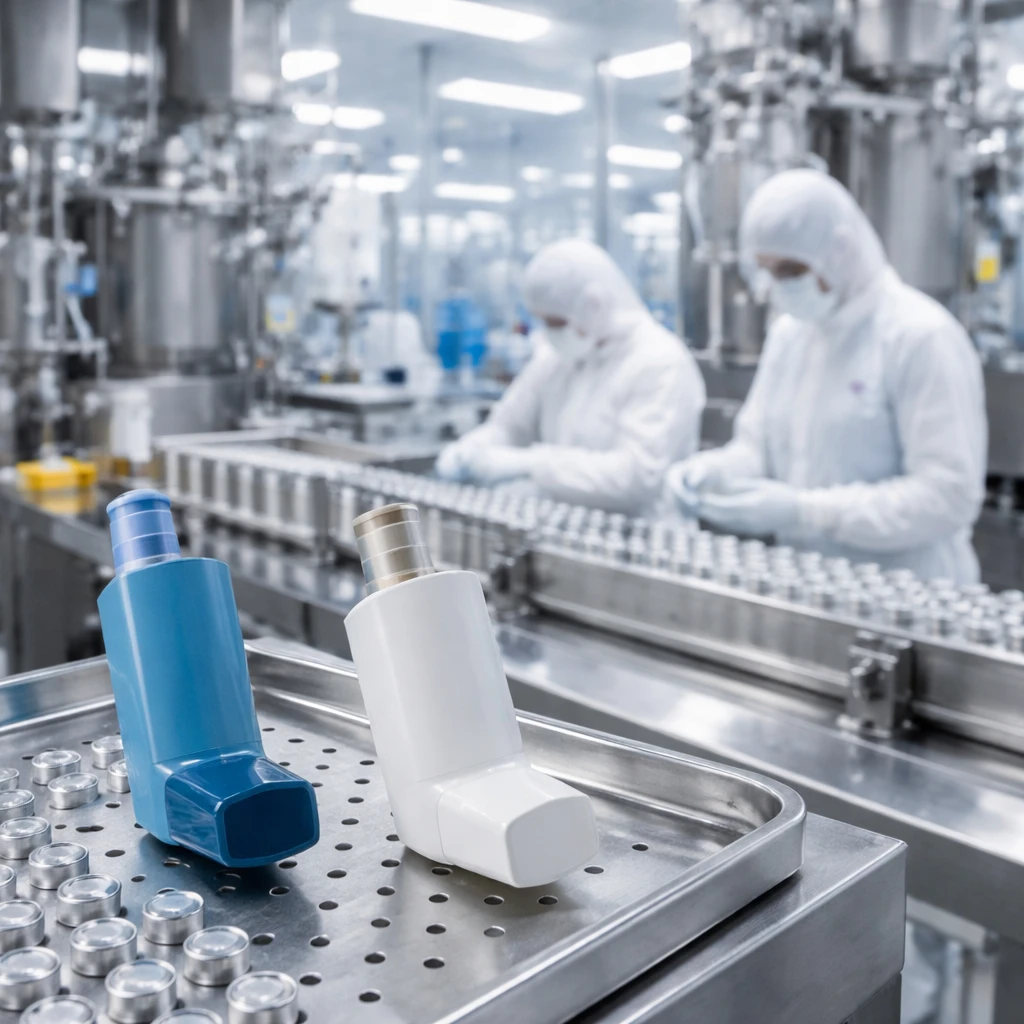
Why investors should care: Amneal is transitioning from a pure generics play into a more balanced model where complex generics (inhalation MDIs) and biosimilars can generate higher-margin revenue and durable growth. The company's first two MDI launches address large U.S. markets - albuterol sulfate MDI (~$1.5 billion market) and beclomethasone dipropionate HFA MDI (~$321 million market) - and are being manufactured at its dedicated inhalation site in Ireland. That capability is not trivial; manufacturing complexity creates a higher barrier to entry and a path to better pricing and margin resilience compared with commoditized oral generics.
Key financial and market context
| Metric | Value |
|---|---|
| Current Price | $13.20 |
| Market Cap | $4.16B |
| Enterprise Value | $6.58B |
| EPS (trailing) | $0.23 |
| P/E | ~59x |
| Free Cash Flow (recent) | $269.9M |
| EV/EBITDA | ~10.7x |
| 52-week range | $7.02 - $15.42 |
Those numbers show a few important things: Amneal is already producing meaningful free cash flow ($269.9M), which supports reinvestment into higher-value areas like inhalation and biosimilars. The EV/EBITDA of ~10.7x is reasonable for a diversified pharma business with mixed generics and specialty exposure; P/E is elevated due to modest trailing EPS, which reflects investor expectations for earnings growth as new products scale.
Recent developments that matter (catalysts)
- Inhalation MDI launches (04/14/2026): Amneal launched albuterol sulfate MDI and beclomethasone dipropionate HFA MDI in the U.S. These address large markets ($1.5B and $321M respectively) and mark the company's entry into a complex inhalation category. Early revenue from these products will be the first proof point that the Irish inhalation facility is commercially viable.
- Biosimilar progress (09/26/2025): The company submitted a BLA for a biosimilar to XOLAIR (omalizumab). If accepted and approved, this could tap a >$4B U.S. market and materially change the growth profile in specialty biologics.
- ELEVATE-PD interim results (12/05/2025): Positive interim Phase 4 data for CREXONT showed improved 'Good On' time and reduced 'Off' time in Parkinson's patients. Continued positive data and subsequent commercialization could add a durable specialty revenue stream.
- Index inclusion (01/27/2026): Amneal was added to the S&P SmallCap 600, which can help provide institutional investor support and steadier flows into the stock over time.
Valuation framing
At a market cap of roughly $4.16B and enterprise value near $6.58B, Amneal's multiples are not frothy when viewed against the potential upside from new product categories. EV/EBITDA of ~10.7x is consistent with a mid-cycle pharma company. The stock's P/E near 59x reflects low trailing EPS ($0.23) and market expectations for growth. That multiple can compress meaningfully if revenue growth accelerates and EPS scales from higher-margin specialty and biosimilar sales.
There isn't a direct peer comparison in this note, but the logic is straightforward: converting multi-hundred million dollar addressable markets (inhalation and omalizumab biosimilar) into even a fraction of market share will move revenue and earnings materially higher from current levels. Given present free cash flow generation and a working enterprise-scale manufacturing footprint, the company is set up to reinvest and capture higher-margin opportunities.
Technical & sentiment backdrop
Technically, the stock is in neutral-to-positive posture: the 10-day SMA (~$13.03) sits just below the current price and the 20-day SMA (~$12.64) is supportive. RSI around 52 signals neither overbought nor oversold. MACD shows bullish momentum. Short interest has fluctuated but recent settlement data suggest a decline from earlier peaks, lowering immediate squeeze risk.
Trade plan (actionable)
Trade direction: Long
Entry price: $13.20
Stop loss: $11.80
Target price: $16.50
Risk level: Medium
Horizon: Mid term (45 trading days) - expect to hold through early commercialization data points, initial prescription trends, and near-term regulatory updates. If the inhalation products show early uptake and the market revalues the biosimilar pathway favorably, the stock should approach $16.50 within this window. If that catalyst cadence slips, the stop protects downside while allowing room for a longer-term position to be established.
Rationale: $16.50 is a sensible target reflecting roughly 25% upside from entry and is above the recent 52-week high of $15.42, which should be attainable on positive commercial traction or a near-term regulatory win. The $11.80 stop sits below recent technical support and would limit losses to roughly 10.6% if the thesis fails to materialize quickly.
Catalyst timeline to watch
- Early Rx/adoption trends for the MDIs (monitor weekly prescriptions and reported sales)
- Regulatory feedback or timeline for the omalizumab biosimilar BLA (watch for FDA actions)
- Further readouts or commercialization updates for CREXONT from ongoing studies
- Quarterly results that disclose inhalation sales and margin contributions
Risks & counterarguments
Every trade has a counter view. Here are the main risks and a balanced counterargument to the bullish case.
- Commercial uptake risk: Inhalation markets are competitive and incumbent brands and payor strategies can blunt share gains. Early launch results may be slower than modeled, delaying re-rating.
- Regulatory risk: Biosimilar BLAs can face unexpected hurdles, and approval timelines can slip. A delay or rejection for the omalizumab biosimilar would materially reduce the upside scenario.
- Margin pressure in generics: Pricing erosion in commoditized generics could offset gains from specialty launches, keeping EPS growth muted.
- Execution risk with manufacturing: Scaling a complex inhalation facility in Ireland carries operational risk; any supply disruptions would hurt revenue and credibility.
- Valuation sensitivity: The stock trades at a high trailing multiple relative to EPS. If new product revenue disappoints, the market could re-rate lower quickly.
Counterargument (to my thesis): A cautious view is that Amneal's inhalation launches may take many quarters to reach meaningful share, while biosimilar regulatory hurdles could delay or reduce the size of the opportunity. If the company ends up generating only incremental low-margin revenue from generics while absorbing launch and development costs, the stock could remain range-bound or move lower despite the product headlines.
What would change my mind
I would downgrade the trade if Amneal reports materially weaker-than-expected early sales for the MDIs, or if the FDA issues a challenging review outcome for the XOLAIR biosimilar that indicates a longer approval timeline or additional data requests. Conversely, materially better-than-expected sales, early market-share gains in inhalation, or an approvable decision on the BLA would strengthen the bullish case and justify raising targets.
Conclusion
Amneal offers a tangible pathway to higher-quality revenue: complex inhalation products and a biosimilar that targets a multi-billion dollar market. That combination, coupled with positive clinical signals for CREXONT and solid free cash flow generation, makes the current risk/reward attractive for a mid-term long trade. Maintain strict risk control at $11.80 and monitor early commercial metrics and regulatory progress closely. If the company executes, $16.50 is a pragmatic near-term objective; if execution slips, trim or exit to preserve capital.
Trade idea: Long AMRX at $13.20, stop $11.80, target $16.50. Hold for mid term (45 trading days) and reassess on commercial and regulatory updates.