
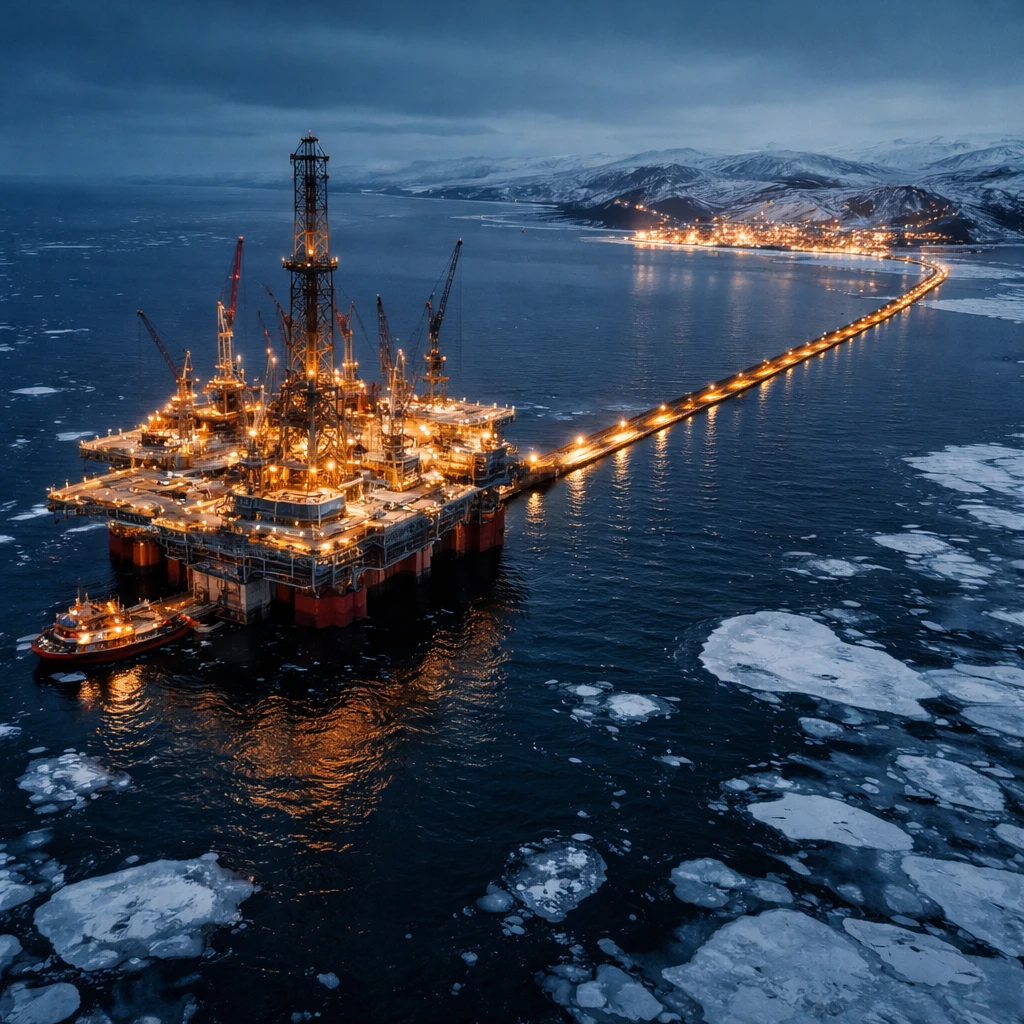
Vaar Energi, a unit of Italy's Eni, announced on Wednesday that it and minority partner Equinor will move forward with a capital plan aimed at raising crude output from the Arctic Goliat oilfield. The operators said the package will require an investment of approximately $360 million.
The work is designed to increase oil production beginning in 2029 and to prolong the field's productive life by roughly 10 years, bringing the end of production to about 2050, the company said in a statement.
Central to the project is a new pipeline connection to the nearby Snoehvit gas facility. That link will allow operators to remove substantial volumes of natural gas that today restrict the flow of oil from Goliat, according to the announcement.
Eni indicated that the additional oil produced as a result of the work will be put on the market immediately. The company said the associated gas will be exported to the Hammerfest LNG plant under a gas bank arrangement agreed with Snoehvit and will be sold when processing capacity becomes available.
The operator noted that Goliat produced more gas than oil in the prior year, but the field lacks the means to export most of its gas. That inability to export has forced the operator to reinject the majority of produced gas back into the reservoir, the statement said.
Production data from the Norwegian Offshore Directorate show that Goliat's average daily oil output was just over 22,000 barrels per day in 2025.
Ownership of the Goliat licence is split between Vaar, which holds a 65% stake, and Equinor, which holds the remaining 35%.
Project context
- The investment targets a clear operational constraint: large volumes of gas in the Goliat reservoir that limit oil flow.
- By creating a pipeline to Snoehvit and using a gas bank arrangement, the partners aim to monetise gas when Hammerfest LNG has processing capacity.
- The initiative seeks to accelerate oil volumes from 2029 while extending the field’s working life to roughly 2050.