
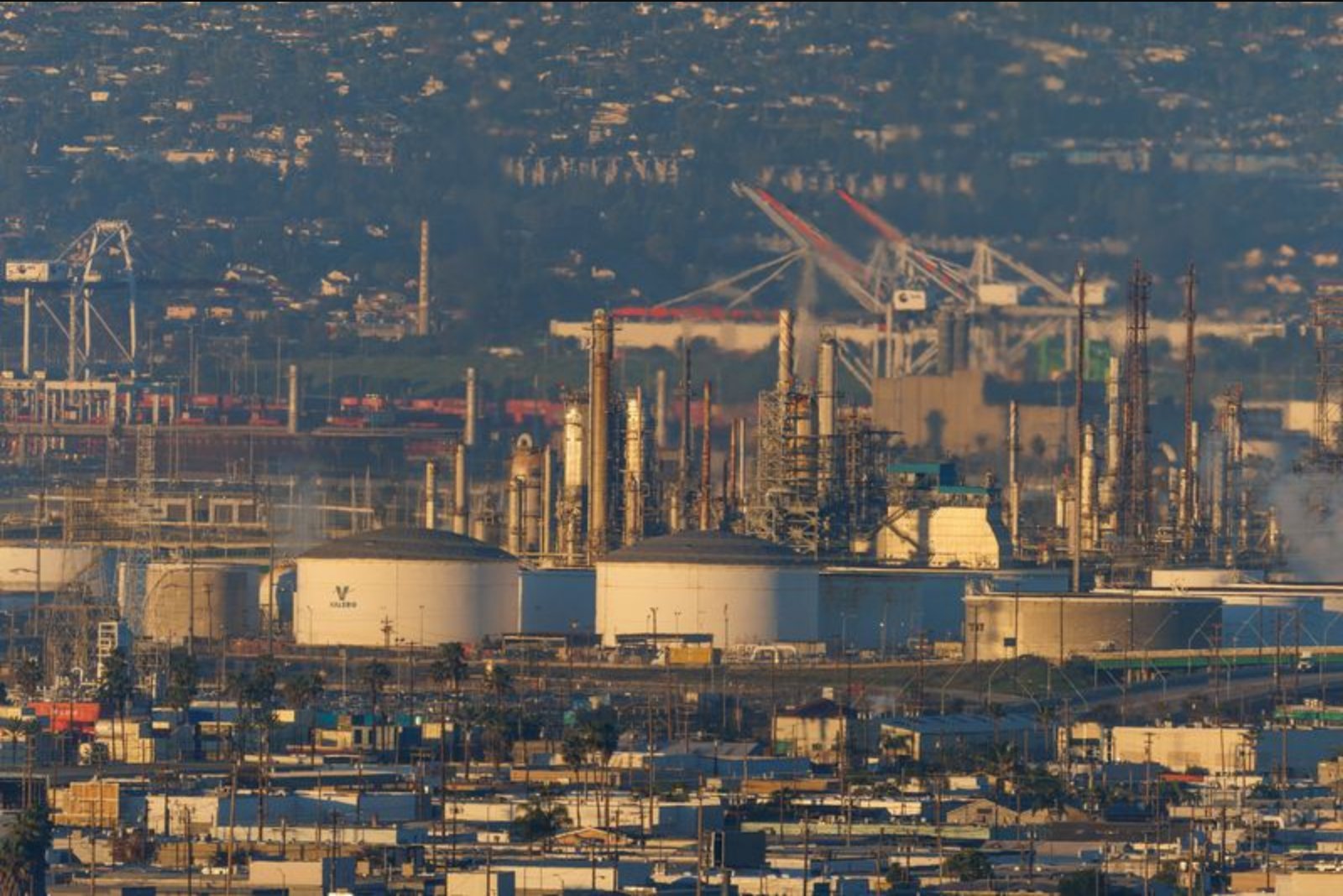
Major U.S. independent refiners are entering earnings season with expectations of markedly improved first-quarter profitability compared with a year earlier, driven largely by a surge in diesel and jet fuel margins after supply disruptions related to the war in the Middle East. Distillate margins in particular strengthened as flows through a key shipping choke point were curtailed.
Market participants trace the margin lift to the February 28 start of U.S.-Israeli attacks on Iran, which prompted the closure of the Strait of Hormuz - a narrow shipping lane that handles roughly a fifth of global oil and a substantial portion of world fuel exports. The disruption reduced the movement of barrels and exported refined products, producing a rapid tightening in product markets.
Analysts say the most pronounced improvement was in diesel - commonly measured by the ultra-low sulfur diesel futures crack spread - where barrels that typically moved out of the Middle East through the strait were choked. That contract jumped 105% to a record high of $86.25 per barrel on March 20, reflecting the abrupt supply squeeze. Jet fuel margins also rallied, particularly benefiting coastal and export-oriented refiners given the Middle East’s role as a jet fuel supplier to markets in Asia and Europe.
Gasoline margins experienced gains as well, though they were more muted than diesel. Refining runs were robust earlier in the quarter and gasoline inventories were relatively ample, which capped gasoline profits despite the broader supply disruption. The U.S. gasoline futures crack spread climbed to $37.62 per barrel on March 27, its strongest reading in more than two years. At the same time, the U.S. average retail gasoline price rose above $4 a gallon at the end of March for the first time in more than three years, representing the steepest monthly increase in decades.
"Refiners had a whirlwind Q1’26, as the escalation of the Iran conflict led to global supply restrictions that sent product cracks (margins) soaring," said Matthew Blair, an analyst at Tudor, Pickering, Holt & Co. He noted that distillates is where the strongest margin uplift was coming through.
The pre-existing picture of tight inventories heading into the supply shock amplified the price response, analysts said. Unlike gasoline markets, diesel had less spare production and inventory capacity to absorb the shock, leaving refiners outside the Middle East better positioned to capture incremental demand and higher margins.
Company-level expectations and results to watch
Phillips 66 is scheduled to report first. LSEG analyst estimates show the company is expected to report a loss of $0.27 per share, an improvement from a loss of $0.90 per share a year earlier. The Houston-based refiner previously warned that a sharp rise in commodity prices produced nearly $900 million in pre-tax mark-to-market hedging losses during the quarter, a challenge also faced by other refiners as crude prices climbed and eroded some of the gains from stronger product margins.
Analysts characterize those hedging losses as largely accounting-related and potentially reversible in later periods, but they still weighed on reported first-quarter earnings. On a longer-term basis, some analysts point to Phillips 66’s high distillate yield as a structural advantage. "Phillips 66 remains well positioned on a longer-term basis due to its high distillate yield, which is among the strongest in the sector," said Allen Good, an analyst at Morningstar.
Valero, the second-largest U.S. refiner by capacity, is forecast by LSEG data to report a profit of $3.15 per share, up from $0.89 per share a year ago. Valero benefited from robust Gulf Coast cracks, though some upside was limited by an idled refinery in California and a fire at a diesel hydrotreater in Port Arthur, Texas, which disrupted local operations.
Marathon Petroleum, the largest U.S. refiner by volume, is expected to report earnings of $0.86 per share, swinging from a loss of $0.24 per share in the prior-year quarter, according to LSEG estimates. Some analysts view Marathon as well positioned to capture gains from the stronger margin environment given its exposure to the U.S. midcontinent and West Coast markets, and expect a portion of excess cash flow could be returned to shareholders through buybacks.
Hedging effects and the path forward
Refiners commonly use hedges to manage exposure to volatile crude prices. Several refiners reported sizable mark-to-market hedging losses in the quarter as crude prices rose, offsetting some of the benefit from higher product cracks. While analysts say these hedging results are largely accounting-driven and may reverse in later reporting periods, they did produce a near-term drag on first-quarter reported earnings.
Investors will be watching management commentary and guidance for the remainder of the year as the strength in margins works through company financials. Analysts generally expect the favorable margin environment to persist for at least the next few quarters, but they caution that much of the profit uplift materialized late in the quarter and will show more clearly in results beyond immediate reporting.
"The market will likely focus more on rest-of-year earnings," said Jason Gabelman, an analyst at TD Cowen, noting that margin strength materialized only late in the quarter.
Market reaction and investor focus
Shares of major U.S. refiners have reacted positively to the changing fundamentals, with notable gains year-to-date for firms such as Valero Energy, Phillips 66 and Marathon Petroleum. Market attention heading into earnings will be centered on how companies reconcile hedging impacts with higher product cracks, the durability of distillate and jet fuel margins, and management plans for cash allocation in light of improved cash generation prospects.
For now, analysts expect refiners to enjoy an earnings tailwind from the margin environment for the coming quarters, even as the timing of when those gains appear in reported results may vary across companies depending on hedging exposure and operational disruptions.