
Stock Markets May 14, 2026 07:19 AM

Treasury’s Bessent Sees Major Boeing Order Likely During Trump’s Beijing Visit

Treasury outlines trade and investment boards, seeks to steer non-sensitive Chinese investments away from CFIUS review

By Nina Shah BA

U.S. Treasury Secretary Scott Bessent said he expects an announcement about large Chinese purchases of Boeing aircraft during President Donald Trump’s visit to Beijing. In a CNBC interview recorded earlier on Thursday, Bessent described talks about broader purchases, proposed governance mechanisms for trade and investment, and measures to ensure non-strategic Chinese investments would not be sent to the Committee on Foreign Investment in the United States, which he chairs.

Treasury’s Bessent Sees Major Boeing Order Likely During Trump’s Beijing Visit
BA

Key Points

  • Treasury Secretary Scott Bessent said he expects large Chinese orders for Boeing to be announced during President Trump’s Beijing visit, part of a push to expand U.S. exports to China.
  • U.S. and Chinese officials discussed forming a "Board of Trade" to govern bilateral trade and a separate "Board of Investment" to preview non-strategic investments so they do not fall under CFIUS review.
  • Bessent highlighted potential purchases beyond aircraft - including energy and agricultural goods - and rejected a reported $1 trillion Chinese investment figure.

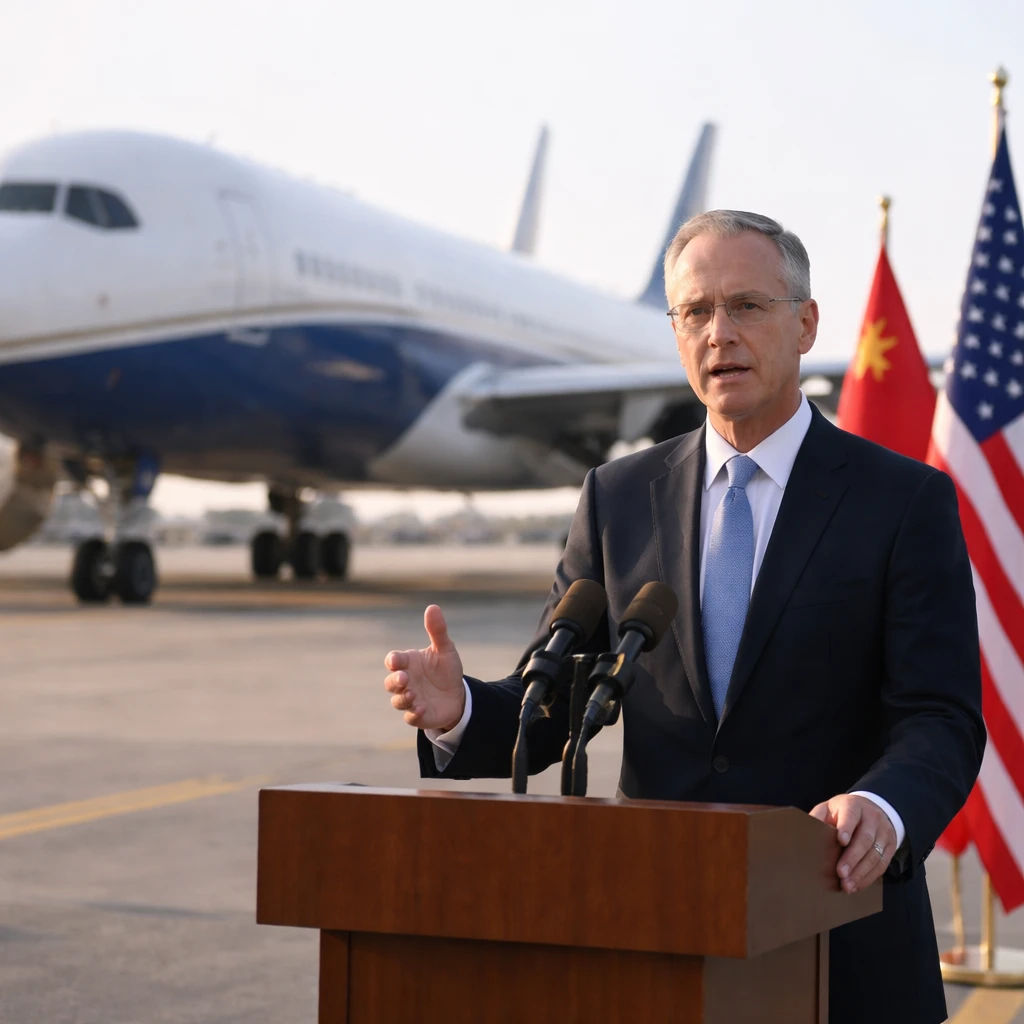
May 14 - U.S. Treasury Secretary Scott Bessent said he anticipated an announcement of large Chinese orders for Boeing aircraft to coincide with President Donald Trump’s trip to Beijing. The comment came during an interview taped earlier on Thursday for CNBC.

Bessent told CNBC that discussions between U.S. and Chinese officials would extend beyond aircraft sales to include other purchases such as energy and agricultural goods. He framed the push as part of a broader effort to expand U.S. exports to China.

On the subject of investment, Bessent said the two sides had considered creating a "Board of Trade" to oversee bilateral commerce and a separate "Board of Investment" to handle investment proposals in non-strategic, non-sensitive sectors. He emphasized that the proposed investment board would serve to preview Chinese plans so they could be screened to ensure they did not fall under the jurisdiction of the Committee on Foreign Investment in the United States, which he leads.

"What we want to do is make sure that these investments don’t get referred to CFIUS, so this would pregame those investments, just to make sure that they’re not of a strategic or sensitive area," Bessent said.

He also pushed back on a reported figure for Chinese investment linked to the visit. "I’m not sure where this $1 trillion investment number has come from," Bessent said, distancing the administration from that particular estimate.

Bessent gave a concrete example of the sort of goods the U.S. would not target for reshoring, noting that fireworks were not an item the United States would seek to bring back from China.

The Treasury secretary reiterated the administration’s broader trade objective as described by President Trump during his conversation with Chinese President Xi Jinping. "We’re focused on getting it into balance," Bessent said. "That’s the goal here, and that can be done one of two ways - either the U.S. receives fewer imports from China, or we sell more to China, and we’re trying to balance that out."


Observers will be watching the visit for confirmation of the Boeing orders and for any formal steps toward the trade and investment governance mechanisms Bessent described. The comments align with a strategy to increase U.S. exports while channeling certain foreign investments into non-sensitive areas that avoid CFIUS referral.

Risks

  • Uncertainty whether a formal mechanism like the proposed Board of Investment will prevent investments from being referred to the Committee on Foreign Investment in the United States - this affects cross-border M&A and the investment sector.
  • Reliance on large purchase announcements during diplomatic visits may not guarantee follow-through on orders, creating volatility for aerospace and export-focused sectors.
  • Efforts to rebalance trade by increasing U.S. exports to China or reducing imports introduce risks for supply chains and industries tied to bilateral trade flows, including agriculture and energy.

More from Stock Markets

Biogen to Advance Tau-Targeting Alzheimer’s Candidate after Mid-Stage Data May 14, 2026 Republic Technologies Secures Global License to Sign Foundation Verification Stack May 14, 2026 Robo.ai Shares Jump After Launch of NeuroStream Video Compression Platform May 14, 2026 Tate & Lyle Shares Soar After Ingredion Lodges Cash Offer Proposal May 14, 2026 Wolfe Reaffirms Nvidia as Its Top AI Chip Pick Despite Short-Term Underperformance May 14, 2026