
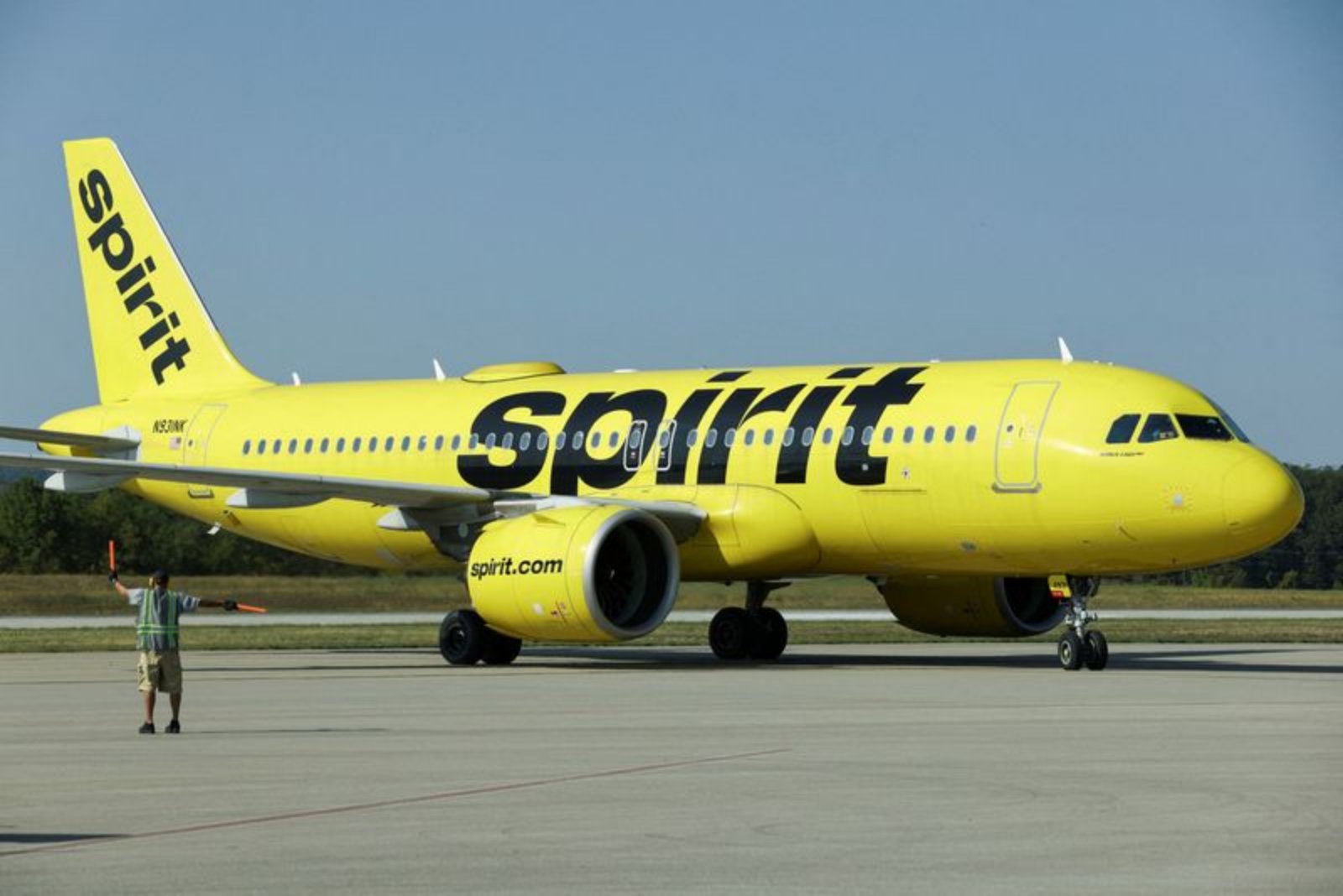
Spirit Airlines' path out of bankruptcy is under renewed strain after jet fuel prices climbed sharply, throwing into question the core assumptions behind the carrier's restructuring effort. The ultra-low-cost carrier built its turnaround on fuel cost estimates disclosed in March that assumed averages near $2.24 per gallon in 2026 and $2.14 in 2027. By mid-April, jet fuel was trading around $4.24 per gallon - roughly double those budgeted levels.
Financial modelling from J.P. Morgan shows the potential severity of a sustained fuel spike. If fuel costs remain near the current elevated level, the bank estimates Spirit's forecast 2026 operating margin could slide to about negative 20%, compared with the 0.5% margin the carrier used in its restructuring plan. That swing would translate into roughly $360 million of incremental costs - a sum that exceeds Spirit's unrestricted cash at year-end, according to the bank.
Spirit has itself sounded the alarm. In its most recent annual report, the airline said the recent jump in fuel prices would have an "immediate and substantial negative impact" on results and cautioned that if higher costs impede its ability to reach agreements with creditors and other stakeholders, it could be forced into liquidation. In an internal email to pilots seen by Reuters, Spirit said operations were continuing normally.
The timing deepens the pressure. Spirit is seeking court approval for a second restructuring in under a year after it emerged from bankruptcy in March 2025. Management still faces a backdrop of elevated domestic capacity, weak leisure demand and a tough pricing environment that complicates any straightforward path to profitability.
Spirit declined to comment for this story.
Project Soar - Plan dependent on lower fuel
The carrier's restructuring blueprint, known internally as "Project Soar," depends heavily on lower jet fuel prices. The plan outlines a smaller, more concentrated airline of about 76 aircraft by mid-August 2026. That reduction is intended to pare aircraft-related debt and concentrate flying on routes judged to deliver stronger revenue potential.
Executives argue a leaner fleet would reduce cash burn, improve margins and lower leverage. Spirit is targeting close to $1 billion of cost reductions in 2026 coupled with revenue enhancements tied to pricing, premium seating and other product changes. The company reports early 2026 performance is moving in the right direction: projected first-quarter operating margins of negative 5.6%, an improvement from negative 27.1% a year earlier.
Creditors and stakeholders push back
Creditors, however, say the plan leaves little room for adverse developments. In a court objection filed last week, Citibank - acting as administrative agent for lenders under Spirit's revolving credit facility - said the carrier's projections rely on fuel prices easing later in the year and fail to show how the business would perform if those prices remain elevated. The lenders described higher fuel as "an entirely new and unbudgeted strain" not reflected in the projections, raising doubts about the feasibility of the restructuring pathway.
Citibank also said Spirit is already in default under portions of its credit agreement and may be required to repay more than $35 million or to provide additional collateral. The bank warned that confirmation of the current plan could precipitate near-term liquidation risks because lenders would have the ability to repossess aircraft engines and spare parts pledged as collateral.
Separately, the U.S. Trustee has objected to Spirit's disclosure statement, contending it does not sufficiently explain why the restructuring approach was chosen over other alternatives - including a potential sale.
Liquidity tight and liquidation risk amplified
Speculation about a near-term liquidation has circulated in recent days as fuel costs rose. A person familiar with the matter said Spirit is not expected to liquidate this week and that liquidation, while still a possibility, is not the most likely outcome. The same person said the carrier is "shaking all the trees" in an effort to raise cash and shore up its balance sheet.
Spirit's financial position limits how long it can absorb a prolonged fuel shock. At the end of 2025, the airline reported about $273 million in unrestricted cash and roughly $591 million in restricted cash. Under the reduced 76-aircraft scenario, Spirit projected its cash balance would fall to about $87 million at its lowest point - materially lower than the approximately $410 million the company projected under its earlier, larger-airline plan.
Under the restructuring timetable, Spirit expects monthly net cash flow to turn positive in November 2026, with full-year net cash flow of roughly $97 million. But the company must also use $150 million of encumbered cash to repay bankruptcy loans that kept it operating, maintain minimum restricted balances and make an additional $100 million payment to lenders at exit, all while lining up new financing.
Operational responses and caveats
In its March filing, Spirit said it responded to the fuel spike with fare increases and capacity cuts and argued that its status in bankruptcy affords it the flexibility to pare capacity and fixed costs if high fuel prices persist. Those measures are intended to blunt the direct cash impact of higher fuel and to preserve liquidity while the restructuring proceeds through the court process.
But creditors argue the current assumptions do not reflect a scenario where fuel stays high, and that the planned margins leave the company exposed. The combined pressure of tightened liquidity, creditor objections and higher operating costs creates a narrow margin for error as Spirit seeks court approval for its second restructuring in under a year.
For now, the company continues to operate its network while it negotiates with lenders and stakeholders. Whether the combination of cost reductions, pricing changes and fleet shrinking can offset fuel at roughly double the levels used in the plan's modelling remains an open, consequential question for shareholders, lenders and the broader airline sector.