
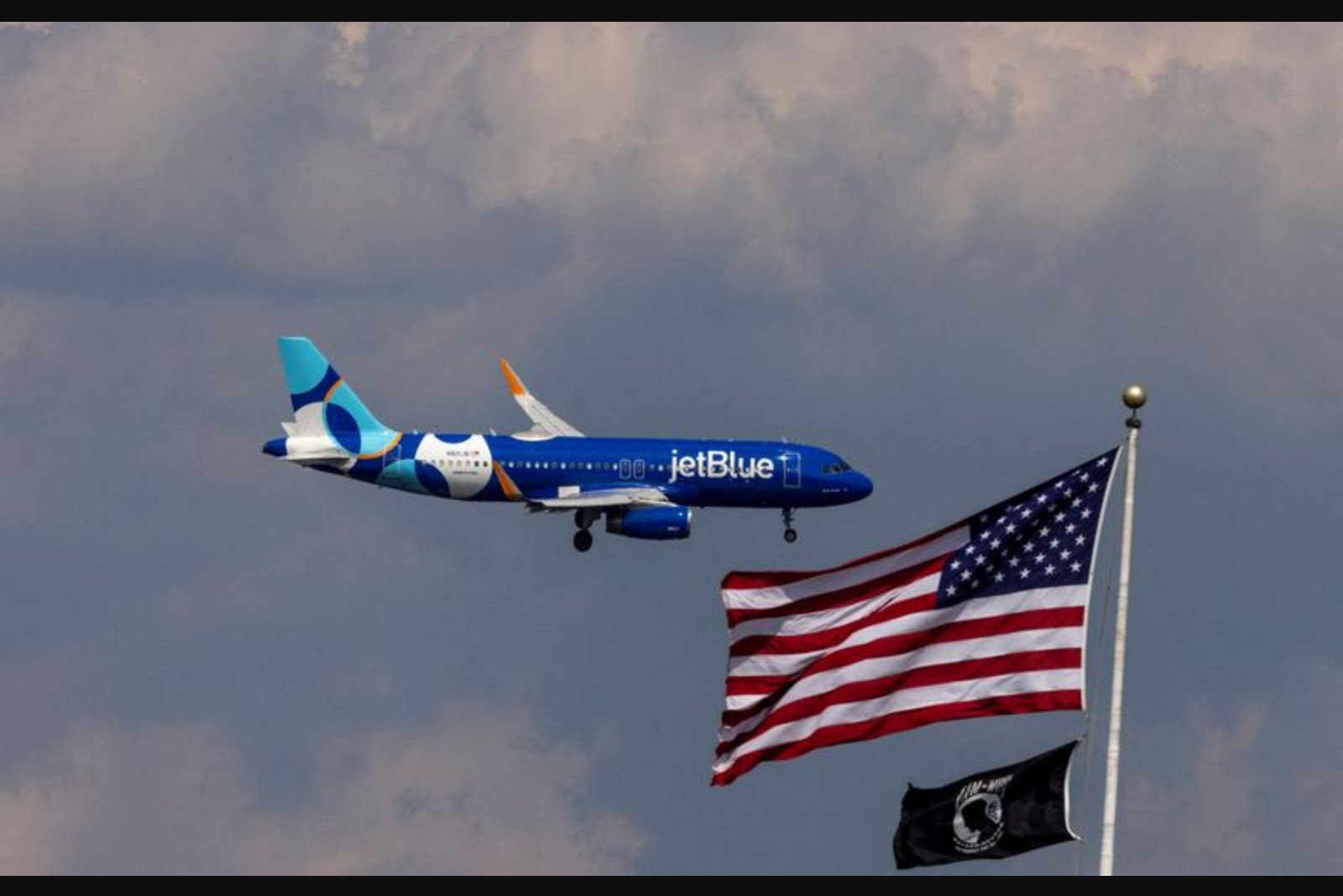
JetBlue Airways arrived into 2026 hopeful that a multiyear restructuring would deliver a return to profitability, but an abrupt jump in jet fuel prices and the specter of a government-backed salvage of Spirit Airlines have clouded that outlook and prompted the carrier to take on additional debt.
The New York-based low-cost airline had told investors it was seeing easing cost pressures and continued resilient travel demand as evidence that its turnaround plan, called Jet Forward, was working. The program helped produce roughly $300 million in earnings before interest and taxes in 2025, and management projected a comparable operating result for 2026 on the assumption that jet fuel would average $2.27 per gallon.
That equation has changed. Since the outbreak of war in the Middle East, jet fuel prices have climbed sharply, a development the industry describes as the worst jet fuel supply crisis it has faced - an outcome the reporting attributes to the Iran war launched by Washington. The higher fuel bill has undercut airline margins across the industry and placed additional strain on JetBlue’s fragile recovery.
JetBlue revised its own first-quarter fuel estimate last month to a range of $3.01 to $3.06 per gallon. Using company consumption of 826 million gallons in 2025 as a baseline and applying the midpoint of $3.04 per gallon, Reuters calculations show JetBlue would spend about $2.5 billion on fuel in 2026. That figure is roughly $450 million, or about 21%, higher than its 2025 fuel outlay, a rise that would largely offset the benefit the carrier expected to realize from lower fuel consumption and would erode cash that could have been used to chip away at around $9.5 billion of debt and lease obligations.
Analysts at Seaport Research provide a starker forecast. Daniel McKenzie expects JetBlue’s fuel expense to jump around 40% year-on-year to approximately $2.9 billion and models the airline offsetting about 30% of that increase through higher revenue. Under that scenario, McKenzie projects a pre-tax loss of roughly $1.1 billion for 2026. The company did not provide comment for this story.
Complicating JetBlue’s operating backdrop is the potential for U.S. government assistance to Spirit Airlines. A bailout or other form of rescue could revive competition on routes where the two carriers overlap, particularly in the low-fare leisure market that forms a core part of JetBlue’s network and revenue base. Restoring capacity from a newly supported Spirit might reduce fares or market share on those routes, undermining JetBlue’s ability to recapture the revenue gains it needs to offset higher costs.
Despite these pressures, JetBlue has taken steps to shore up its balance sheet. The airline secured a $500 million debt financing commitment that is backed by up to 22 aircraft and CEO Joanna Geraghty told employees the company was not considering bankruptcy this year. At the end of the latest reported period the company held about $2.3 billion in cash and also has material assets it could pledge if it needed to raise more capital.
Credit-watchers remain concerned. Earlier this month, Fitch lowered JetBlue’s rating to CCC+, citing doubts about the carrier’s capacity to cover fixed expenses from operating earnings. Joseph Rohlena, a North American airlines analyst at Fitch, said that liquidity was not an immediate problem for JetBlue but warned that continued elevated fuel prices or a drop in demand could force the airline back to capital markets to raise funds.
JetBlue operates a smaller international footprint and offers fewer premium seats than larger legacy carriers, limiting its exposure to high-yield premium leisure and business travel that have helped other airlines better absorb the fuel shock. Even those larger carriers have felt the squeeze: Delta expects to recover only 40 to 50 cents for every additional dollar it spends on fuel this quarter, United sees a similar shortfall before potential improvement later in the year, and Alaska Airlines said it is only recouping about one-third of its increased fuel costs and has withdrawn its guidance as a result.
For JetBlue, the timing and scale of the fuel-cost shock intersect with a period when the airline had anticipated steady progress toward break-even on a net basis this year after posting annual net losses since 2019. The uplift from Jet Forward in 2025 and the forecast for 2026 were premised on lower fuel assumptions that the company has since had to revise sharply upward.
Investors will be watching the carrier’s scheduled quarterly results closely for details on how a far higher fuel bill has affected margins and cash flow, and whether management can demonstrate meaningful revenue recovery or additional cost offsets. Absent clear evidence of sustained revenue lift or a material drop in fuel prices, JetBlue’s path back to profitability looks more uncertain, and the company may rely increasingly on borrowing or asset-backed financings to manage near-term obligations.
Summary
JetBlue's recovery is threatened by a surge in jet fuel prices linked to the Middle East conflict and by the possibility of U.S. government intervention for Spirit Airlines. The carrier has revised fuel cost assumptions higher, taken on new debt, and faces pressure on margins and cash flow that could negate savings from its Jet Forward restructuring unless revenue or fuel trends improve.
Key points
- JetBlue's Jet Forward generated about $300 million in EBIT in 2025; management expected similar results in 2026 assuming $2.27 per gallon jet fuel.
- Revised fuel estimates of $3.01 to $3.06 per gallon imply about $2.5 billion in fuel costs for 2026 at 826 million gallons consumed - roughly $450 million higher than 2025.
- Liquidity measures include a $500 million debt financing commitment backed by up to 22 aircraft and roughly $2.3 billion in cash, though the credit rating was downgraded to CCC+ by Fitch.
Risks and uncertainties
- Persistently elevated jet fuel prices - impacts the airline sector broadly and JetBlue’s operating margins specifically.
- A potential U.S. bailout of Spirit Airlines - could increase competition on overlapping low-fare routes, affecting leisure-travel revenues.
- Market sensitivity to demand shifts - if consumer travel demand softens, JetBlue may face heightened liquidity needs and capital-raising pressure.