
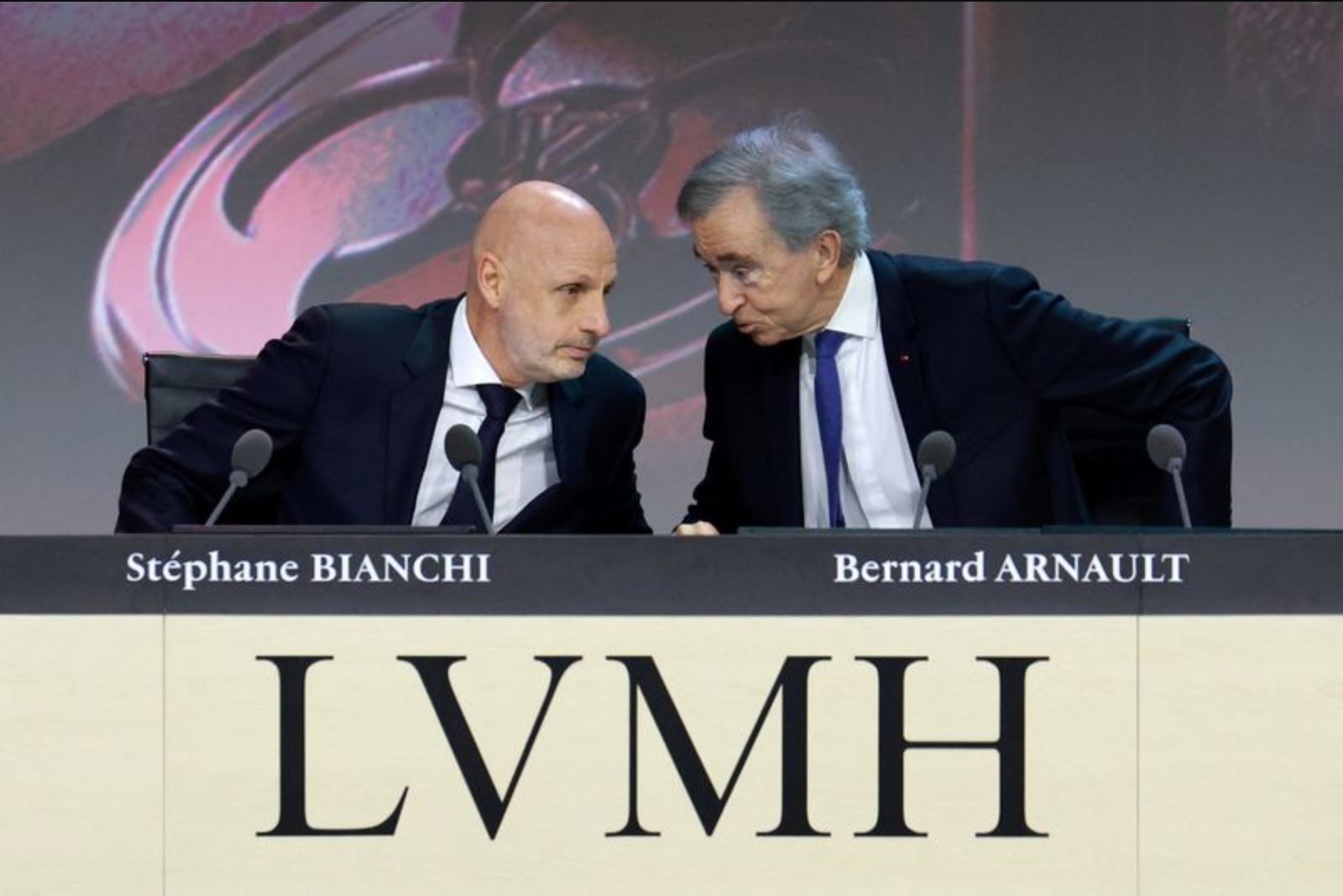
Bernard Arnault told attendees at LVMH's annual shareholder meeting in Paris that the French luxury group’s return to growth rests on how the crisis in the Middle East develops. "You will have noticed that the world is now in a very serious crisis in the Middle East," he said, adding: "It all depends on how this crisis unfolds".
Arnault framed the conflict as the pivotal variable for the company’s near-term trajectory. He told shareholders that should the situation be resolved quickly, LVMH could resume growth across its divisions. By contrast, he warned that if the crisis were to escalate into what he described as a "global catastrophe", it would be impossible to reliably forecast the consequences for the group.
The group has already reported measurable effects tied to the Iran war. Earlier this month LVMH said the conflict trimmed at least 1% from total group sales in the first quarter and dented tourist flows into Europe. Those impacts were raised again at the shareholder meeting as part of the explanation for continued weakness in the luxury sector after nearly three years without meaningful expansion.
Geopolitical developments in the region were underscored by reports that Iran seized two ships in the Strait of Hormuz as it tightened control over the strategic waterway. The move followed U.S. President Donald Trump's announcement that he was indefinitely calling off attacks, and there was no indication that peace talks had restarted.
Market reaction to the ongoing uncertainty has been significant for LVMH's shares. The stock, which is the largest luxury group by sales, has fallen 26% since the start of the year and is 3% lower than at the time of the company’s last shareholder meeting a year ago. That share performance aligns with broader caution among investors about when and how luxury demand may recover amid the geopolitical backdrop.
At the meeting, Arnault emphasized the conditional nature of any recovery. He reiterated that a quick end to the conflict would position the group to regain momentum across its business lines, while an uncontrolled escalation would produce uncertain outcomes beyond the company's ability to project.
Context limitations - The comments reflect the company's current assessment of front-line events. Beyond the items reported at the meeting and the Q1 sales impact figure already disclosed, the company did not provide additional numerical forecasts or timelines tied to a recovery.