
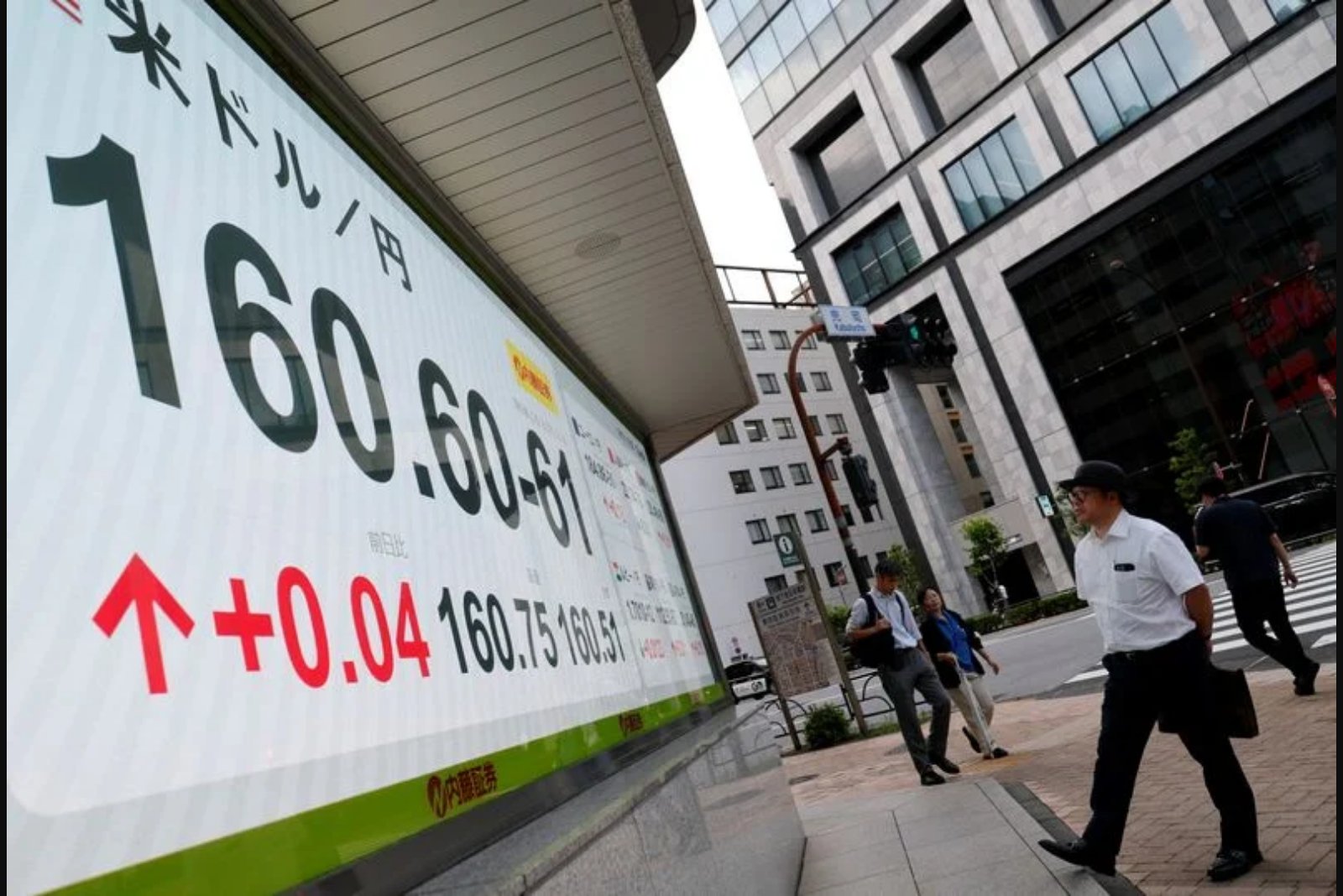
The yen remained under intense pressure on Friday, trading near its weakest levels in four decades despite a recent interest rate hike by the Bank of Japan and prior intervention attempts by the Ministry of Finance. The currency showed minimal movement against the U.S. dollar, edging up 0.1% to 161.205 yen, after hitting a two-year low the previous day. Thin liquidity, driven by public holidays in the United States and much of Asia, limited volatility across most currency pairs. While the Strait of Hormuz returned to normal shipping operations following a newly signed U.S.-Iran peace deal, uncertainty lingers regarding the durability of the truce.
Despite the Bank of Japan raising interest rates to a 31-year high last week and previous dollar-selling interventions earlier in the year, the yen has found little support. Market participants are now scrutinizing the spending plans of Prime Minister Sanae Takaichi, which have contributed to a decline in investor confidence. This political uncertainty has fueled speculation that further foreign exchange intervention may be necessary to prevent excessive volatility.
Tony Sycamore, a market analyst at IG in Sydney, noted that the Ministry of Finance is likely to defend the 161.95 yen level if tested, deploying resources similar to those used in April and May, amounting to approximately ¥11.7 trillion. Such action would consume roughly 11 to 12 percent of Japan's total foreign exchange reserves in a short timeframe, with limited lasting impact on the currency's trajectory. Sycamore warned that at this pace, the authorities would need to exercise greater selectivity in future interventions to maintain credibility and preserve flexibility for when it truly matters.
Inflation data released on Friday indicated that Japan's annual core inflation remained below the central bank's 2 percent target for the fourth consecutive month in May. This suppression was largely attributed to government fuel subsidies, which offset rising raw material costs stemming from the Middle East conflict. However, analysts at Capital Economics projected that as energy costs are passed through to utility bills and other goods and services, inflation could rise to approximately 3.5 percent by early 2027.
Minutes from the Bank of Japan's April meeting, also released on Friday, revealed that some board members advocated for a more rapid increase in interest rates if the Middle East conflict persists, aiming to prevent underlying inflation from overshooting the 2 percent target. Deputy Governor Ryozo Himino echoed this sentiment on Friday, stating that the central bank remains committed to raising interest rates while monitoring the risk that underlying inflation may exceed its target.
Outside of Japan, major currencies remained largely stable during Asian trading hours. The U.S. dollar index, which tracks the greenback against a basket of six major currencies, held steady at 100.81 after climbing 0.5 percent to a one-year high on Thursday. The British pound remained flat at $1.3205, following the Bank of England's decision to maintain interest rates at 3.75 percent. The Bank of England cited uncertainty regarding the strength of inflation pressures, deeming it premature to raise rates further.
Political developments in the United Kingdom also drew attention, with traders awaiting the results of a by-election in Greater Manchester. The incumbent mayor, Andy Burnham, if victorious, is expected to challenge Prime Minister Keir Starmer for leadership of the ruling Labour Party. The euro remained unchanged at $1.1459, while the Australian dollar slipped 0.1 percent to $0.7011. The New Zealand dollar held steady at $0.5756. In digital asset markets, Bitcoin declined 0.2 percent to $62,868.18, and ether remained flat at $1,708.98.