
Equity markets across East Asia concluded a remarkable trading week with historic milestones, while the U.S. dollar solidified its dominance in global currency trading. The convergence of geopolitical easing and a sharp repricing of U.S. monetary policy created a complex environment for investors, characterized by falling energy costs and a strengthening greenback.
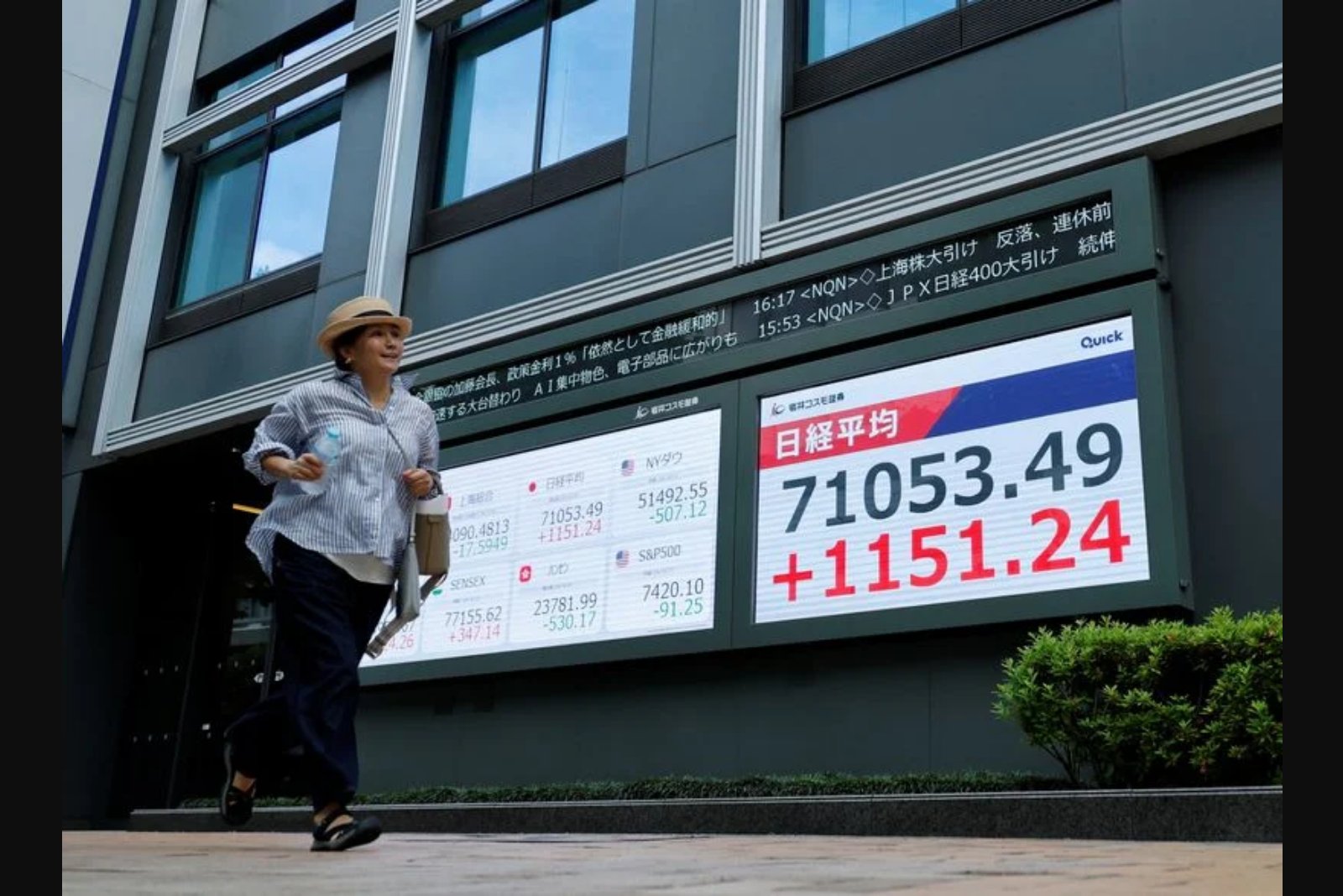
In Japan, the Nikkei index climbed 0.8% on Friday, securing a record high for the fifth consecutive trading session. This performance extended the index's weekly gain to a substantial 8.5%. South Korean markets mirrored this optimism, with the benchmark KOSPI jumping 3.1% on the final trading day of the week. This daily surge added to a massive weekly rise of 15.3%, marking one of the most potent rallies in recent history. The broader region remained on a celebratory note, with mainland China and Hong Kong markets closed for the Dragon Boat Festival holiday, and Taiwan also observing the break.
The catalyst for this equity surge was the reopening of the Strait of Hormuz, a critical artery for global oil transport. Following the United States lifting its blockade on Iran on Thursday, oil tankers resumed sailing through the waterway. This development was part of an interim deal designed to end a three-month conflict. The impact on energy markets was immediate and severe for prices. Brent crude futures dropped 1% on Friday to settle at $79.03 a barrel. For the week, Brent crude prices fell by 9.5%, significantly reducing cost pressures for energy-intensive industries and lowering inflation expectations globally.
However, the post-conflict governance of the strait introduces new variables. Madison Cartwright, a senior geo-economics analyst at the Commonwealth Bank of Australia, highlighted that future control will be led by Iran and Oman. She noted that this arrangement creates the possibility for Iran to impose a 'maritime service' fee. The current toll-free transit is guaranteed for only 60 days. Cartwright warned that this development undermines international norms regarding free navigation and establishes a precedent that other nations might follow.
While Asian equities rallied, the U.S. dollar embarked on a powerful trajectory, hovering near a 13-month high against its major peers. The U.S. dollar index was on track for a weekly gain of 1%, closing Friday at 100.78. This strength was primarily driven by a hawkish turn from the Federal Reserve. Following the central bank's decision to hold rates steady on Wednesday, nine of its nineteen officials signaled that higher borrowing costs might be necessary later this year. New Federal Reserve Chair Kevin Warsh emphasized his commitment to delivering price stability, reinforcing the market's expectation of multiple rate hikes.
The dollar's surge had profound effects on currency pairs. The Japanese yen weakened to 161.26 per dollar, marking its lowest level since July 2024. This move placed the yen well beyond the 160 level, a threshold widely monitored for potential intervention by Japanese authorities. The British pound also retreated, falling 0.7% overnight and closing 0.1% lower at $1.3195. This decline followed the Bank of England's decision to maintain interest rates in a 7-2 vote. In domestic news, Greater Manchester mayor Andy Burnham secured an election victory in northern England, removing a significant hurdle for a leadership challenge against Prime Minister Keir Starmer.
Fixed income markets reacted sharply to the revised rate outlook. Short-term Treasuries faced heavy selling pressure, with two-year U.S. Treasury yields rising 9 basis points over the week to 4.1790%. Conversely, longer-dated bonds found support as investors welcomed the drop in oil prices and the central bank's resistance to political pressure for immediate rate cuts. The ten-year yield decreased by 3 basis points to 4.4510%, while the thirty-year yield slumped 7 basis points to 4.9010%, reaching its lowest level in two months. Molly Nickolin, a strategist at Morgan Stanley, observed that the yield curve remained noticeably flatter than prior to the meeting. She attributed this structure to a combination of higher expected policy rates and firmer confidence in the Fed's ability to combat inflation.
In the corporate sector, U.S. President Donald Trump announced that Apple had agreed to collaborate with Intel to design and manufacture its chips domestically. This news propelled Intel's shares up 10% to a record high. Despite this corporate rally, Wall Street futures slipped 0.2% after the overnight trading session. Precious metals came under pressure from the strong dollar, with spot gold slipping 0.5% to $4,188 an ounce and spot silver falling 0.8% to $65.30 an ounce.