
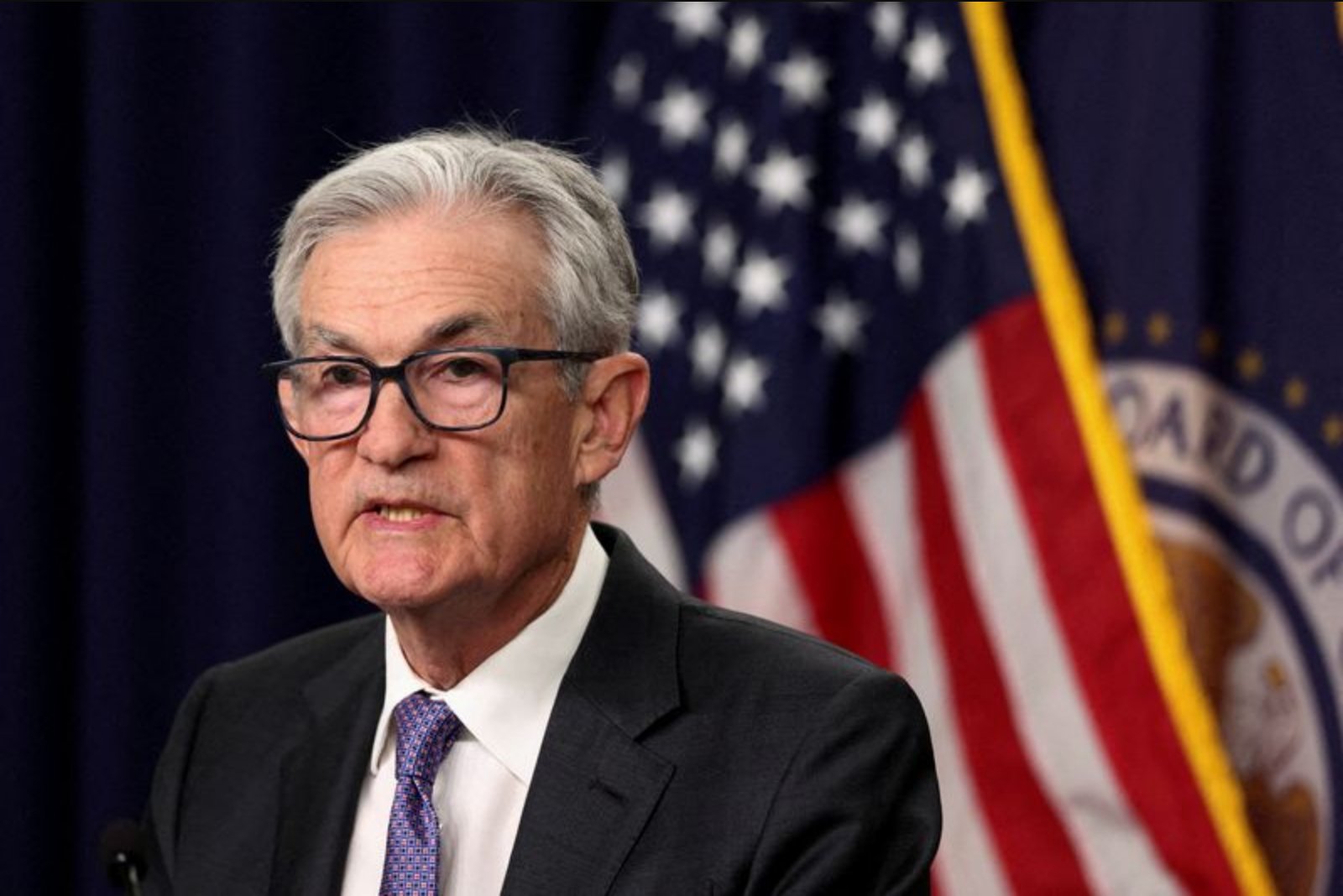
Federal Reserve officials will convene in Washington this week for a meeting that could mark the end of Jerome Powell's term as chair of the U.S. central bank - at least as leader of the Federal Open Market Committee (FOMC). Despite persistent uncertainty stemming from elevated energy costs and strains tied to the Iran war, the FOMC is expected to vote to hold its benchmark overnight interest rate in the 3.50%-3.75% range, where it has stood since December.
The gathering carries added personal and institutional significance after legal and political hurdles shifted over the past week. A major roadblock to Senate confirmation of Powell's intended successor, Kevin Warsh, was removed on Friday when the U.S. Department of Justice dropped a criminal inquiry into renovations at the Fed's headquarters in Washington. That action addressed a central concern of a Republican senator who had signaled he might slow the confirmation process, and it also satisfied a condition Powell had set for leaving the Board of Governors.
With that obstacle cleared, a May 15 transition at the top of the central bank now appears more probable. Still, questions remain about whether Powell will step down from the Board of Governors if Warsh is confirmed in time to take charge at the June policy meeting. Powell indicated last month that he might remain on the Fed's board and that his decision would be driven by what he judged to be "best for the institution and for the people we serve." If he chose to stay, his tenure as a governor could extend through January of 2028, prolonging his involvement while the administration that appointed him pursues its own agenda.
Beyond personnel matters, the policy meeting and Powell's subsequent press conference will be watched closely for any changes in tone toward future rate moves. The FOMC statement will be released at 2 p.m. EDT, with Powell addressing reporters 30 minutes later. Market participants and analysts expect a continued hold on rates for now, but the wording of the statement could be revealing: officials may choose to signal that the next move in policy could be a hike if inflation were to accelerate again.
Policymakers face a backdrop complicated by higher energy prices and maritime disruptions tied to the Iran war. When the conflict began on February 28, central bankers said the economic and inflationary implications would depend on how quickly hostilities ended and whether oil prices fell back toward pre-war levels near $70 a barrel. Although direct bombardment has paused in recent weeks, elements of economic warfare remain in place: U.S. interdictions of Iranian-linked vessels, Iran's attempts to impede passage through the Strait of Hormuz, and broader interruptions to oil and other global supply chains.
Those disruptions have already had a marked impact on markets. Brent crude futures, the global benchmark, have climbed roughly 50% since the onset of the conflict, contributing to a significant pickup in gasoline and overall energy prices. The jump in energy costs was a major factor behind the largest monthly rise in the U.S. Consumer Price Index in nearly four years, a development that has sharpened policymakers' focus on inflation risks.
With inflation running about a percentage point above the Fed's 2% target, the path of monetary policy is uncertain. The Fed's prior plans to resume rate cuts later in the year have been put on hold since December, and bond market pricing has shifted toward expectations that the policy rate could remain unchanged through at least the middle of 2027. That shift reflects a reassessment of upside risks to inflation stemming from prolonged energy-price pressure and the potential for supply-chain spillovers.
Fed Governor Christopher Waller, in remarks ahead of the meeting, framed the dilemma policymakers now confront. He warned that the longer elevated energy costs persist and the Strait of Hormuz remains constrained, the greater the danger that higher inflation becomes embedded across a broader array of goods and services. Such dynamics, he said, could generate supply-chain effects that slow real activity and employment, producing the "very complicated" policy challenge of simultaneous high inflation and a weakening labor market. Waller tempered an earlier push for lower rates by signaling that holding policy steady may be warranted under those conditions.
A number of other Fed officials have similarly wrestled with whether to retain the current pause or to prepare markets for the possibility of additional tightening. At their March policy meeting, an increasing share of participants flagged the potential need for higher rates, setting the stage for debate over whether the April policy statement should introduce language underscoring that the next rate move could be in either direction. Such a change in forward guidance would be notable, signaling a less assured path back to cuts.
Voices across the Fed spectrum have highlighted the inflationary risks that could emanate from sustained high oil prices. St. Louis Fed President Alberto Musalem said in a recent interview that if elevated energy costs persist long enough, they could lift core inflation rather than only headline measures like gasoline. At that point, Musalem cautioned, the risk that inflation expectations become unanchored would grow more relevant and could justify raising rates. He described current policy as "in a good place" and likely appropriate to keep for some time, but he also acknowledged conditions under which tightening could become necessary.
Even officials who have favored easier policy recently are reevaluating their stance amid the changing outlook. Fed Governor Stephen Miran, once a vocal proponent of lower rates to support a softening jobs market, has indicated he is considering moderating the pace of cuts he had previously recommended because the inflation picture has become "a little bit less favorable."
Beyond the substance of policy, the meeting will likely provide clarity on Powell's immediate plans and the institutional implications of any decision he makes about remaining on the Board. Powell has been publicly candid about weighing options based on the needs of the institution and the wider public, comments that take on greater meaning now that the DOJ probe has been dropped and an obstructing vote on Warsh's confirmation appears less likely.
Bank of America economists, in a recent note, summed up the narrow near-term consensus: the Fed will "stay firmly on hold at its April meeting" and is apt to avoid signaling that policy risks are definitively two-sided in the statement, though it is a close call. They added that markets should expect Powell to sound hawkish. The central question remains the balance between acknowledging upside inflation risks tied to the Iran war and energy prices, and preserving optionality on rate cuts should inflation and activity evolve differently.
As the Fed concludes this session, officials will be weighing intersecting risks: a potential embedding of higher inflation across the economy, signs of loosening in labor markets, and the uncertain trajectory of international disruptions to energy and trade. The language the Fed chooses in its statement and Powell's answers at the press conference will be carefully parsed for hints about whether the committee is prepared to tighten further or intends to hold steady until clearer evidence emerges.
Summary: The Federal Reserve is expected to maintain its policy rate at 3.50%-3.75% at this week's meeting, amid elevated oil prices and supply-chain frictions tied to the Iran war. A DOJ decision to drop an inquiry connected to Fed headquarters renovations removed a key obstacle to the confirmation of Powell's likely successor, though Powell may still choose to remain on the Board. Policymakers will closely watch inflation data and the wording of the statement for signals on the possibility of future rate hikes.