
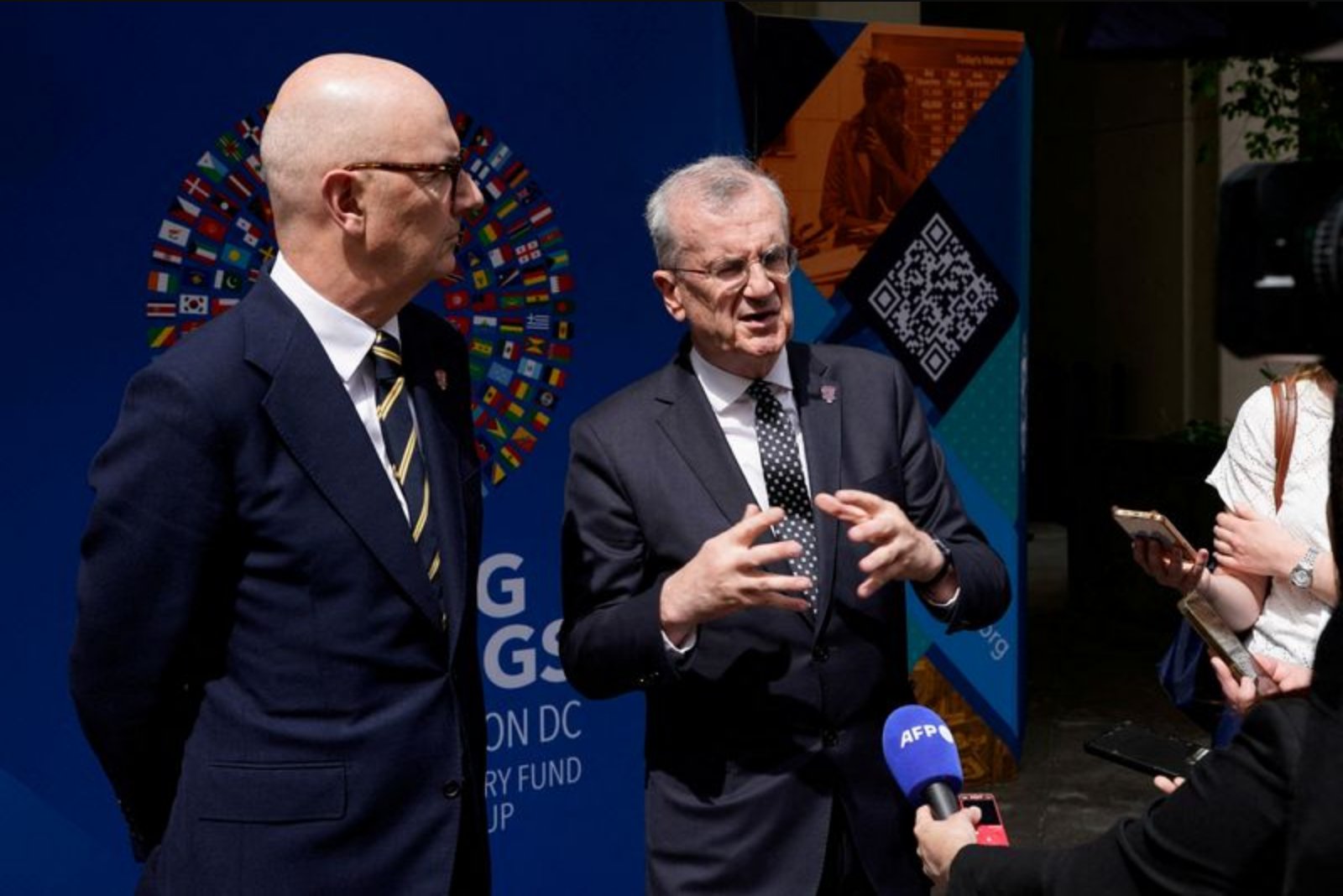
Washington, April 16 - Senior officials at the European Central Bank have downplayed the likelihood of an interest rate rise at the bank's next meeting, arguing that more incoming data are necessary and that the exact meeting in which any action is taken is not the principal concern.
Inflation in the euro area rose above the ECB's 2% target last month, driven in large part by higher energy costs. That jump has prompted debate within the ECB about whether to tighten policy to prevent the energy shock from penetrating broader price dynamics and triggering a wider inflationary process.
"We will do what is needed," ECB chief economist Philip Lane said on Thursday. He added: "I know you care if it’s going to be one meeting or another meeting, but in the grand scheme, which meeting it turns out to be that we make the decision... that’s detail."
Francois Villeroy de Galhau, head of the Banque de France and an influential voice on the ECB's 27-member Governing Council, was more explicit about the near-term odds. Speaking to CNBC, he said: "To bet on April would be premature at this stage. We need to reach a sufficient level of data about the effect on underlying inflation and also the negative effect on demand."
Financial markets have reduced the probability they assign to an April rate increase to roughly one in five, even while pricing in a full hike by July and anticipating a further tightening toward the end of the year.
Latvian central bank governor Martins Kazaks, attending the International Monetary Fund and World Bank spring meetings, said market expectations were "reasonable." He noted: "One move of 25 basis points wouldn’t do much more than signalling." Kazaks emphasized that staying out of April would not remove the need to act later if conditions warranted.
Kazaks and his Estonian colleague Madis Muller both observed there is limited evidence so far of second-round effects from higher energy prices - a key consideration for policymakers contemplating rate increases. "It would also take some time for broader inflationary pressures to take hold," Muller said. "It might therefore be difficult to tell by the end of April if we need to be concerned about it."
While none of the officials explicitly ruled out an April tightening, most said such a move would require a marked worsening in the outlook. Alexander Demarco, governor of the Central Bank of Malta, pointed out that inflation expectations remain "quite well anchored," and urged caution.
"We need to be patient, not rush any decision and see what the data tells us," Demarco said, reflecting the consensus among several policymakers that confirmation of persistent inflationary pressures is needed before taking action.
Context and next steps
Policymakers continue to weigh whether the recent energy-driven rise in headline inflation will translate into sustained underlying inflation. The prevailing view among the cited officials is that more evidence is required to determine if and when monetary tightening should follow.