
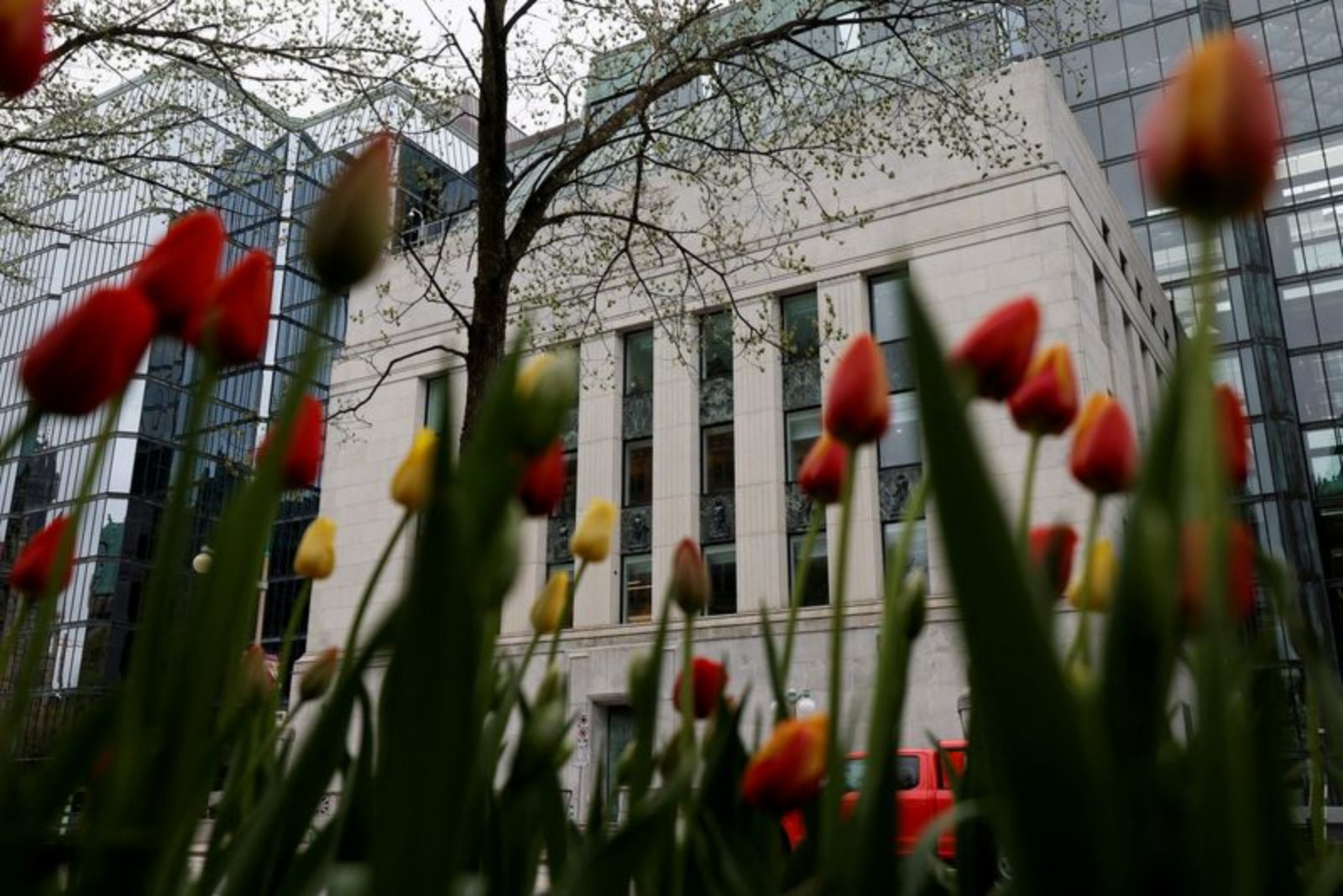
OTTAWA - The Bank of Canada is widely expected to leave its benchmark rate at 2.25% when it announces its decision on April 29 at 9:45 a.m. ET (1345 GMT), with economists viewing the recent uplift in oil and gasoline prices triggered by the Iran war as a temporary shock rather than a shift in underlying inflation dynamics.
Central banks typically act when inflation expectations point to durable upward pressure on prices. In this instance, analysts said the spike in gasoline costs may push April inflation higher but is unlikely to be sustained long enough to force a policy response.
Canada's annual consumer price inflation climbed to 2.4% in March, driven in part by higher crude oil costs that pushed gasoline prices upward. While this represents the strongest reading since December, it still sits near the midpoint of the Bank of Canada's 1% to 3% inflation target range.
At the same time, the Canadian economy remains fragile in areas, even as it has avoided a recession that some had feared would stem from U.S. tariffs. That combination - a modest rise in headline inflation alongside pockets of economic weakness - underpins expectations that the central bank will opt to hold rates.
Governor Tiff Macklem has signalled he is not concerned about a near-term uptick in inflation expectations tied to the conflict. The bank, officials and outside economists emphasize that a policy tightening would be warranted only if elevated gasoline costs translated into persistent inflation driven by entrenched expectations among households and businesses.
"What the bank is looking for is whether these expectations of inflation become ingrained among consumers and among businesses, and right now, we are not seeing that," said Gemma Stanton-Hagan, director of economics and policy at PwC. "There’s a lot of weakness in different areas of the economy," she added, saying these considerations support a decision to pause monetary tightening.
Money markets largely expect the BoC to hold its policy rate at this meeting, though they are pricing in a potential hike toward the final quarter of the year - an outlook that differs from most economists polled by Reuters, who generally foresee no further rate increases this year following the uptick in oil prices.
The central bank will release its quarterly Monetary Policy Report with the interest-rate decision, providing updated projections for growth and inflation. Pedro Antunes, chief economist at Signal49 Research, said the Bank of Canada is likely to revise upward its GDP and inflation forecasts in that report, reflecting recent changes in the oil price environment.
Antunes also noted the limits of monetary policy in addressing an externally driven oil-price shock. He argued that fiscal policy, rather than the central bank, should play the leading role in responding to such a supply-side disruption.
"The bank is now focused on keeping wage growth aligned with its 2% target," Antunes said, observing that policymakers would be reluctant to tolerate persistently high wage inflation, which could influence longer-term inflation expectations. "The bank is going to talk tough in the monetary policy report," he added.
The policy announcement arrives one day after Finance Minister François-Philippe Champagne presents a mid-term fiscal update, a timing that underscores the interplay between monetary settings and fiscal measures in managing a sector-specific price shock.
This decision and the accompanying report will be watched closely by sectors sensitive to interest-rate outlooks and energy-price movements, including consumer spending, household budgets affected by gasoline costs, and financial markets pricing future policy paths.