
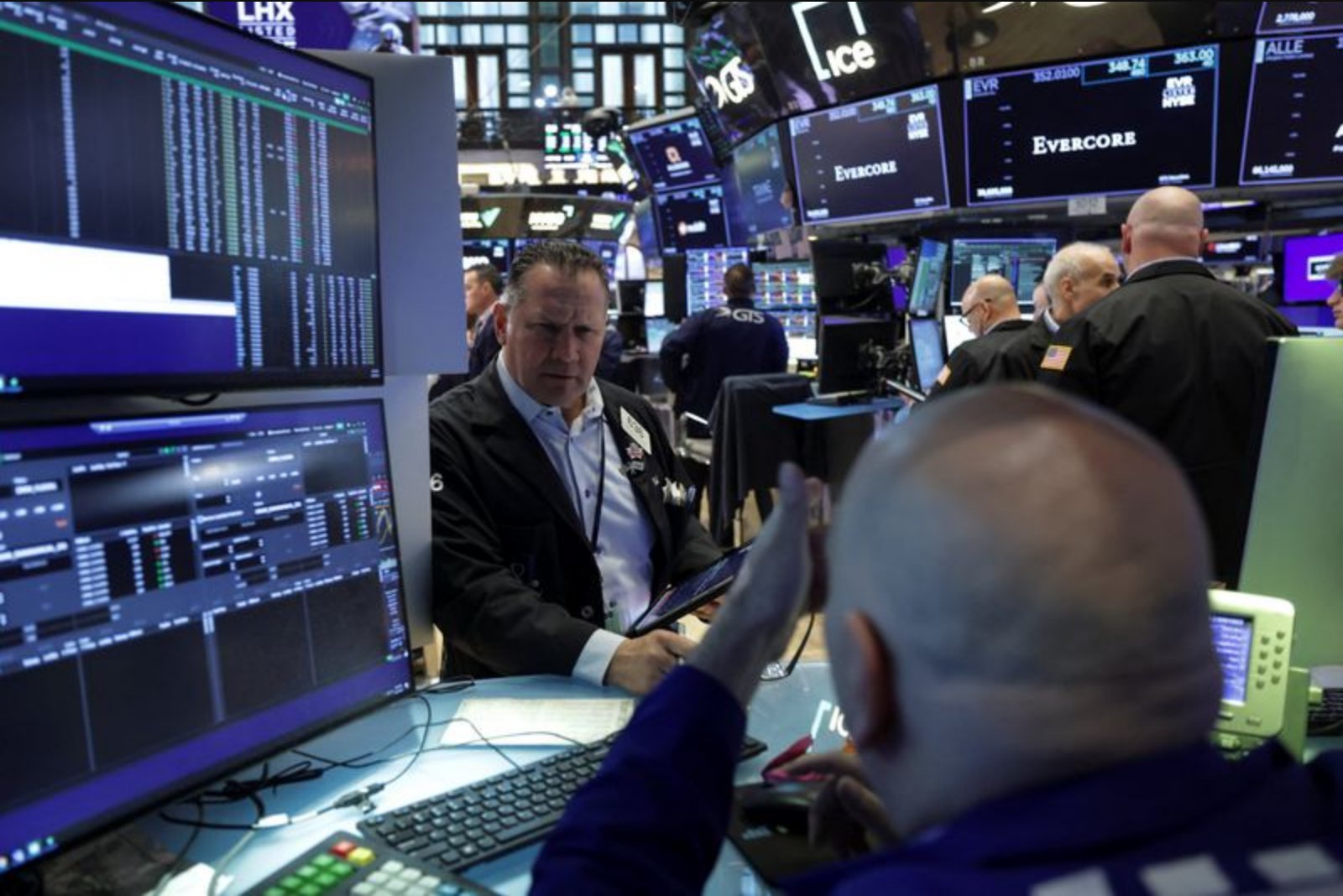
The weekend left markets juggling a mix of geopolitics, energy-market strain and a sustained rally in technology stocks. A stalemate in Iran and a shooting near a Washington press dinner attended by President Donald Trump and his officials have complicated the backdrop, yet equities tied to artificial intelligence and chips remain on an upswing.
Roughly 44% of the S&P 500's market capitalization is set to report quarterly results in the coming days, with a cluster of the largest technology firms - Microsoft, Meta, Apple, Alphabet and Amazon - all scheduled to announce earnings this week. That cadence arrives against the continued acceleration of demand for AI infrastructure and components, which has pushed chipmakers to the forefront of the market rally.
Intel's dramatic move to record highs this month has become a defining market story. At the same time, there are growing signs that hyperscalers and major tech companies are planning larger capital expenditure programs - most recently underscored by Tesla lifting its 2026 capex plan to more than $25 billion. How markets will react to persistent increases in capex across the tech sector remains uncertain, and could feed bouts of unease if investors reassess near-term returns on heavy investment.
For now, technology stocks continue to power gains. Chipmakers led Asian indexes to fresh record highs on Monday, following record peaks on Wall Street last Friday. S&P 500 futures were flat before the U.S. open on Monday, while European bourses opened muted.
Energy markets are exerting a separate, powerful influence. Brent crude reached a three-week high of $108 per barrel as traffic through the Strait of Hormuz remains severely restricted. No new peace talks have been scheduled to resolve the tensions, though Pakistani efforts to broker discussions continue. Longer-dated energy futures are also trending up, with Goldman Sachs raising its fourth-quarter Brent forecast to $90 per barrel.
Central bankers are set to dominate the calendar this week. The Federal Reserve and other major G7 central banks will meet, with the Bank of Japan due to deliver the first rate decision on Tuesday. Market expectations are that none of these institutions will change interest rates this week as officials assess how elevated energy costs are filtering through to inflation. The Fed meeting will carry particular attention because it could be Jerome Powell's last as chair - and last Friday's announcement that the Department of Justice was dropping its criminal probe into Powell has cleared the way for the Senate confirmation of chair nominee Kevin Warsh. Against that backdrop, forward guidance from Powell may have less influence than it has over the past eight years.
Investors will also watch some fresh inflation readings, including U.S. personal consumption expenditures data - the Fed's preferred inflation measure - due on Thursday, alongside preliminary euro zone data.
Chart of the day - U.S. oil exports have surged in recent weeks, helping to ease an acute energy supply shock originating in the Middle East. Total U.S. oil exports this month hit a record 12.9 million barrels per day, with refined products making up more than 60% of that figure, according to Energy Information Administration data. Seaborne U.S. oil exports are set to climb to a record 9.6 million barrels per day in April, while flows to Asia have roughly doubled from pre-war levels to about 2.5 million barrels per day, according to data analytics firm Kpler. That surge in exports has helped to cushion Asian economies, which are among the most exposed to potential Gulf supply losses, a point noted by ROI Energy Columnist Ron Bousso.
What to watch this week:
- U.S. 2-year and 5-year note auctions at 1 p.m. EDT.
- Bank of Japan monetary policy meeting begins - first major central bank decision of the week.
- UK’s King Charles III begins a four-day U.S. state visit.
If you follow the Morning Bid podcast, the latest episode unpacks the busy week ahead and provides daily market analysis.
Promotional note included in the original briefing: a service called ProPicks AI evaluates Intel Corporation (INTC) and other companies each month using over 100 financial metrics. The machine-driven tool claims to assess fundamentals, momentum and valuation without human bias and identifies stocks it considers appealing based on current data. The original text cited notable past winners and invited readers to explore whether INTC appears in any ProPicks strategies or if alternatives exist within the same sector.