
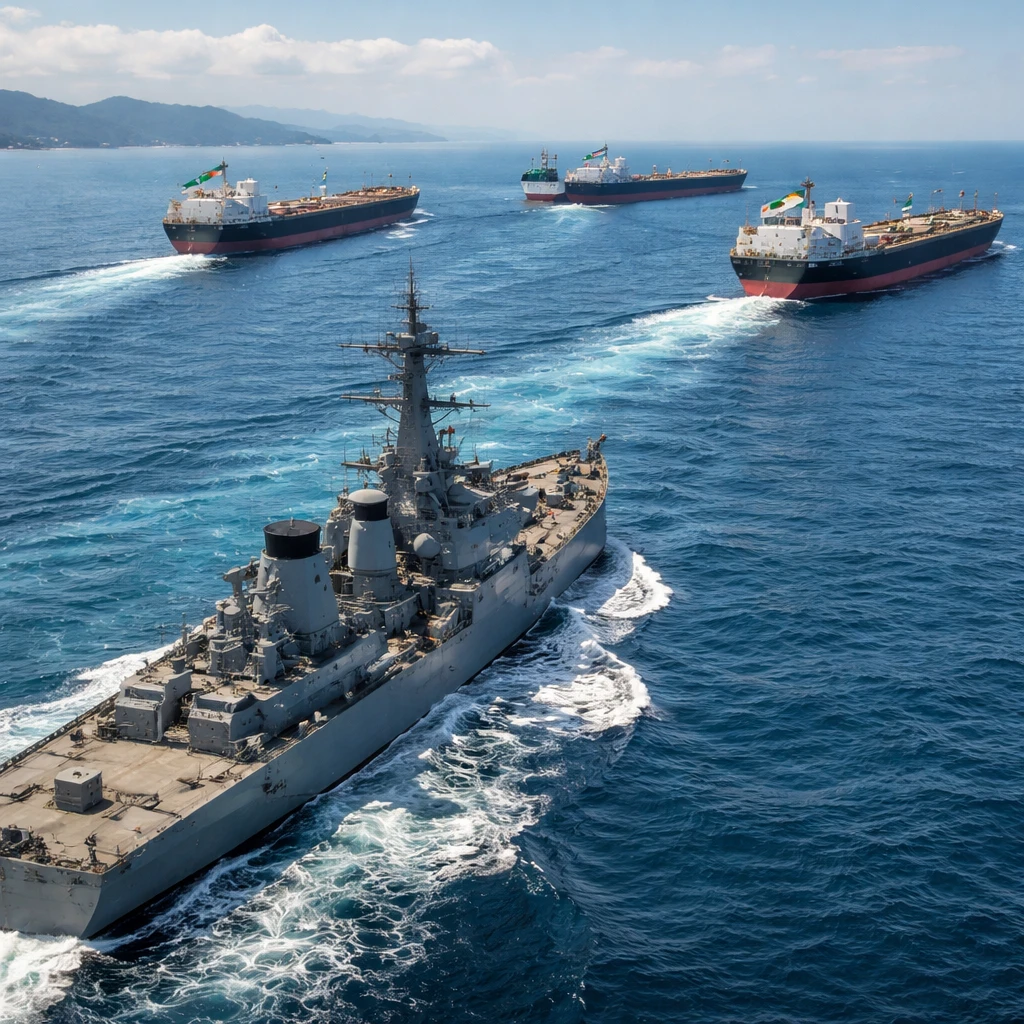
Summary: U.S. military forces have intercepted at least three Iranian-flagged oil tankers in Asian waters and are redirecting them away from areas near India, Malaysia and Sri Lanka. These operations form part of a broader maritime blockade imposed by Washington and follow a series of incidents in which Iranian forces have fired on or seized commercial vessels attempting to transit the Strait of Hormuz.
U.S. forces in the region have taken control of multiple Iranian vessels in recent days, including the seizure of an Iranian cargo ship and an oil tanker. In a separate set of developments, Iran said it captured two container ships trying to leave the Gulf via the Strait of Hormuz after having fired on those vessels and another ship - actions the Iranian authorities described as their first seizures since the onset of the war.
The confrontations at sea occur nearly two months after military action between the U.S. and Israel and Iran began. Despite an uneasy ceasefire, there are few signs that diplomatic talks or negotiations are resuming to de-escalate the conflict. The closure of the Strait of Hormuz has had an immediate and material effect on global energy flows, disrupting approximately one-fifth of worldwide oil and gas supply and contributing to a broader energy crisis.
Shipping and security sources have reported the recent diversions of at least three additional Iranian-flagged oil tankers. U.S. forces are reported to be redirecting these ships away from their prior positions near the coastal waters of India, Malaysia and Sri Lanka.
The current maritime posture involves a U.S.-imposed blockade on Iran’s trade by sea, enforced alongside operations intended to prevent vessels linked to Iran from reaching certain destinations. Iran, for its part, has engaged vessels attempting to sail through the Strait of Hormuz, using gunfire and direct seizures in several cases.
These developments have carried implications across global energy markets and maritime commerce. The interruption of flows through the strait has tightened supplies and contributed to broader energy market dislocations. Meanwhile, the seizing and redirecting of commercial vessels has heightened concerns about the safety and security of international shipping lanes in the region.
Given the information available, the situation remains fluid: U.S. military interdictions and Iranian retaliatory actions are ongoing, and there is no clear indication included in reporting that diplomatic engagement to end hostilities has progressed. Observers and market participants remain attentive to further naval movements, vessel seizures, and the potential for additional disruptions to global energy supply.