
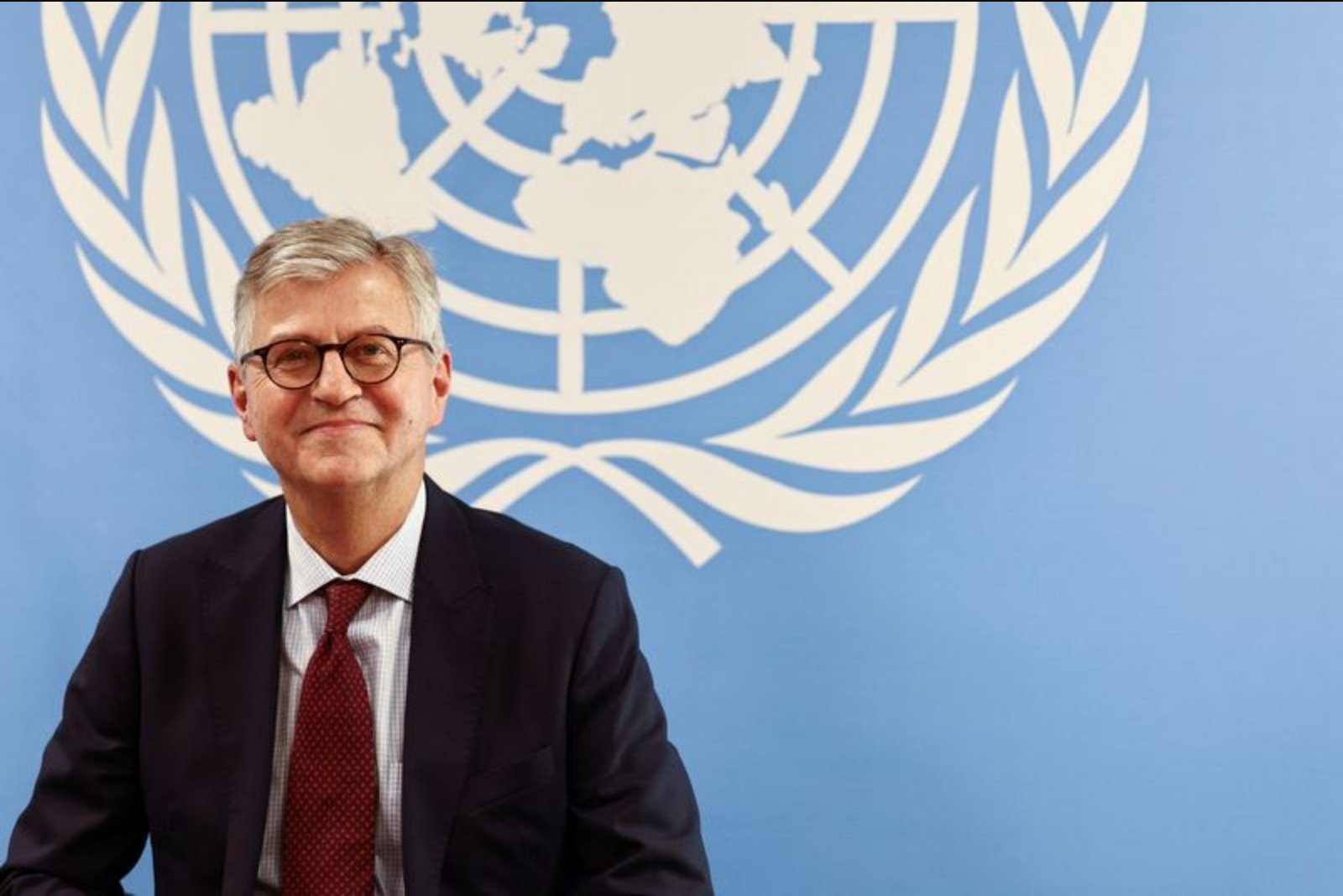
U.N. peacekeeping chief Jean-Pierre Lacroix said on Thursday that discussions are under way about options for a continued United Nations presence in Lebanon once the mandate of the U.N. Interim Force in Lebanon (UNIFIL) formally ends at the end of December.
UNIFIL, which was first deployed in 1978, currently comprises more than 7,000 peacekeepers drawn from 47 countries. In recent weeks five peacekeepers have been killed while on duty - three from Indonesia and two from France - amid the latest outbreak of fighting between Israel and the Iran-backed Lebanese group Hezbollah.
Lacroix told reporters in Geneva that he is consulting with all parties about the range of options and expects to make formal recommendations to the U.N. Security Council by June. He said the Lebanese authorities had made clear they wish for some continued U.N. presence.
"They’re (the Lebanese) very clear that they would want to keep a U.N. presence," Lacroix said.
While emphasizing the request from Lebanon, Lacroix added that any future U.N. presence would likely be smaller than the current UNIFIL deployment. "We’re looking at a presence that would probably be smaller than UNIFIL," he said.
UNIFIL’s mandate includes monitoring a ceasefire, assisting the Lebanese army as it deploys into the south, and helping enforce prohibitions on illegal arms in that area. Hostilities between Hezbollah and Israel reignited on March 2, when the Lebanese group opened fire in support of Iran, and a strained ceasefire is now in effect. Despite the ceasefire, attacks continue in southern Lebanon, where Israeli troops have established what they describe as a buffer zone.
Describing the situation on the ground, Lacroix said he estimated Israeli forces occupy "a significant stretch of land north of the Blue Line, with a massive level of demolition and no civilians allowed." The Blue Line is a U.N.-mapped line that separates Lebanon from Israel and the Israeli-occupied Golan Heights.
UNIFIL has remained in Lebanon through successive rounds of conflict, including a 2024 war during which its positions were repeatedly targeted. The recent fatalities among peacekeepers underline the risks the mission continues to face.
At the same time, the wider U.N. peacekeeping system is confronting financial pressures. Lacroix noted the United Nations runs 11 peacekeeping missions globally with more than 46,000 personnel, but unpaid fees by member states have forced cuts equating to 25% of operations. He warned these reductions are affecting the U.N.’s capacity in some areas.
"We are trying to mitigate those impacts, but they are very real," Lacroix said.
As consultations progress, the U.N. will weigh the security conditions, the preferences of Lebanese authorities, and operational constraints before advising the Security Council on the form and size of any continued presence in Lebanon.
Key points
- UNIFIL, deployed since 1978, has over 7,000 peacekeepers from 47 nations and has recently suffered five fatalities - three Indonesians and two French nationals.
- The U.N. will present recommendations to the Security Council by June on options for a continued but likely smaller presence after the UNIFIL mandate ends at the end of December.
- Financial shortfalls across U.N. peacekeeping - unpaid fees forcing a 25% cut in operations - are constraining the organization's ability to protect civilians and sustain missions.
Risks and uncertainties
- Uncertainty over the form and size of any post-December U.N. presence in Lebanon - impacting regional security and defense sector planning.
- Continued hostilities in southern Lebanon despite a strained ceasefire, with ongoing attacks and an Israeli-declared buffer zone - affecting humanitarian and reconstruction needs.
- Budgetary pressures from unpaid member state fees that have led to a 25% reduction in U.N. operations - diminishing capacity to protect civilians and maintain peace, with implications for international aid and peacekeeping suppliers.