
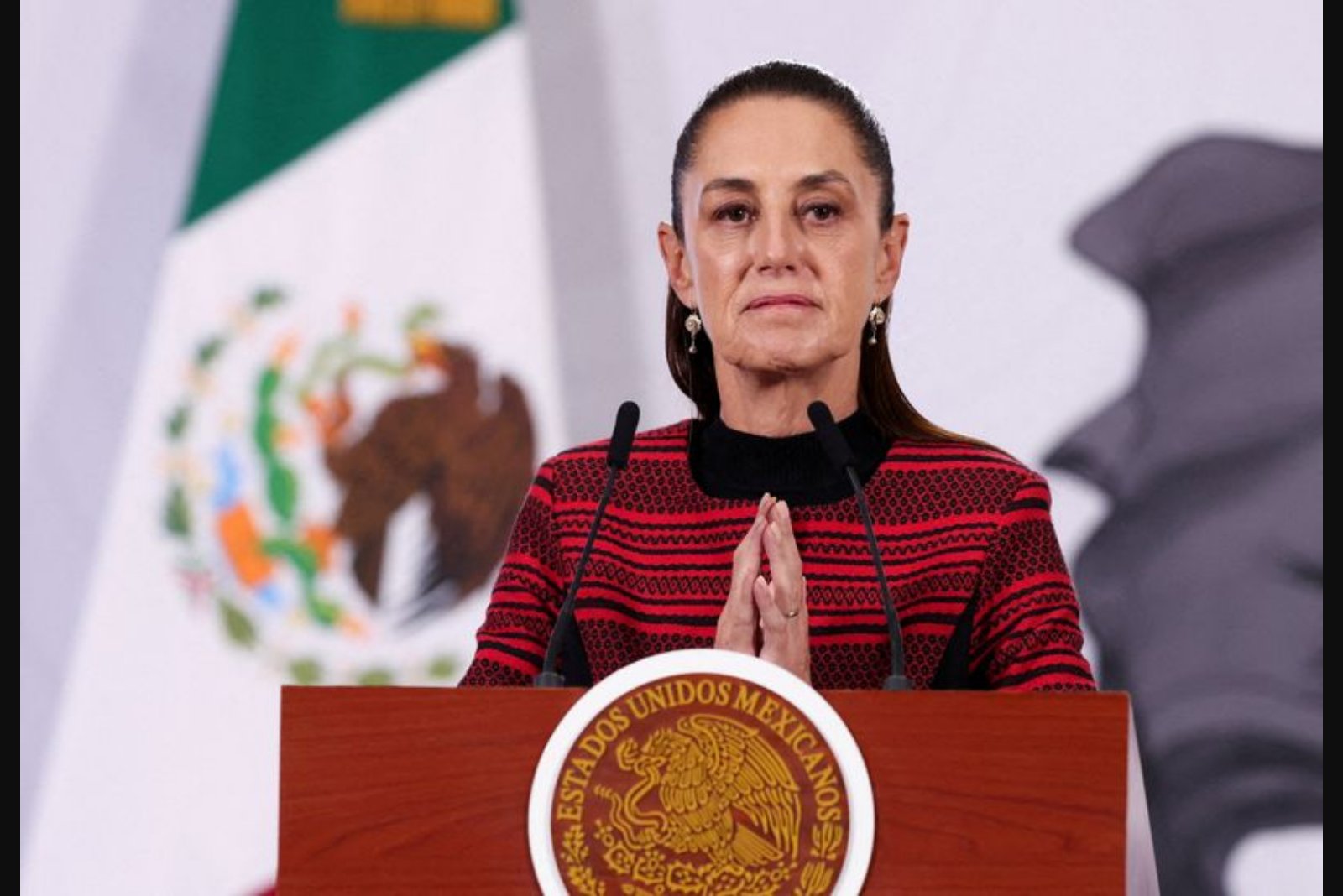
Mexican President Claudia Sheinbaum moved to ease a diplomatic flare-up with the United States after a car crash on Sunday in the northern state of Chihuahua killed two U.S. nationals, people familiar with the matter have said were CIA officers. The U.S. government has confirmed that two staff members from its embassy in Mexico City died in Mexico, but it has not specified which agency employed them. The U.S. intelligence agency in question declined to comment.
At her daily press conference, Sheinbaum reiterated condolences for the dead and emphasized the primacy of the human element in the episode, following public criticism from White House press secretary Karoline Leavitt, who had said that offering sympathy "would be well worth it" when asked about Mexico’s requests for more information on the Americans' activities.
Disputed accounts of the crash
Authorities in Chihuahua have provided a sequence of statements about the crash that have left elements in dispute. State Attorney General Cesar Jauregui said the U.S. nationals were traveling with state-level Mexican officials when their vehicle crashed early on Sunday, killing four people in total. He said the vehicle was part of a convoy that included other state investigators and soldiers from the Mexican Army, returning from an operation to destroy clandestine drug laboratories.
Jauregui subsequently clarified that the U.S. nationals had not taken part in the raid itself. According to his later statement, the Americans had been conducting a separate drone training session and had received a ride back from the convoy that was returning from the laboratory operation. That account, however, has been questioned by other actors involved in reporting on the incident.
Two former U.S. officials, speaking on condition of anonymity, have told reporters that the Americans who died were employed by the Central Intelligence Agency. The identities of the deceased Americans were first reported by a Mexican journalist. Other reporting has suggested there may have been more U.S. officers in the area during the operation and that some wore uniforms of the Chihuahua state investigative agency, but those specific details have not been confirmed.
Diplomatic and political fallout
The deaths have reignited an already sensitive debate over U.S. involvement with Mexican security forces. The presence of American personnel in counter-narcotics operations is politically charged in Mexico, where the president has consistently said she supports intelligence sharing and cooperation but will not permit U.S. agents or forces to conduct operations on Mexican soil.
That stance contrasts with repeated public calls by U.S. President Donald Trump for more robust use of U.S. military power against Mexican drug cartels and his suggestion that Washington could act unilaterally if it judged Mexican efforts insufficient.
In response to the incident, Mexico's federal government dispatched a diplomatic note to the U.S. embassy seeking an explanation for the Americans' presence in Chihuahua. President Sheinbaum also said her government would examine whether Mexico’s national security law had been violated.
The episode has created strain inside Mexico as well. The state of Chihuahua is governed by the opposition National Action Party, and the incident has produced tensions between the federal government and state authorities. The national senate has summoned Chihuahua Governor Maria Campos to provide testimony on the events.
Observers warn of potential consequences
Security analysts have cautioned that the diplomatic confrontation could have unintended consequences for Mexico's president and for bilateral cooperation. One security expert noted that factions in Washington advocating unilateral U.S. military action against cartels might use the episode to argue that collaboration with Mexico has failed, potentially strengthening calls for independent U.S. measures.
Separately, previous reporting disclosed that the U.S. intelligence agency in question has executed covert programs in Mexico, including training and equipping select Mexican units tasked with capturing high-profile cartel figures. Those activities have been described as part of the broader, long-running U.S. role in counter-narcotics efforts in the country.
What remains unresolved
Key details about the crash and the full circumstances of the Americans' presence remain unresolved. Mexican officials have issued differing descriptions of whether the Americans participated in the raid, provided training, or were in another role altogether. U.S. authorities have confirmed the deaths of two embassy staffers but have not detailed the agency that employed them. Independent verification of some reporting about additional American officers and uniforms on the scene has not been made public.
As both governments seek further information, the incident continues to shape debates about the limits and mechanics of bilateral security cooperation, the domestic political balance in Mexico, and the risk that diplomatic friction could alter how the two countries address cartel-related violence.