
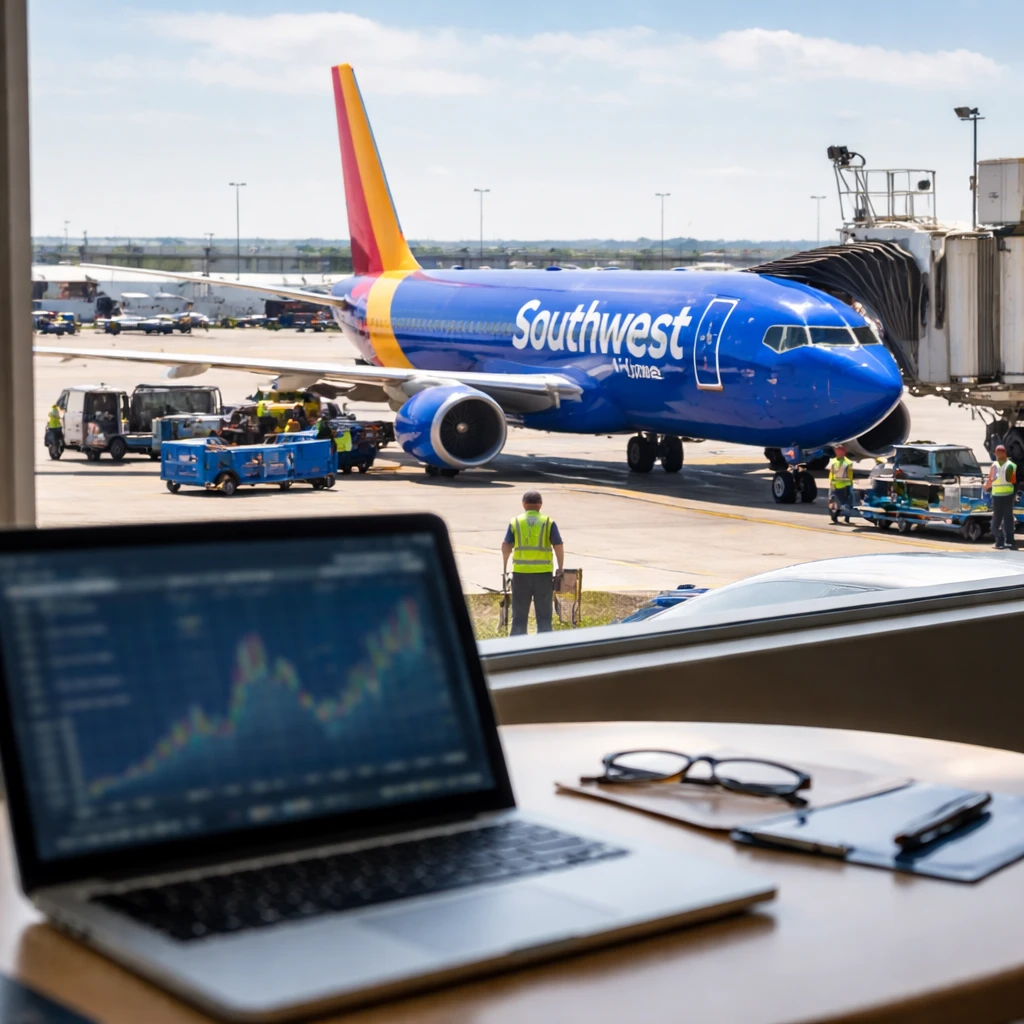
Raymond James raised its price target on Southwest Airlines Co. (NYSE: LUV) to $55 from $45 and kept an Outperform rating on the stock. The firm framed the move as reflecting an asymmetric risk/reward profile and a backdrop of generally skeptical investor sentiment, which it said supports reiterating the Outperform view.
In its comments, Raymond James said Southwest's recent results "speak for themselves," while also acknowledging it is still early in the company’s recovery story. The firm explicitly disagreed with a line of investor concern that the carrier's second-quarter 2026 revenue outlook calls into question the durability of its relative margin recovery or implies a loss of market share, noting that revenue is running ahead year over year.
According to Raymond James, Southwest's second-quarter 2026 pretax margin guidance ranks second only to Delta Air Lines Inc. among the Big 5 U.S. carriers. The analyst noted that this margin positioning is notable because Southwest does not have premium cabin exposure, an extensive long-haul international network, or a refinery asset that Delta operates, yet still projects strong pretax margins.
The firm added that it expects additional realization of relative value from Southwest over coming quarters and years. That view underpins the higher price target and continued Outperform recommendation.
Context and implications
Raymond James’ assessment centers on margin performance as the key differentiator. The firm sees the combination of current results and skeptical sentiment from investors as creating a favorable asymmetric risk/reward, and it expects continued unlocking of value rather than deterioration.
What remains uncertain
- Raymond James acknowledged that it is early in the recovery process, signaling that the trajectory of margins and revenue will require further confirmation over time.
- The firm directly disputed concerns that second-quarter 2026 guidance undermines margin durability or signals market share loss, but those investor concerns remain a point of debate.
Overall, Raymond James is taking a constructive stance on Southwest’s near-term profitability prospects and longer-term relative valuation, while recognizing that additional quarters of data will be important to validate the trajectory.