
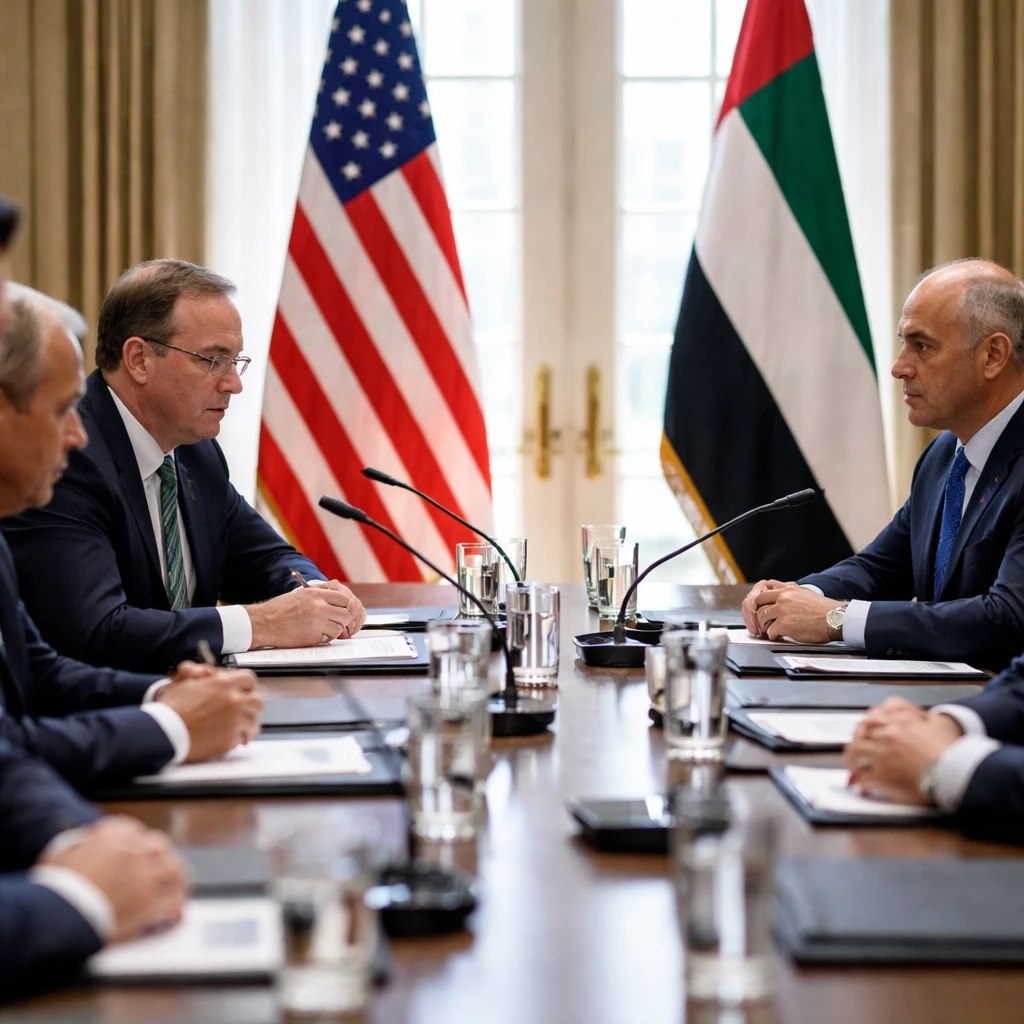
White House National Economic Council Director Kevin Hassett said on Monday that a currency-swap line for the United Arab Emirates would likely not be necessary, despite recent discussions between UAE and U.S. officials about establishing such a financial safety net.
UAE Central Bank Governor Khaled Mohamed Balama raised the possibility of a currency-swap line during meetings in Washington with Federal Reserve officials and Treasury Secretary Scott Bessent, according to reporting noted during the exchanges. Balama said the UAE has avoided the most severe economic fallout from the conflict in Iran so far, but that the country might require a financial backstop if the situation worsens.
Speaking on CNBC, Hassett described the UAE as an "incredibly valuable ally" and conveyed confidence that the U.S. Treasury would take action to help if it became necessary. He added, however, "I think that it probably won’t be necessary," and noted he had not yet discussed the specific matter with Bessent.
The discussion in Washington follows a precedent in which the United States established a similar stabilization arrangement last fall to support the Argentine peso ahead of midterm elections. That move was described as having been important for the political standing of Argentine President Javier Milei, who is identified as an ally of President Trump.
Hassett also referenced a recent assessment from President Trump that talks between the U.S. and Iran have been "moving forward very positively," a comment he suggested could reduce the likelihood of conditions that would force the UAE to seek broad financial assistance.
Context and implications
The remarks by Hassett underscore that U.S. officials are weighing requests for financial tools that central banks sometimes use to stabilize currencies, while also recognizing current assessments that a large economic shock to the UAE is not imminent. At the same time, UAE officials have positioned contingency planning in Washington by raising the swap option with senior U.S. financial counterparts.
Hassett's statements left open the possibility that U.S. assistance could be provided if circumstances changed, but affirmed current expectations that a formal swap line will likely not be required.