
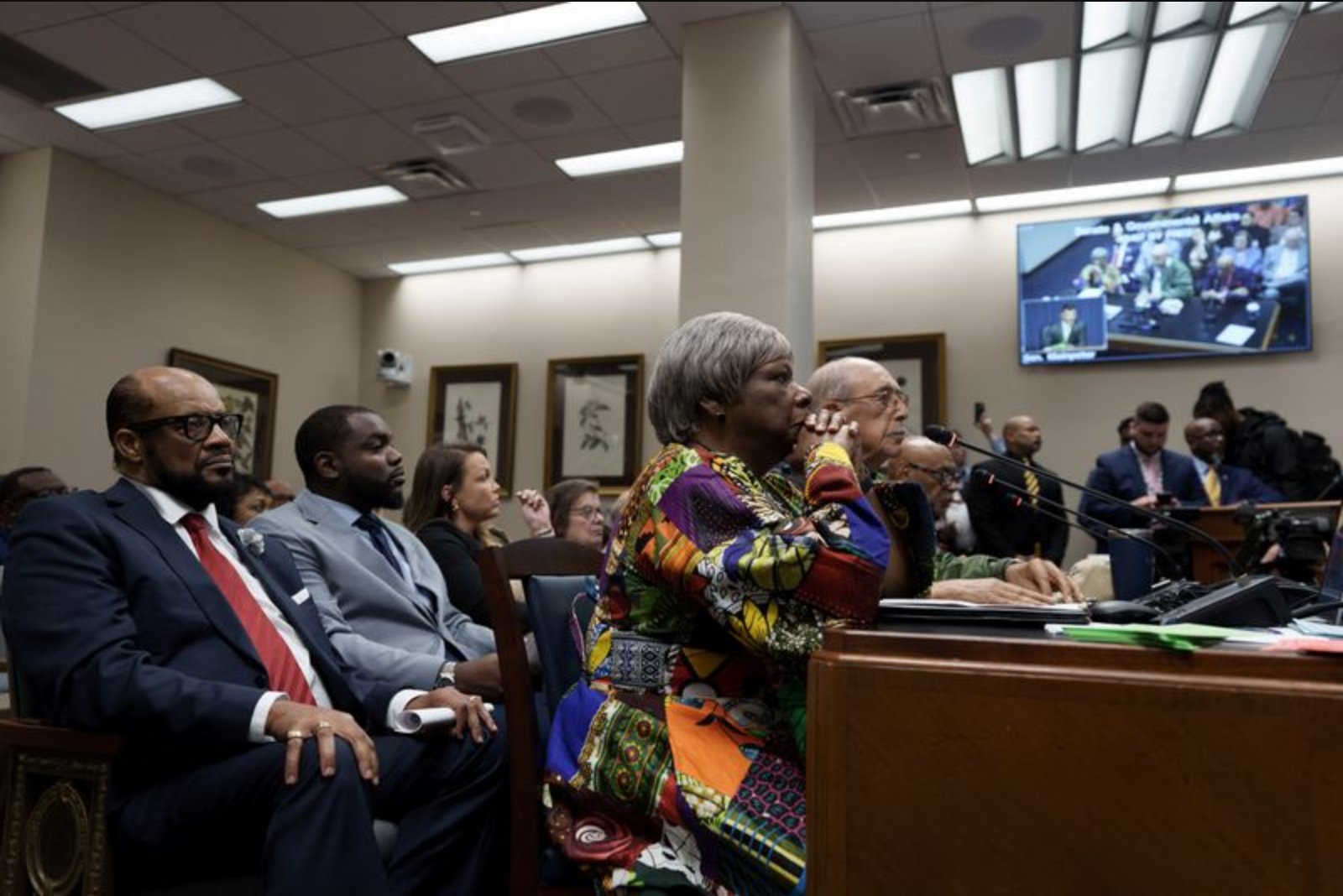
The Louisiana Senate, controlled by Republicans, on Thursday advanced a redrawn congressional map that would eliminate one of the state's two Democratic-held, majority-Black U.S. House districts. The chamber approved the plan 27-10 on a strictly party-line vote, and the legislation now proceeds to the state House of Representatives, where Republicans hold a better-than two-thirds majority.
Lawmakers moved quickly after a recent U.S. Supreme Court ruling, issued roughly two weeks earlier, that significantly weakened legal protections for districts designed to concentrate minority voters. That decision prompted a wave of redistricting activity in several Republican-led Southern states, with Tennessee, Alabama and South Carolina among those that have either broken up Democratic-leaning districts or initiated steps to do so.
Proponents of the new Louisiana map say it is drawn for partisan reasons rather than racial considerations. Supporters in the Senate, including the bill's sponsor, state Senator Jay Morris, framed the changes as a shift in political boundaries intended to reflect partisan objectives rather than to target racial groups.
"This Senate should seek to support a map that gives everyone a voice," Democratic state Senator Katrina Jackson-Andrews said from the Senate floor on Thursday, criticizing the proposal for its effect on Black voters.
Civil rights groups, voting rights advocates and Democratic lawmakers have condemned the plan as diluting the electoral influence of Black residents in Louisiana. Black residents account for about one-third of the state's population, and critics contend the proposed lines would reduce the number of districts where Black voters can elect their preferred candidates.
Under the current congressional layout, Louisiana contains two majority-Black districts centered on New Orleans and Baton Rouge. The Supreme Court had ruled that the existing map was unconstitutional, finding that lawmakers had placed too much emphasis on race when drawing the boundaries. The newly proposed map would instead create a single Democratic-leaning district that links the two cities, potentially setting up a contest between the two Democratic incumbents who represent those areas, Troy Carter and Cleo Fields.
The redistricting move came against the backdrop of a disrupted election timeline. Republican Governor Jeff Landry suspended congressional primary elections a day after the high court decision and only two days before early in-person voting was scheduled to begin; thousands of absentee ballots had already been returned by mail when the suspension was announced.
Analysts and partisan actors note that this cycle of redistricting is part of a broader national battle that could give Republicans an electoral advantage as they work to maintain a narrow majority in the U.S. House this fall. At the same time, the political environment retains uncertainties, with Democrats still regarded as favored by some to win control of the House amid factors affecting the presidential approval backdrop.
If the new lines remain in place for November's midterm elections, they would likely result in Republicans capturing five of the state's six congressional districts, according to assessments made public during the debate.
Contextual note: The bill now moves to the state House for consideration, where a Republican supermajority makes passage likely.