
Overview
The U.S. Supreme Court on Thursday allowed a federal rule that permits mifepristone - the drug commonly used in medication abortion - to be prescribed through telemedicine and dispensed by mail to remain in effect while litigation continues. The decision restores, for the moment, a 2023 rule issued by the U.S. Food and Drug Administration that had relaxed an earlier requirement that an in-person clinician visit be required to receive the drug.
Immediate legal steps
The action by the justices granted emergency requests from Danco Laboratories and GenBioPro, two manufacturers of mifepristone, to lift a block that had been imposed by the New Orleans-based 5th U.S. Circuit Court of Appeals. That court had on May 1 ordered that a prior federal requirement - requiring an in-person clinician visit to obtain mifepristone - be reinstated. The pharmaceutical makers appealed the 5th Circuit decision, and the Supreme Court previously put that order on hold in interim decisions on May 4 and May 11 to provide more time for deliberation.
Two members of the Court, Justices Samuel Alito and Clarence Thomas, registered dissent from the Supreme Court's decision to allow the 2023 FDA rule to remain operative while the dispute runs its course in the lower courts.
Case context and political backdrop
The litigation has returned the issue of abortion access to the high court's docket at a politically charged moment, with November congressional elections approaching and Republicans seeking to hold their majorities. The broader legal fights over abortion follow from the Supreme Court's 2022 decision in Dobbs v. Jackson Women’s Health Organization, which overturned the prior Roe v. Wade precedent. The Dobbs ruling prompted a wave of state-level restrictions - the article's summary notes 13 states moved to near-total bans - and propelled a growth in medication abortion.
Parties and prior developments
A range of actors has contested the FDA's regulatory approach to mifepristone. Louisiana, which has a near-total ban on abortion, sued the FDA in 2025 arguing that the 2023 rule eliminating the in-person dispensing requirement was unlawful and contributed to a sharp increase in medication abortions despite the state's restrictions. The state alleged that the FDA had ignored risks such as sepsis and hemorrhaging. The drugmakers Danco Laboratories and GenBioPro intervened in the litigation to defend the regulation.
The Trump administration at the time opposed Louisiana's challenge, citing an ongoing review of safety regulations for mifepristone and contending the state lacked legal standing to bring the suit. In April, U.S. District Judge David Joseph in Lafayette declined to enjoin the regulation but agreed with the administration to pause the case pending the review. A three-judge panel of the 5th Circuit later blocked the regulation, finding Louisiana was likely to prevail in its challenge, which prompted the drugmakers to seek relief at the Supreme Court.
Regulatory and clinical claims
The FDA has maintained that mifepristone was approved based on scientific evidence and remains safe and effective when used as directed. The drug was originally approved in 2000. Medication abortion typically uses a two-drug regimen, mifepristone followed by misoprostol, and is generally used to end a pregnancy within the first 10 weeks. The article notes that medication abortion accounts for roughly two-thirds of U.S. abortions.
Reproductive health experts, as cited in the reporting, point to hundreds of clinical trials, studies and medical reviews that have found mifepristone to be safe, with serious complications described as extremely rare. Proponents of access have argued that opponents of the drug have mischaracterized the evidence, including studies concerning telehealth and mail-based dispensing, where adverse events and serious complications have been reported as rare.
Prior Supreme Court action and standing issues
The article highlights that in 2024 the Supreme Court unanimously rejected an earlier attempt by anti-abortion groups and some doctors to reverse FDA rules that had loosened access to mifepristone, on the ground that those plaintiffs lacked the legal standing necessary to pursue their challenge. That ruling left intact the regulatory framework until the present series of challenges and appeals unfolded.
Commercial and regulatory stakes
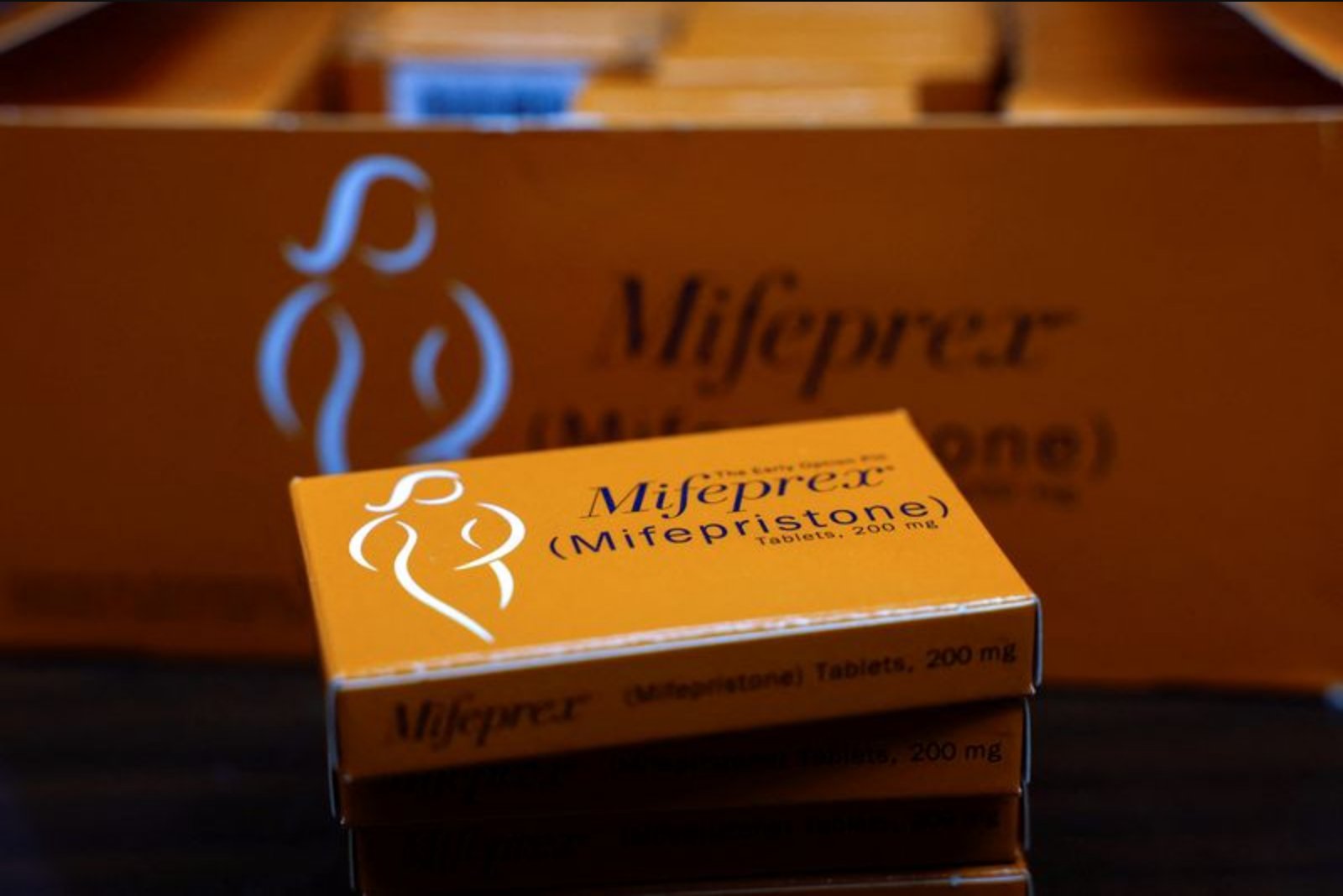
For the manufacturers involved, the litigation carries commercial significance. Danco's sole marketed product is the brand-name mifepristone marketed as Mifeprex, and GenBioPro reportedly derives most of its revenue from the generic formulation. The enforcement or rollback of dispensing rules directly affects distribution channels - including telemedicine and mail delivery - that have broadened access since the 2023 regulation.
Observers and advocacy positions
Abortion rights advocates describe the current legal challenges to mifepristone as the most consequential threat to abortion access since the Dobbs decision. Anti-abortion advocates contest the safety of the drug and the appropriateness of relaxed dispensing rules. Meanwhile, some critics of the Trump administration's review of mifepristone have labeled it politically motivated and unnecessary given the accumulated studies supporting the drug's safety; they contend such a review could produce tighter restrictions.
What remains unresolved
With the Supreme Court's order allowing continued mail and telemedicine access pending further legal proceedings, the ultimate disposition of the challenge remains undecided. The procedural posture - including past pauses and interim rulings - indicates additional litigation and administrative action will determine whether the 2023 FDA rule survives in the long term.
Impacted sectors - Pharmaceuticals and health care delivery systems are central to the dispute, with potential regulatory changes affecting manufacturers, telehealth providers and the channels by which medication abortion is supplied. Political and legal uncertainty also intersects with policy and electoral dynamics.