
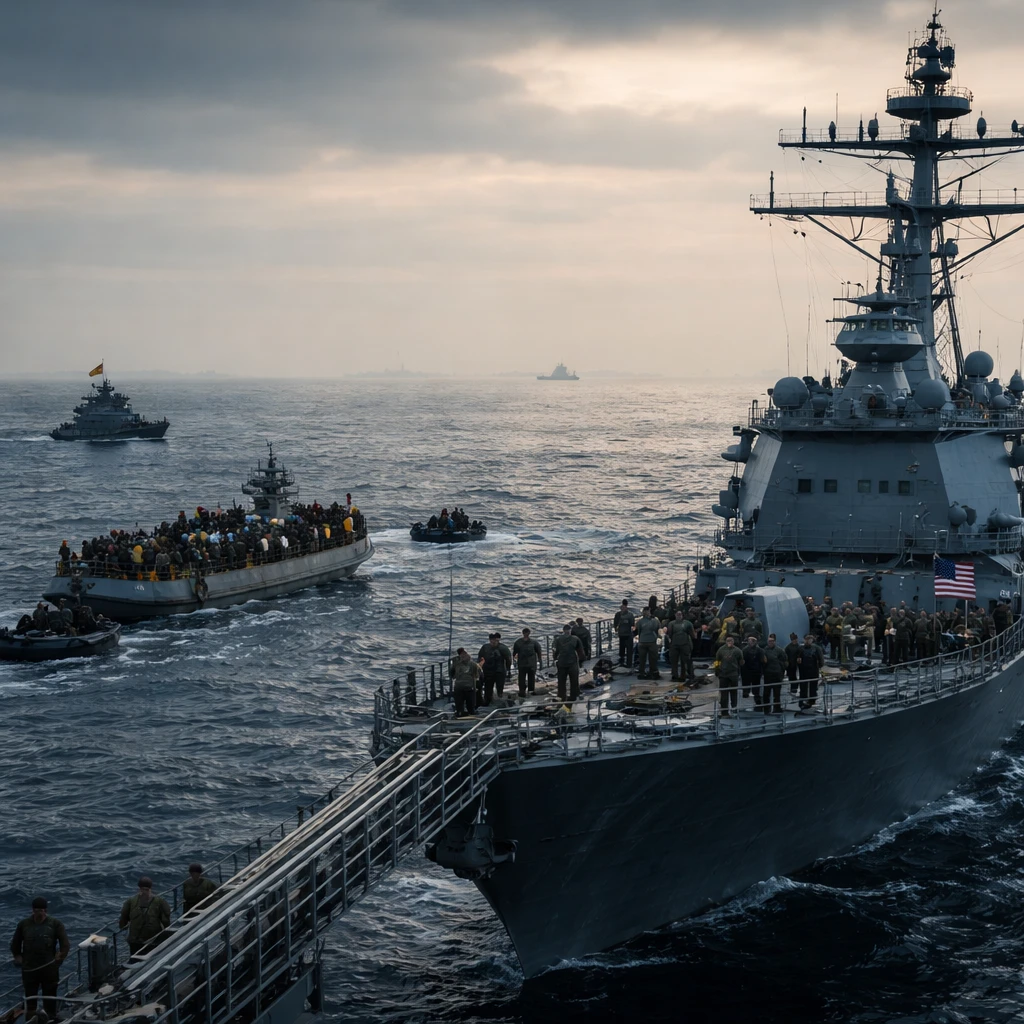
President Donald Trump said on Monday that the United States will keep its naval blockade of Iran in place until an explicit deal is struck with Tehran, as both sides face an uncertain window for further negotiations ahead of a ceasefire that is due to end later this week.
In a post on his social media platform, the president asserted that he was "winning the war by a lot," and rejected media narratives he characterized as contrary to that assessment. He again maintained that Iran's military and missile capabilities had been "wiped out."
In the same post he wrote: "THE BLOCKADE, which we will not take off until there is a 'DEAL,' is absolutely destroying Iran."
The president had previously warned he was prepared to order strikes on Iran's critical infrastructure if a diplomatic settlement could not be reached. Those remarks followed renewed confrontations over the weekend in which U.S. forces said they fired on and then seized an Iranian vessel they accused of attempting to breach the blockade.
Over the weekend Tehran briefly reopened the Strait of Hormuz, a key shipping channel, but then closed it again. Iranian authorities said the waterway will remain shut until the U.S. blockade is lifted.
Attention this week centers on whether U.S. and Iranian representatives will meet for additional negotiations before the ceasefire expires on Wednesday. Iran's Speaker of the Parliament and chief negotiator, Mohammad Bagher Ghalibaf, criticized the idea of talks under pressure, saying Iran would not accept negotiations "under the shadow of threats" and warning that Tehran had prepared "new cards" to deploy on the battlefield.
Those statements suggested a reduced appetite in Tehran for further direct talks with Washington. At the same time, a separate report indicated that Iran had informed regional mediators it planned to send a delegation to Pakistan on Tuesday for a second round of ceasefire discussions with the United States. Public statements by Iranian officials, however, said no decision had been made on holding additional talks with U.S. representatives.
In an interview earlier in the day, President Trump confirmed a U.S. delegation led by Vice President JD Vance will travel to Islamabad for peace talks this week. He also described it as "highly unlikely" the ceasefire would be extended.
The coming days are likely to determine whether diplomatic channels can produce an agreement before the ceasefire lapses, or whether military confrontation and economic pressure will continue to shape the situation. For now, both the maintenance of the blockade and the mixed signals about negotiations leave the immediate path forward unclear.