
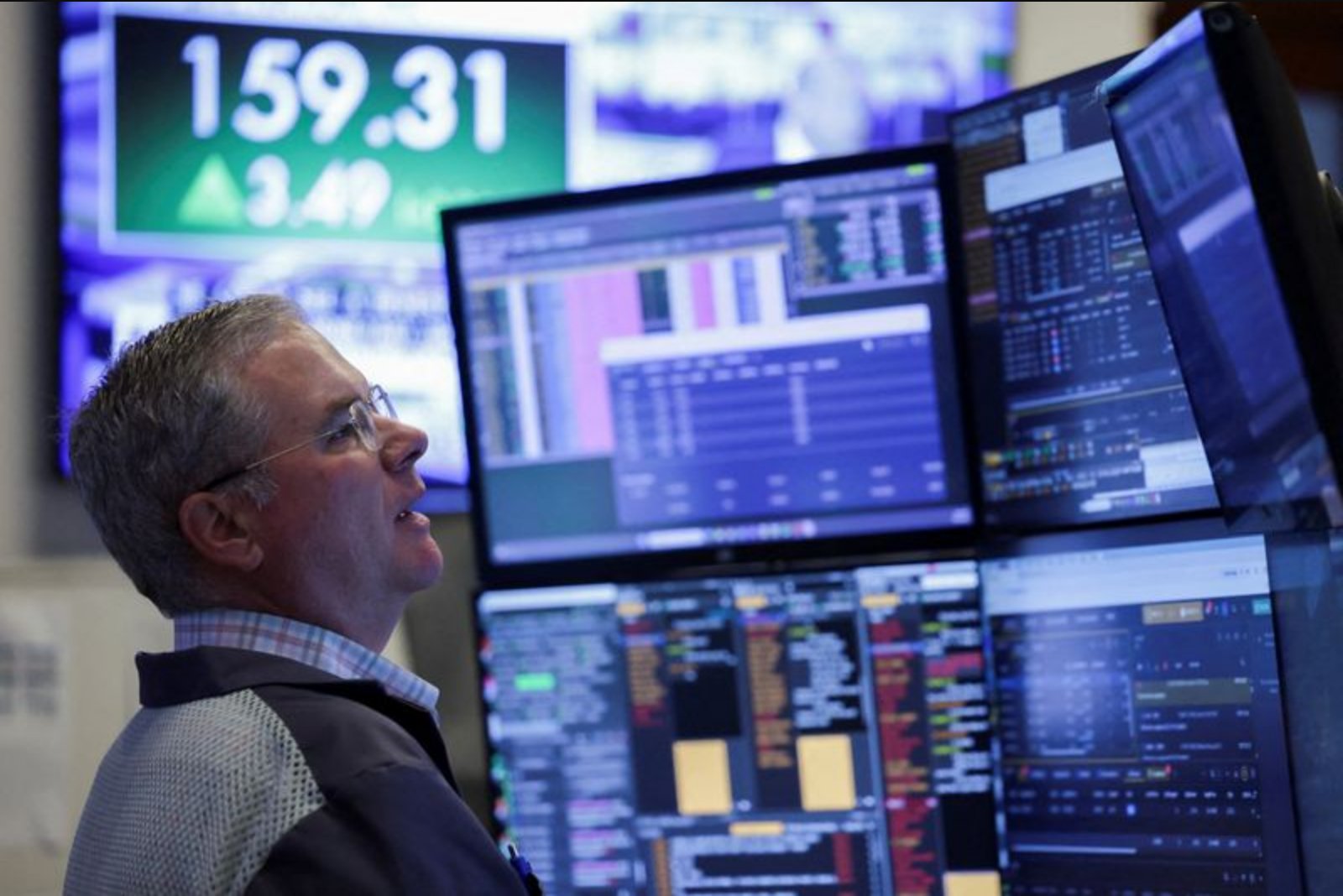
NEW YORK, April 23 - U.S. equities have staged a brisk rebound, prompting investors who had been waiting on the sidelines to redeploy capital amid a mix of improving geopolitical signals, encouraging corporate results and anticipation of AI-driven spending.
After an 8% decline in the weeks following the U.S.-Israeli attack on Iran on February 28 and concern about potential disruption to oil shipments through the Strait of Hormuz, the S&P 500 has climbed 11% from its March low and in recent sessions reached successive record closing highs. A ceasefire between the U.S. and Iran has helped ease the immediate energy and inflation worries that followed the attack, reducing a major source of market risk.
Investors have cited a simple, powerful motivator for their renewed participation: the fear of missing out, commonly abbreviated as FOMO. "The market will do whatever it has to do to prove the most people wrong. It’s rallied 10% here in a very short period of time. Most people missed it," said Todd Morgan, chairman of Bel Air Investment Advisors. "We’ve slowly added new money back into the market the last week or two, believing that there’s a light at the end of the tunnel."
For many market participants, two forces are at work. First, a strong start to the earnings season and first-quarter corporate profits that have shown resilience give investors confidence that businesses are holding up even as policy and geopolitical noise persists. Second, expectations that companies will increase capital spending on AI-related infrastructure - including data centers and other computing capacity - are reshaping sectoral positioning and driving interest in areas tied to technology and industrial investment.
Risk appetite had been dented by the prospect that conflict in the Middle East could expand into a broader regional war, potentially pushing energy prices higher and feeding global inflation. Those concerns were heightened by the threat of significant disruption to exports through a key global shipping lane. Since the ceasefire, however, some of that immediate market stress has dissipated, allowing investors to refocus on earnings and growth prospects.
"I think the biggest risk right now may be staying on the sidelines too long," said Michael Arone, chief investment strategist at State Street Investment Management. "I think that investors who are trying to time the market may risk losing out on some of this momentum."
Positions in equities appear to be shifting. Data from Deutsche Bank showed that investors’ equity positioning for the week ended April 17 recorded one of its largest weekly jumps since 2010, even though overall positioning remains only slightly above neutral. Portfolio managers and strategists interviewed by market outlets described putting fresh capital to work across technology, industrials and financials, and noted particular interest in AI, data centers, small-cap stocks and select emerging markets.
Market breadth has reflected these moves. The tech-heavy Nasdaq has advanced about 18% from its late March low, while an index of emerging market stocks has risen 15%. Energy names continue to attract attention from investors who expect oil to retain a supply-driven premium for several quarters despite the possibility of some price moderation. Brent crude futures are trading roughly 40% above their late February levels, a factor that keeps energy sector dynamics front and center for portfolio construction.
Investors are also allocating to materials and other commodity-linked sectors to capture two longer-term demand drivers: AI-associated capital expenditures and increased geopolitical uncertainty. Both factors are expected to underpin higher defense and infrastructure spending in coming quarters, which, in turn, could support demand for materials and related commodity prices.
"It’s a bet that the earnings growth story holds and that earnings growth is going to support valuations," said Edward B. O’Gorman, CEO of River Wealth Advisors. "If we get back to a Fed cutting interest rates, that’s a little bit of a tailwind." Expectations for year-over-year earnings growth in 2026 have risen during the year, with estimates moving from 16% in early January to almost 20% last week, according to data from LSEG I/B/E/S. Technology companies account for the bulk of that increase, alongside contributions from energy and materials firms.
Not everyone is allocating only to the largest technology names. Shannon Saccocia, chief investment officer, wealth, at Neuberger Berman, said she expects the equity bounce to broaden beyond a narrow set of mega-cap tech stocks as growth accelerates above trend this year, supporting both corporate earnings and consumer sentiment. "Having people look past the noise of policy uncertainty and focus on the economic aspects and the fundamentals is going to be important this year in terms of being able to capture the moves in the equity market," she said.
For some managers, the secular case for equities is straightforward and not dependent on the daily cadence of ceasefire diplomacy. "I just have a great deal of faith and confidence that the market is going to move higher, especially if you buy quality names," said Bel Air’s Morgan, who highlighted AI-driven profit growth as a probable magnet for previously sidelined cash.
Systematic strategies have contributed to strong inflows into the market rally to date, and analysts are watching whether retail investors—who have been slower to re-enter than institutional players—will begin to chase recent upside. "I wouldn’t be surprised to see retail finally start chasing this rally," said Adam Turnquist, chief technical strategist for LPL Financial. He noted that the S&P 500’s move above the 7,000 level could draw additional buyers into the market. "We’re not really overbought internally ... We would argue this breakout is really just getting started," Turnquist added.
Portfolio managers quoted in market coverage said they are balancing exposure to high-growth technology holdings with positions in industrials, financials, energy and materials to reflect both the upside from AI-related spending and the lingering geopolitical uncertainties that can affect commodities and defense-oriented sectors.
Context and outlook
Investors are confronting a market environment in which improving diplomatic developments have reduced immediate tail-risk from Middle East hostilities, corporate results have so far shown durability, and forecasts for earnings growth have been revised upward for next year. Those factors together are prompting a reallocation into equities, driven in part by FOMO and in part by conviction around AI-linked investment trends.