
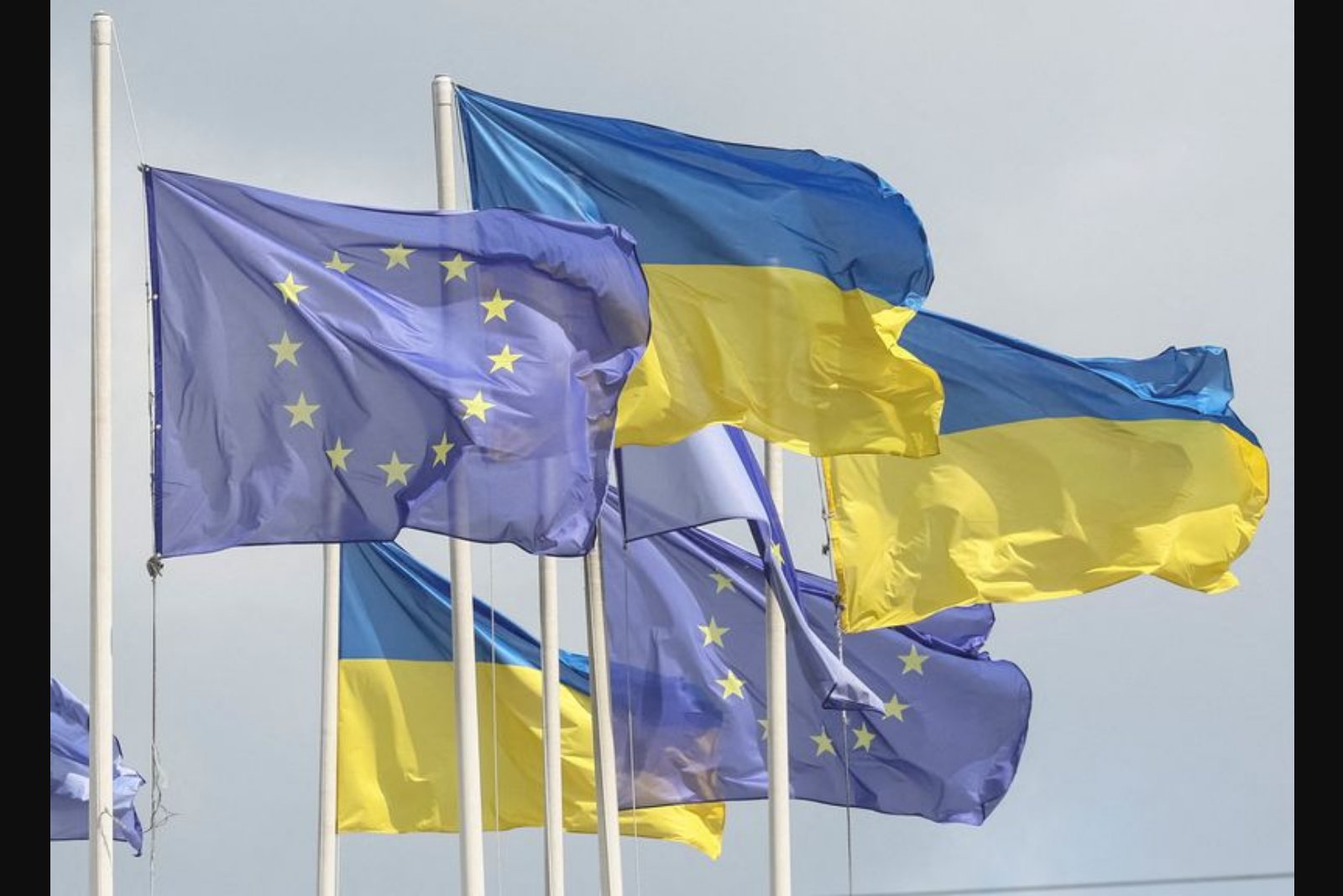
The European Union on Thursday completed formal approval of a 90-billion-euro loan to Ukraine and a 20th set of sanctions on Russia, delivering a significant financial bridge for Kyiv just before an informal summit of EU leaders in Cyprus that Ukrainian President Volodymyr Zelenskiy will attend. The loan - equivalent to about $105 billion using the published exchange rate - is designed to meet roughly two-thirds of Ukraine's projected financing needs for the next two years.
European Commission President Ursula von der Leyen framed the move as a reinforcement of the bloc's support. "We are on our way to Cyprus with good news," she said, adding that as "Russia doubles down on its aggression, we are doubling down on our support to the brave Ukrainian nation enabling Ukraine to defend itself and putting pressure on Russia's war economy."
The formal sign-off followed an earlier approval by EU ambassadors on Wednesday, made possible after Hungary lifted its veto. The delay caused by that veto had held up the package for several months.
As he arrived in Cyprus, President Zelenskiy reiterated the intended effects of the package in a post on X. "This package will strengthen our army, make Ukraine more resilient, and enable us to fulfill our social obligations to Ukrainians, as set out in law," he said. He also said the measures should be followed by further sanctions steps. Zelenskiy is scheduled to dine with the EU leaders while in Cyprus.
Only half of the approved 90 billion euros will be disbursed to Ukraine this year, with the remainder slated to arrive in 2027. The bulk of the assistance is earmarked for military spending, while approximately 17 billion euros each year are allocated to general budget needs such as health and education.
Officials and economists said the approval provides a crucial lifeline for Kyiv and averts the deep cuts to public services that had been projected if the loan had not been released. Prior economic assessments had warned that Ukraine would begin to run out of money by June absent timely disbursement, which would have required sharp reductions in public spending. Nonetheless, some economists and officials cautioned that Kyiv may still require additional funding to meet its full military needs this year.
The informal Cyprus summit will not produce binding decisions, but it will serve as a forum for leaders to discuss several pressing topics. In addition to Ukraine and the newly approved sanctions, talks will cover the war in the Middle East, measures to address energy costs and the contours of the EU's next long-term budget.
For part of the summit, leaders from Egypt, Jordan, Lebanon, Syria and the Gulf Cooperation Council will join EU heads of state for a shared lunch on Friday.
On the energy front, the European Commission presented plans on Wednesday aimed at reducing electricity taxes and coordinating the summer refill of national gas storage facilities, measures intended to blunt the energy impact of the conflict involving Iran. The published documents indicate the Commission will, for the moment, avoid larger market interventions such as capping gas prices or imposing taxes on energy companies' windfall profits - steps that were employed in 2022 when Russia cut gas supplies and prices spiked.
($1 = 0.8553 euros)