
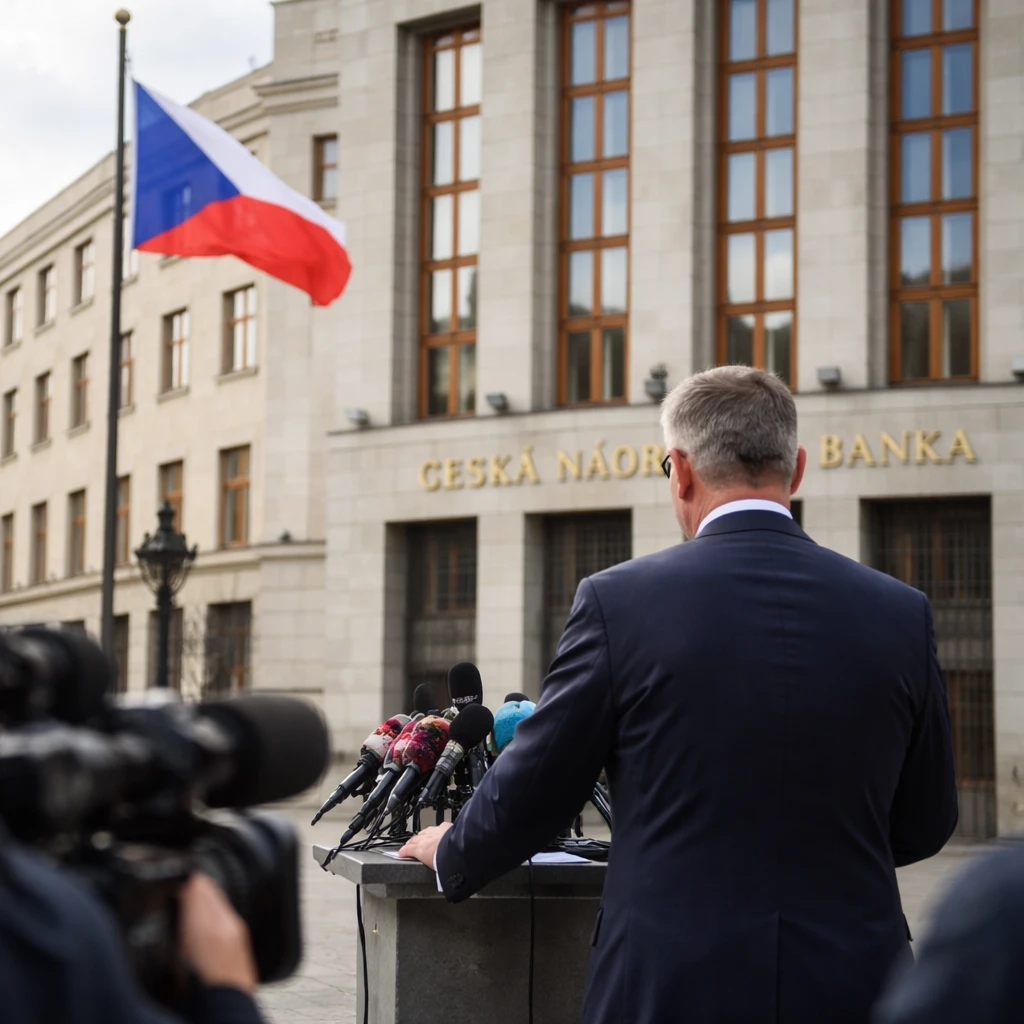
Prime Minister Andrej Babis on Thursday told the public that he believes the Czech National Bank (CNB) should refrain from increasing interest rates, arguing that the country's inflation rate remains one of the lowest in the European Union and that Czech borrowing costs already sit above those prevailing in the euro zone.
Delivering his remarks in a live briefing coinciding with the CNB's regular policy meeting, Babis said he did not see a rationale for a rate rise at this time and voiced a hope that the central bank would opt not to act. He also cautioned that any upward move in policy rates would add difficulties for both households and firms across the country.
Financial markets and analysts, however, were positioned differently ahead of the decision. They priced in a 25 basis point increase in the CNB's main repo rate, projecting the rate to be lifted to 3.75% at the Thursday meeting.
It is important to note that the Czech National Bank operates independently from the government, and its policy choices are made within that framework.
Observers following the briefing highlighted two clear tensions in the debate: the prime minister's public intervention stressing low inflation and the potential burden on households and businesses, and market expectations that the central bank will tighten policy further by raising its policy rate by 25 basis points to 3.75%.
The outcome of the CNB meeting will determine whether the central bank follows market expectations or heeds the government leader's appeal to hold rates steady. Until the central bank announces its decision, both the government stance and market pricing will remain points of attention for investors, businesses and consumers.