
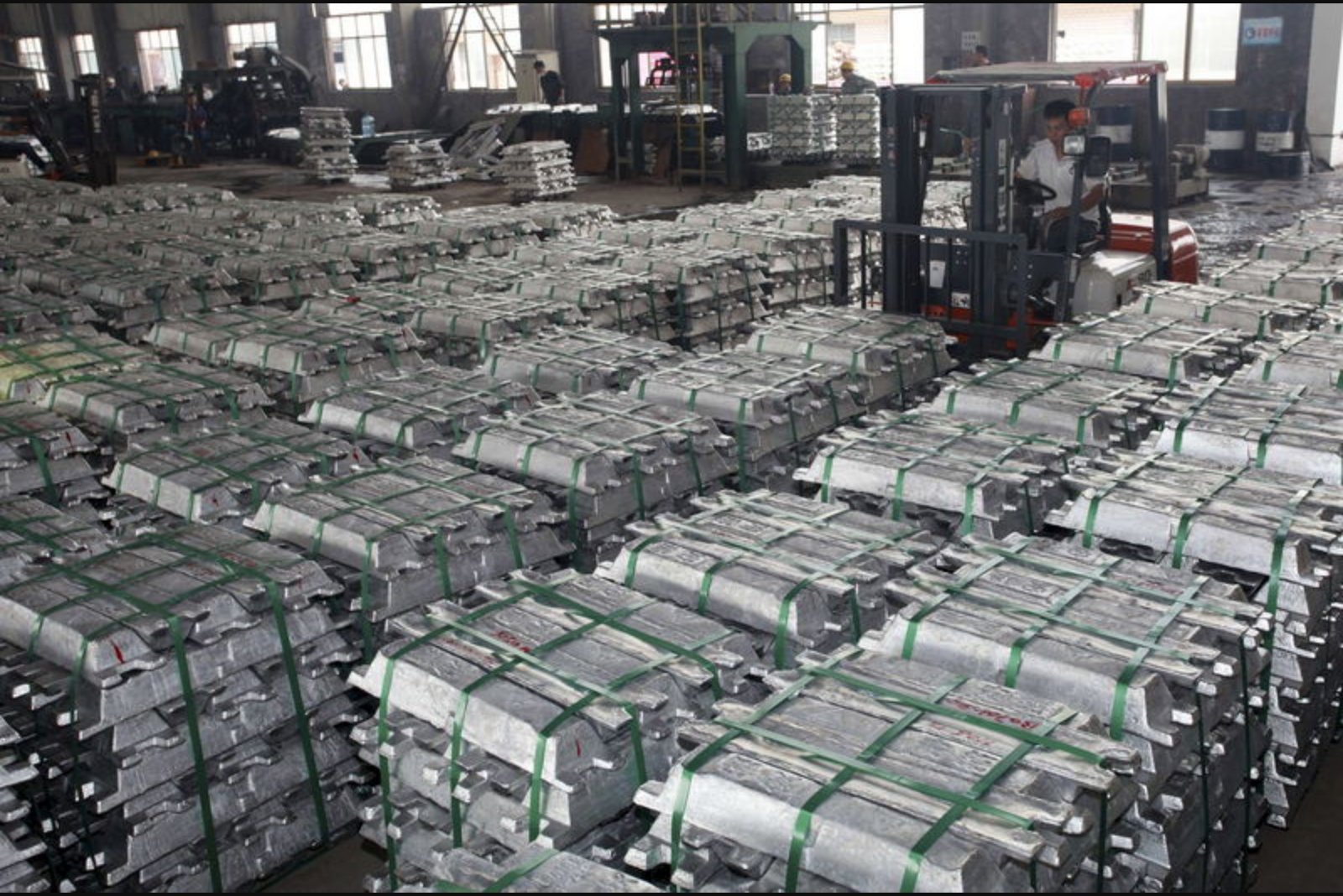
The aluminium market is entering what Citi characterises as a major structural supply shock, driven by disruptions in the Middle East and compounded by already minimal spare capacity and historic low inventories. The bank's analysts say conditions have set up one of the most bullish price configurations seen in decades, with physical and financial dynamics likely to push prices materially higher.
Summary
Citi, which began a bullish outlook on aluminium in mid-2025 when the metal traded around $2,600 a tonne, now forecasts an average price of $4,000 a tonne in the second half of 2026. In a bullish scenario, the bank projects an average of $5,350 a tonne in 2027. Their view rests on structural constraints: China’s output remains capped, ex-China supply growth is inadequate to fill the gap, and the immediate impact of the supply disruption is, in the bank’s phrasing, "already done."
Why inventories matter
Citi highlights that inventories were at 55-year lows heading into the current shock and that spare production capacity is near zero. Those features, combined with elevated costs for substitutes such as copper and plastics, have left the market particularly vulnerable. The bank expects inventories to trend lower and to "draw to fresh all-time lows over the next 6-12 months," with buying of physical inventory and futures hedges contributing to higher prices.
Structural backdrop and supply-demand view
The bank’s analysis is framed by a structural thesis rather than a view that hinges on a rebound in demand. Citi projects a deficit of roughly 2.7 million tonnes this year even under sluggish demand assumptions. Crucially, the analysts state that the market "no longer requires strong demand growth to remain structurally tight." Persistent deficits, they argue, must ultimately be absorbed by inventory drawdowns - a condition Citi describes as the core issue confronting the market.
Buffers, convexity, and the role of hedges
Initially, a range of stock types - hidden, financing, merchant, and pipeline inventories - can soften the immediate impact of physical shortfalls. That is why commodity tightening cycles often prove "volatile, frustrating, and macro-driven rather than immediately explosive," according to Citi. As these cushions shrink and embedded short hedges tied to financing and carry begin to unwind, the analysts warn the market becomes more exposed. Under such conditions, "relatively small shortages can generate disproportionately nonlinear price responses." This potential for outsized moves is the basis for Citi’s view that aluminium retains strong upside convexity despite broader macroeconomic uncertainty.
Risk ceiling and trade exposure
On the downside, Citi considers losses increasingly "self-limiting outside of a severe recession" of a magnitude comparable to either the Volcker-era downturn or the 2008-09 global financial crisis. The bank also identifies two principal market risks: a major risk-off event and a deep global recession. To express their conviction in markets, Citi currently carries two open trade recommendations: a long December 2026 futures position and a long 3,300/3,600 call spread, both of which were initiated in January.
Key points
- Citi expects aluminium inventories to fall to fresh all-time lows over the next 6-12 months, supporting higher prices.
- The bank forecasts an average price of $4,000/t in 2H 2026 and a bull-case average of $5,350/t in 2027, based on constrained supply and limited substitution at current relative costs.
- Sectors impacted include metals and mining, industrial manufacturing, and commodity trading activities, as well as industries reliant on aluminium feedstock and hedging strategies.
Risks and uncertainties
- A major risk-off event could trigger sharp corrective moves in commodity markets, undermining the bullish outlook - affecting financial markets and commodity-linked equities.
- A deep global recession remains a tail risk that could reduce demand materially and test the downside, particularly for industrial and manufacturing sectors that use aluminium intensively.
- As financing- and carry-related hedges unwind, volatility could increase abruptly, affecting trading desks, merchant balance sheets, and firms relying on short-term inventory financing.
Conclusion
Citi’s case for meaningful aluminium price appreciation is constructed around a tight structural supply picture, multi-decade-low inventories, and limited ability for substitutes to fill gaps at current relative prices. The bank sees inventory drawdowns as the central mechanism through which deficits will be resolved and warns that once buffering stocks and embedded hedges are exhausted, the potential for nonlinear price moves rises. While the analysts note downside is likely contained unless a severe recession materialises, they identify a major market sell-off or deep global downturn as the key scenarios that could invalidate their bullish thesis.