
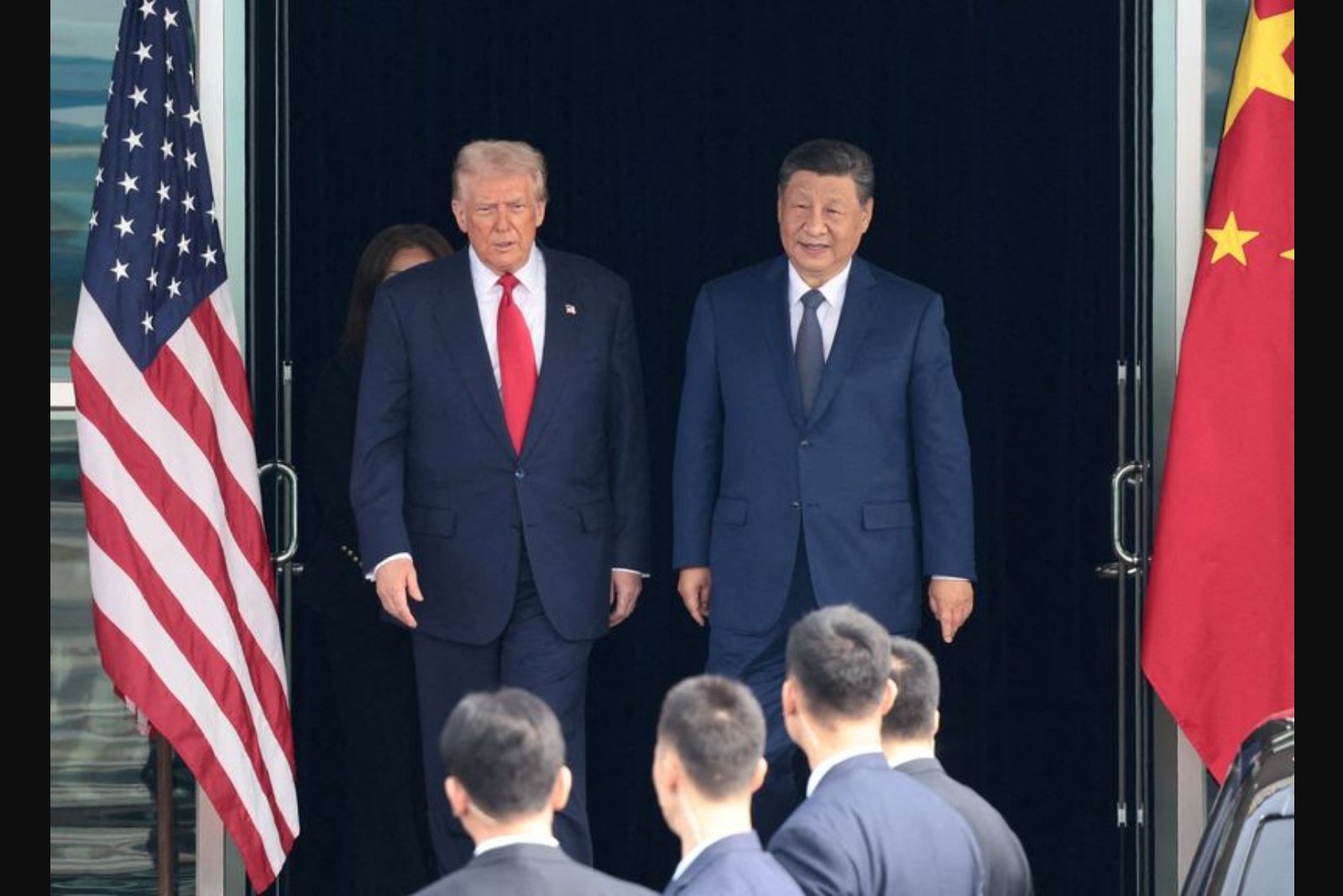
Chinese President Xi Jinping told long-time acquaintances in Iowa that the appetite among citizens in both countries for interpersonal exchange and cooperation remains unchanged even as official ties evolve, according to a written reply published ahead of an expected April meeting with U.S. President Donald Trump.
In his response to a New Year greeting from Iowa businessman Luca Berrone, Xi stated: "The hope of U.S.-China relations lies in the people." Xi's note was released on Monday and revisits connections first formed when he led a Hebei provincial delegation to Iowa in May 1985 to study food production in that U.S. sister-state.
The correspondence builds on earlier gestures to the same circle. In 2022, Xi sent a New Year greeting to Sarah Lande, another acquaintance from the Iowa visit, in which he said global stability depended in part on steadier U.S.-China relations following strains experienced during the pandemic.
The exchange comes as Washington and Beijing navigate a recent period of frayed and then recalibrated relations. The two countries experienced a turbulent 2025 that included a public threat by President Trump in October to impose additional 100% tariffs on imports from China. That same year, however, also saw renewed grassroots connectivity: the prospect of a TikTok ban in the United States prompted many American users to explore a Chinese social media app called RedNote, and a trend dubbed "Chinamaxxing" - the online adoption of Chinese cultural habits - became prominent among some members of America's Gen Z, driven in part by a perception of China as a rising technological power.
On the diplomatic front, high-level ties moved toward relative stabilization after talks between Xi and Trump in South Korea in October produced a one-year extension of a trade truce. Under the terms reported following those discussions, the United States agreed to scale back some tariffs while Beijing committed to a number of actions, including tougher measures against illegal fentanyl trafficking, resumption of purchases of U.S. soybeans and a pause in curbs on rare earth exports.
The leaders then held a surprise phone call in early February that touched on Taiwan and other security concerns. According to President Trump, Xi also indicated China would consider increasing its purchases of U.S. soybeans, a point of direct relevance to Iowa producers.
President Trump has said he plans to visit China in April, and he has stated that Xi Jinping would travel to the United States toward the end of 2026. The written exchange with Iowa contacts arrives in this context of resumed engagement at both the people-to-people level and among heads of state, even as substantive policy decisions and bilateral negotiations continue to unfold.
Contextual note: The contents above reflect the text of Xi's reply and the sequence of public interactions and statements between the two leaders and their respective countries as described in the source material.