
Overview
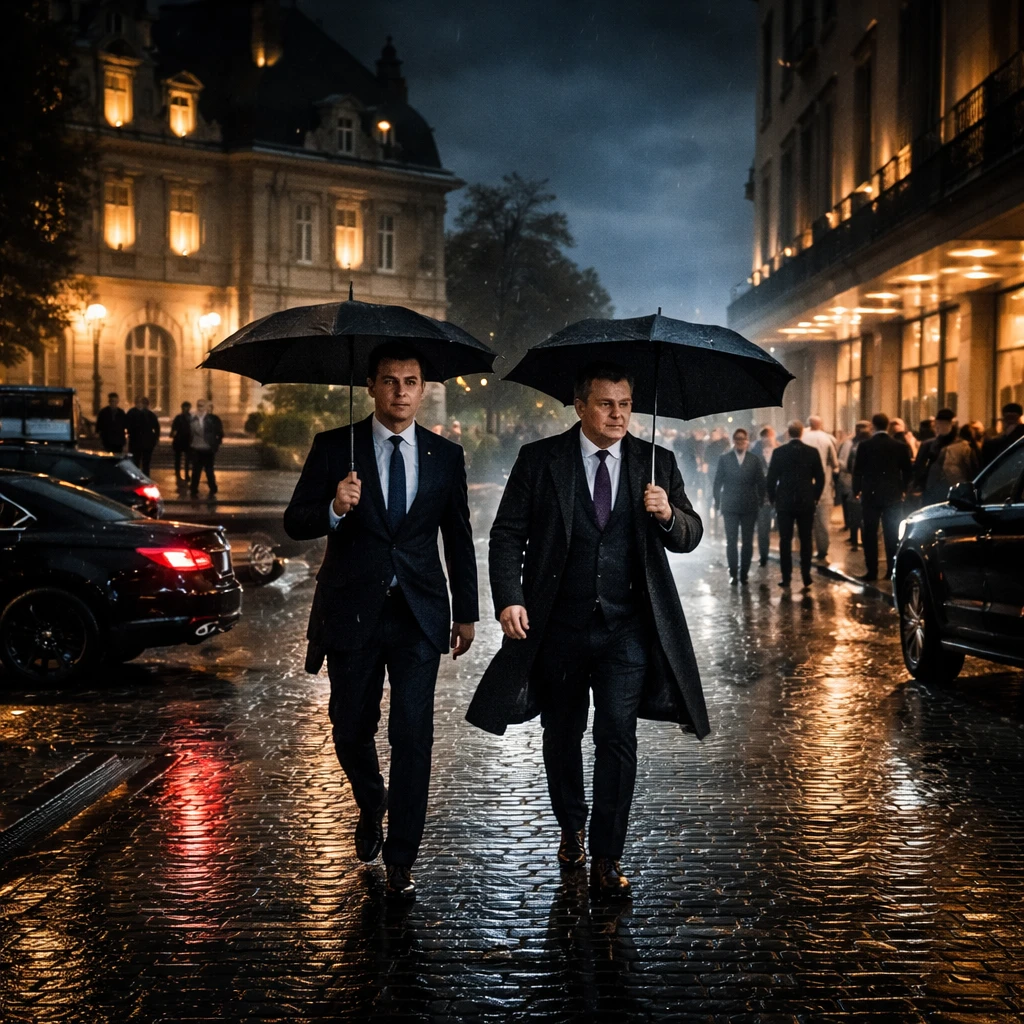
U.S. envoys Steve Witkoff and Jared Kushner conducted a tightly scheduled diplomatic push in Geneva on Tuesday, attempting to advance talks on two of the United States' most intractable foreign policy challenges in one 24-hour span. The two tracks - discussions over Iran's nuclear program and separate negotiations aimed at ending Russia's war in Ukraine - were held in different parts of the Swiss city under heightened security. The rapid sequencing of the talks and the decision to dispatch a narrow U.S. delegation to handle both sets of talks have drawn public and private skepticism about whether either process will produce lasting results.
Geneva choreography and the Iran session
The Iran discussions opened the day. U.S. delegates engaged in indirect meetings with Iranian Foreign Minister Abbas Araqchi, with Oman acting as an intermediary. Those exchanges lasted about three and a half hours and took place at locations on opposite sides of Geneva, reflecting the city's role as a frequent host for international diplomacy.
Both the U.S. team and Iranian officials said the indirect exchanges produced some movement, but there was no indication that an agreement was imminent. While diplomacy continues, the U.S. has been enlarging its military presence near Iran, a posture that signals the option of force remains part of Washington's calculations. That stance has left many in the Middle East uneasy, amid concerns that U.S. strikes could escalate into a broader regional conflict.
From Oman to the Intercontinental - Ukraine talks begin
With little pause, the U.S. delegation moved from the Oman diplomatic mission to the five-star Intercontinental hotel for the first day of talks aimed at Ukraine. Those negotiations are expected to span two days. Observers entered the Geneva sessions with tempered expectations for a breakthrough in the effort to end a war described by many as Europe's largest since World War II.
Questions about capacity and credibility
Critics in and outside of government have questioned whether assigning Witkoff and Kushner to juggle both files in a single day makes operational sense. A regional official close to Iran's leadership, speaking on condition of anonymity, likened the arrangement to an emergency room with two critically ill patients and a single doctor, warning that neither case could receive sustained attention and that the approach increases the chance of failure.
Brett Bruen, a former foreign policy adviser in the Obama administration, said the White House appears to prioritize quantity over depth in negotiations. Bruen also pointed to a broader problem, arguing that reductions in experienced staff at both the State Department and the National Security Council have hollowed out the government's diplomatic bench, leaving uncertainty about whether the right personnel remain in place to pursue complex foreign policy goals.
Assessment of the envoys and their record
Administration officials defend the assignment of Witkoff and Kushner to the two negotiations. They point to the envoys' dealmaking experience and the close trust they enjoy from the president. Witkoff, sometimes described as an "envoy for everything," helped secure a ceasefire last year between Israel and Hamas, although efforts toward a more permanent settlement have since stalled. Kushner led the Abraham Accords during the president's first term, which brought diplomatic relations between several Arab states and Israel; however, that agreement has seen little forward movement since the president returned to office nearly 13 months ago.
Despite those past roles, some analysts and regional observers say both men lack the depth in diplomatic experience to face seasoned counterparts such as Araqchi and veteran Russian negotiators on matters as complex as nuclear safeguards and the terms for ending an active war.
Notable absences and official response
One conspicuous absence from the Geneva meetings was the U.S. Secretary of State, Marco Rubio, who is viewed as the administration's senior diplomatic specialist. That absence has fed criticism that the administration's highest-ranking, traditionally trained diplomats are not being prioritized for these negotiations.
When asked to address concerns about the two-track, single-day approach, a White House spokesperson defended the president's strategy, saying the administration "has done more than anyone to bring both sides together to stop the killing and deliver a peace deal" in Ukraine. The spokesperson also labeled some critiques anonymous and declined to supply detailed responses to specific questions about Geneva.
Wider reactions
Mohanad Hajj-Ali of the Carnegie Middle East Center in Beirut said entrusting Witkoff and Kushner with resolving multiple global crises is startling. Other analysts underscored the potential risks of sending negotiators rooted in private-sector dealmaking and New York real estate into arenas where long-term, technical diplomatic engagement and specialized expertise are traditionally emphasized.
Implications and unresolved questions
The dual-track Geneva sessions underscored several unresolved dynamics: the administration's appetite for high-profile dealmaking at scale, the use of trusted private-sector figures in frontline diplomacy, and the practical limits imposed by a smaller professional diplomatic corps. How these dynamics will shape the trajectory of talks on Iran's nuclear activities and any negotiated end to the war in Ukraine remains unclear. Observers noted that while incremental progress was reported from the Iran exchanges, neither track yielded signs of an imminent resolution.
Methodology note
This report is based on accounts from participants, official statements, and interviews with regional and policy experts. Where sources spoke on background, their anonymity is preserved at their request.