
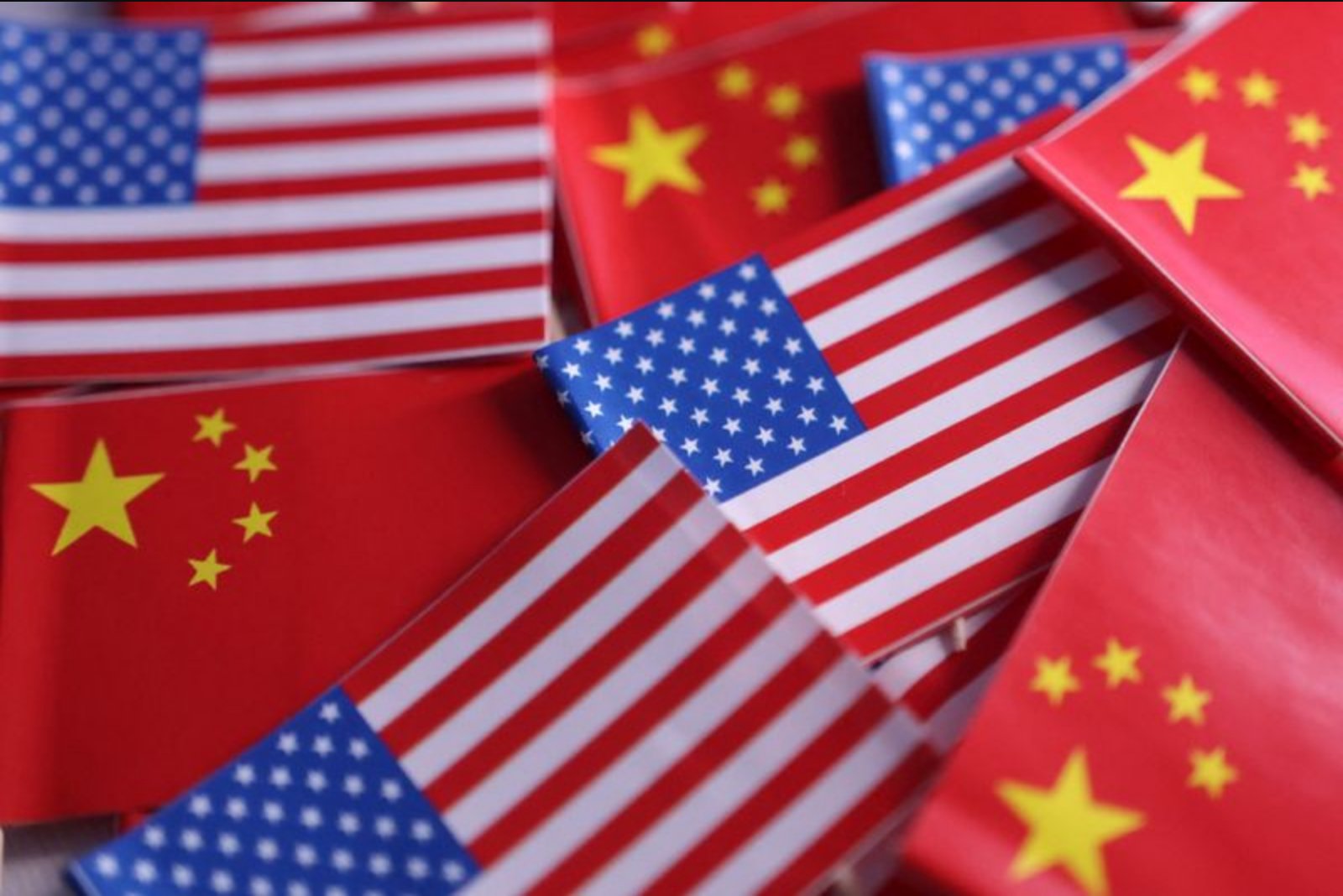
U.S. officials attending Asia-Pacific Economic Cooperation meetings in southern China this week are pressing American AI exports and maritime monitoring technologies as part of an effort to blunt Beijing’s technological and maritime sway in the region.
Casey Mace, the U.S. senior official to APEC, confirmed that the Trump administration has launched a $20 million fund intended to accelerate uptake of American artificial intelligence solutions among partner economies across the Asia-Pacific. The fund forms one element of a wider U.S. push to reaffirm leadership in emerging technologies.
The initiatives arrive in advance of a series of high-profile diplomatic moments that are expected to cast attention on U.S.-China competition over technology and regional economic influence - including a planned presidential visit to China in April and China’s hosting of APEC’s annual leaders’ summit in Shenzhen in November.
A State Department spokesperson criticized China’s approach to AI, saying that "China’s AI technology promotes CCP propaganda and censorship, while its vision for AI governance seeks to enable authoritarian repression," referring to the Chinese Communist Party. China, for its part, says it supports international cooperation on AI governance and has dismissed Western assertions that its technology exports facilitate censorship.
Last July, President Donald Trump issued an executive order intended to ensure that American AI technologies, standards and governance models gain acceptance across global markets. U.S. officials are using the APEC platform to press that agenda directly with regional partners.
Alongside AI promotion, U.S. delegates have emphasized maritime surveillance and anti-illegal-fishing technology. Officials argue that illegal, unreported and unregulated fishing undermines food security and maritime sovereignty for many Pacific island and coastal states, and that U.S. private-sector tools can help local governments monitor and enforce fishing rules more effectively.
Ruth Perry, Acting Principal Deputy Assistant Secretary of State for Oceans and International Environmental and Scientific Affairs, pointed to China’s distant-water fleet - described in the discussions as numbering 18 million - as creating enforcement challenges for smaller coastal states. Perry said many countries in the Pacific are negatively affected and identified China as a significant actor whose fleet size cannot be ignored, citing reports that suggest an unusual degree of state coordination in those activities.
Perry described a range of technologies being developed by U.S. companies to assist government monitoring and enforcement: satellite vessel tracking, artificial intelligence-based analytics, acoustic detection systems and sensor-equipped ocean buoys. She also highlighted links between illegal fishing and other transnational crimes such as forced labour, human trafficking and smuggling.
The U.S. delegation noted that China’s revised Fisheries Law is scheduled to take effect in May. Perry emphasized that while Beijing is publicly stating intentions to strengthen oversight, Washington and other observers will watch to see whether those commitments are followed by substantive action.
The combined push on AI export promotion and fisheries surveillance at APEC reflects a coordinated U.S. strategy to influence technology adoption and maritime governance across the Asia-Pacific without introducing new policy announcements beyond the fund and the promotion of private-sector tools.
Context for logistics and maritime stakeholders
- Efforts to export U.S. AI tools and maritime monitoring systems could affect demand for satellite services, surveillance platforms and sensor equipment used in fisheries management and maritime domain awareness.
- Heightened attention on illegal fishing and fleet activity may increase procurement interest among Pacific coastal states and regional partners for monitoring and enforcement technologies.
- Uncertainty around implementation of China’s revised Fisheries Law will influence how quickly regional enforcement dynamics evolve.