
Overview
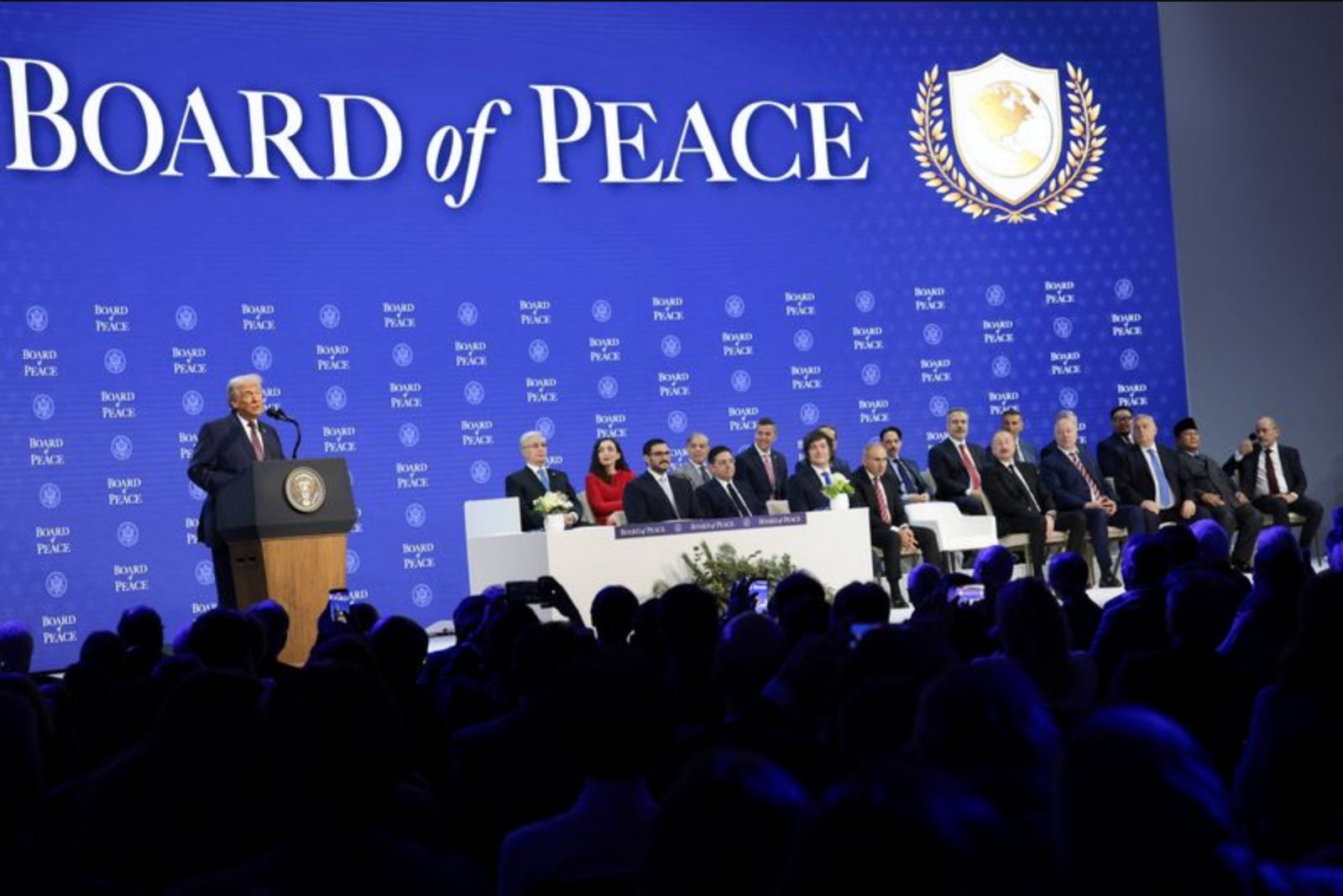
President Donald Trump will use the inaugural formal session of his Board of Peace next week to present a multi-billion dollar plan for reconstruction in Gaza and to disclose details about a proposed U.N.-authorized International Stabilization Force that is intended to deploy to the Palestinian enclave in the months ahead, two senior U.S. officials said.
The meeting, which the officials said will be held in Washington, D.C., and chaired by the president on February 19, is expected to draw delegations from at least 20 countries, including a number of heads of state. The officials provided the information on condition of anonymity.
Origins of the Board
Mr. Trump signed documents establishing the Board of Peace on January 23 in Davos, Switzerland. The creation of the board was subsequently endorsed by a United Nations Security Council resolution as part of the administration's Gaza plan, according to the officials.
The board has attracted participation from several regional Middle East powers, including Turkey, Egypt, Saudi Arabia and Qatar, as well as Indonesia, a major emerging nation. By contrast, some global powers and traditional Western U.S. allies have approached membership with greater caution. Israeli Prime Minister Benjamin Netanyahu said during a recent visit to Washington that Israel has joined the board.
Funding: A Central Focus
A central element of the Washington meeting will be the announcement of a multi-billion-dollar fund for Gaza. The fund will comprise monetary contributions from participating board members, officials said.
One official described the offers as "generous" and emphasized that the United States had not made explicit requests for donations. "People have come to us offering," the official said. "The president will make announcements vis a vis the money raised."
International Stabilization Force
Deployment of the International Stabilization Force forms a key component of the next phase of Mr. Trump's Gaza plan, which was originally announced in September. Under that plan, a fragile ceasefire that began on October 10 marked the first phase of implementation, during which Hamas released hostages and Israel freed detained Palestinians.
Officials said the president will announce that several countries have committed troops, collectively amounting to several thousand personnel, to the stabilization force expected to deploy in Gaza in the months ahead. A primary operational challenge identified by the officials is the disarmament of Hamas fighters, who have so far been described as reluctant to relinquish weapons.
Under the administration's Gaza plan, Hamas members who commit to peaceful co-existence and decommission their weapons will be granted amnesty. Those members who choose to leave Gaza are to be provided safe passage to receiving countries, according to the plan's provisions cited by officials.
Administration, Humanitarian Aid and Security Updates
The Board of Peace sessions will also include detailed briefings on the work of the National Committee for the Administration of Gaza, the body established to assume day-to-day civil administration of the Gaza Strip from Hamas. The committee announced its membership and convened its first meeting in January.
Attendees will receive updates on humanitarian assistance flows into Gaza and developments related to the Gaza police, as officials seek to coordinate civil governance, security and relief efforts through the new institutional framework.
Scope and Focus
While critics have voiced concern that the Board of Peace might broaden its mandate to address other conflicts and potentially compete with the United Nations, the U.S. officials emphasized that next week's meeting will focus exclusively on Gaza. The session is designed to concentrate on reconstruction financing, stabilization troop deployments, civilian administration, humanitarian support and security arrangements in the enclave.