
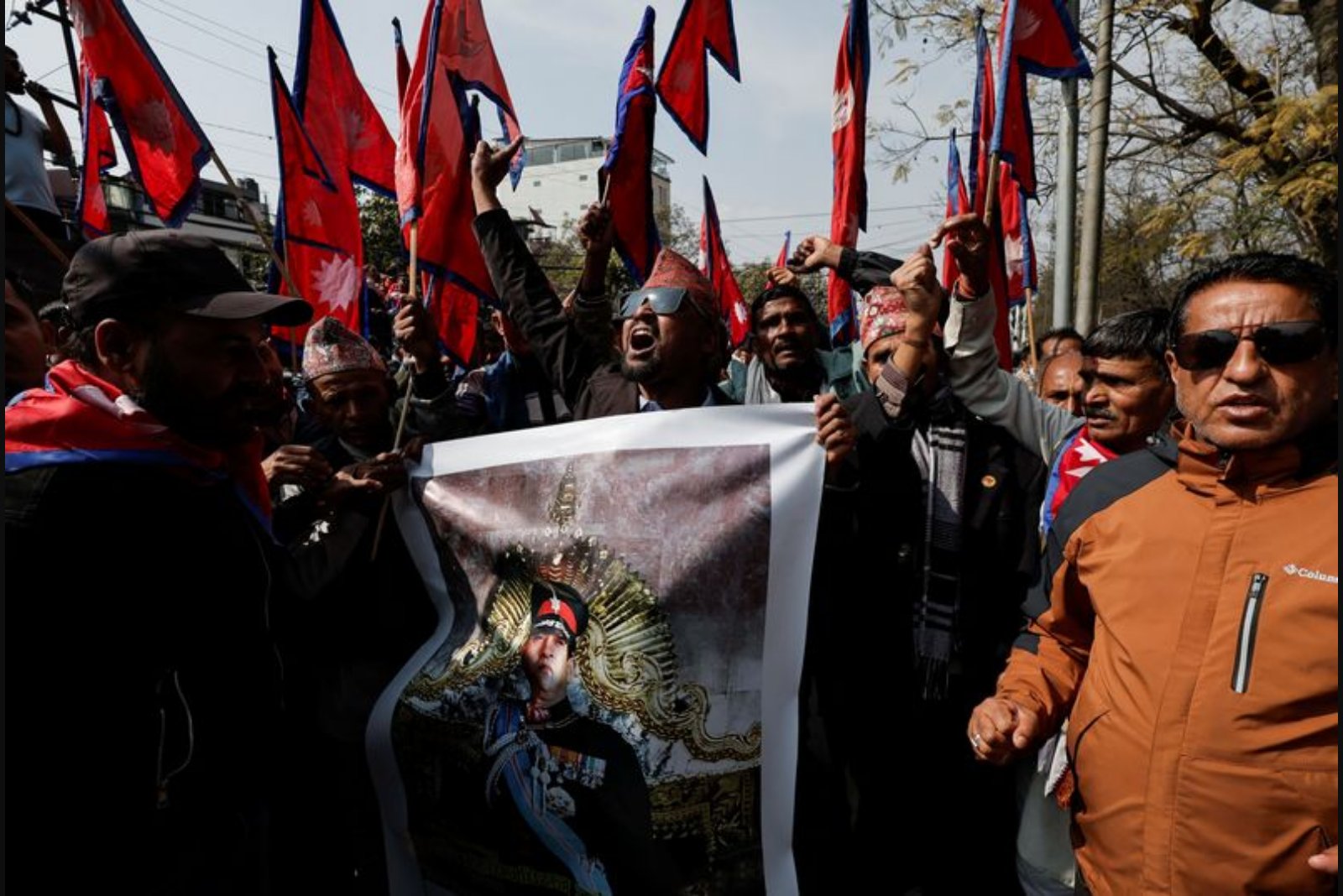
KATHMANDU, Feb 13 - Thousands of monarchist supporters assembled in central Kathmandu on Friday to greet the country’s last reigning monarch, Gyanendra, upon his return from a three-month holiday in the east of Nepal. The crowd, largely pro-monarchy, lined the route to his private residence and greeted his arrival by car with national flags and floral bouquets.
Supporters chanted slogans including "King, come and save the country" as they welcomed the 78-year-old former sovereign, who has lived as a private citizen in Kathmandu since the monarchy was abolished in 2008 by a special assembly dominated by former Maoist rebels. The 2008 decision transformed the predominantly Hindu Himalayan nation into a secular republic, and Gyanendra has not held public office since.
At the rally, demonstrators voiced sharp dissatisfaction with the performance of successive republican governments. "We must restore the monarchy because the king can be a caring guardian of all Nepali people, something many corrupt political leaders have failed to do," said Sanatan Prasad Regmi, 55, who identified himself as a supporter of Gyanendra. "We have no use for a republic," he added.
The return of the former monarch comes as Nepal prepares for its first national election since widespread anti-corruption protests led by a wave of Gen Z activists. Those protests culminated in September when clashes left 77 people dead, and Prime Minister K.P. Sharma Oli subsequently resigned amid the unrest.
Political instability has been a persistent feature of Nepal’s recent history. The country has experienced 14 changes of government over the past 18 years, a level of turnover that, according to observers cited at the rally, has unsettled investors and slowed economic growth.
A parliamentary election is scheduled for March 5 to fill 275 seats. The race is highly fragmented: 65 parties are contesting the assembly, and among them are royalist groups that support restoring a constitutional monarchy. In parallel, two recently prominent figures - a rap artist who became Kathmandu’s mayor and a former television host turned politician - have joined forces to challenge the long-established parties that have dominated Nepali politics for more than three decades.
According to election authorities, nearly 19 million of Nepal’s roughly 30 million residents are eligible to vote in the upcoming election. Authorities added almost one million new voters to the rolls after the protests, noting that the majority of the newly registered are young people.
The events surrounding Gyanendra’s return and the larger political flux highlight deep public frustration with governance and economic performance as Nepal heads into a pivotal vote that will shape the country’s next parliamentary term.