
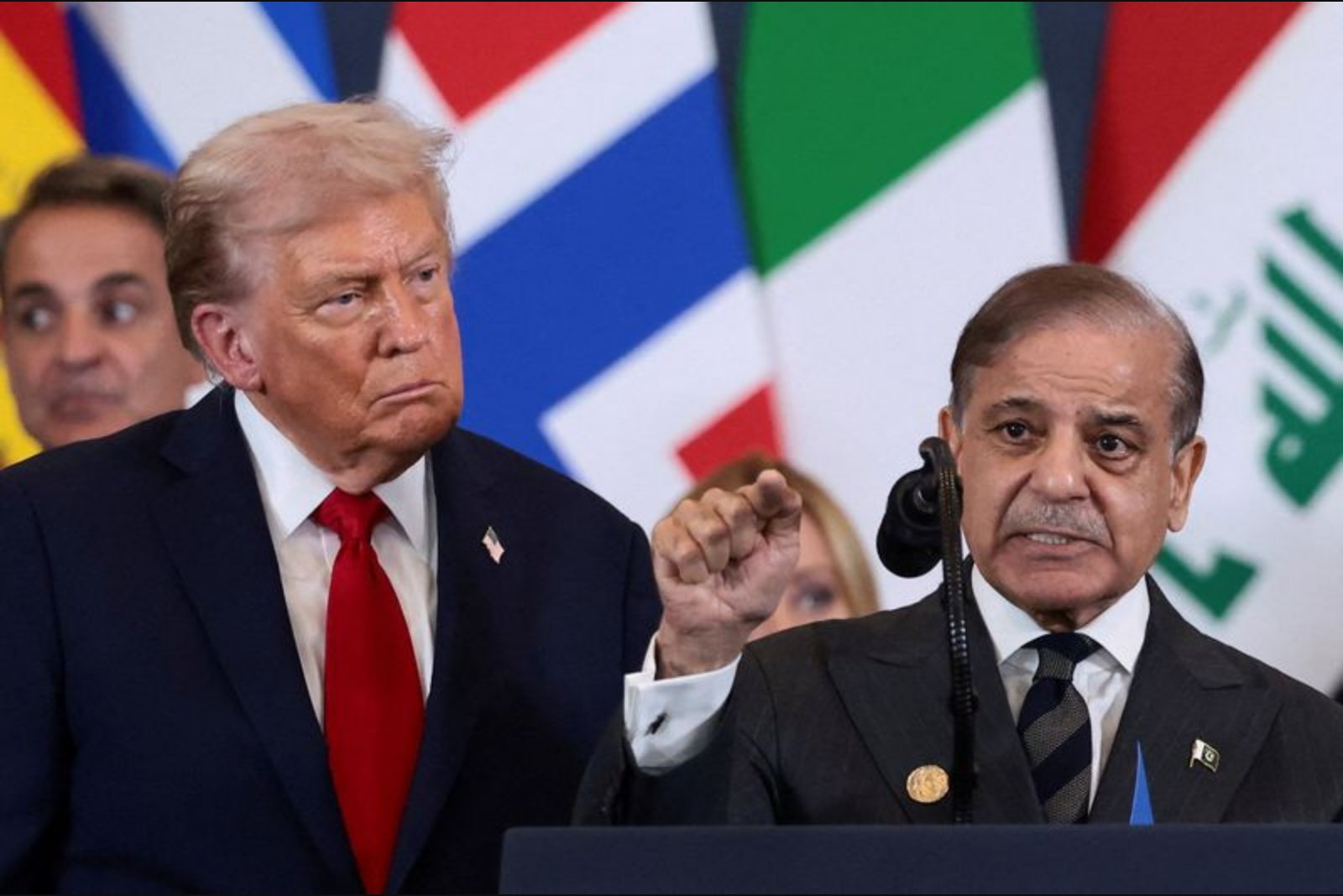
ISLAMABAD, Feb 18 - Pakistan’s leadership will press for precise clarity on the objectives and command arrangements of the proposed International Stabilization Force in Gaza before making any commitment to contribute troops, three government sources said.
Prime Minister Shehbaz Sharif is scheduled to attend the first formal meeting of President Donald Trump’s Board of Peace in Washington on Thursday. The meeting, which Mr. Trump will chair, is expected to include delegations from at least 20 countries. U.S. officials plan to outline a multi-billion dollar reconstruction package for Gaza and provide further detail on proposals for a U.N.-authorised stabilization force for the Palestinian enclave, the sources said.
During the Washington visit, Sharif intends to gain a clearer picture of the ISF’s purpose, the legal or U.N. authority under which it would operate and the chain of command that would govern participating contingents, according to three government sources who spoke about the matter.
One source, described as a close aide to the prime minister, said Pakistan was prepared to contribute troops but only on the condition that their role would be confined to peacekeeping duties. "We are ready to send troops. Let me make it clear that our troops could only be part of a peace mission in Gaza," the aide said. "We will not be part of any other role, such as disarming Hamas. It is out of the question," he added.
Pakistan’s foreign ministry did not respond to a request for comment on the matter.
Trump’s 20-point plan for Gaza, as described by officials involved in preparations, envisages a force drawn from Muslim-majority nations to oversee a transition period focused on reconstruction and economic recovery in Gaza after the recent fighting. Washington has been urging Islamabad to take part in the force.
Analysts point to Pakistan’s experience as a potential asset for any multinational stabilization effort. The country’s military has experience with conventional warfare and with counter-insurgency operations, and observers say that background could be valuable in a complex transition and reconstruction environment.
One of the government sources said Pakistan could provide an initial contingent relatively quickly if assurances on role and mandate were forthcoming. "We can send initially a couple of thousand troops anytime, but we need to know what role they are going to play," the source said.
Two of the sources indicated that Sharif, who met President Trump earlier this year in Davos and late last year at the White House, would likely have an opportunity to speak with the U.S. president either on the sidelines of the Board of Peace meeting or the following day at the White House.
The Board of Peace was created in late January and was initially conceived to help cement the ceasefire in Gaza, but its mandate is being presented by U.S. backers as potentially broader - to help mediate and resolve global conflicts. That wider remit has prompted cautious reactions from some countries, which have expressed concern that the board could become a parallel institution to the United Nations.
Pakistan has voiced support for the establishment of the board while simultaneously expressing reservations about a mission whose objectives would include demilitarising Hamas, the Islamist militant group that controls Gaza. Officials in Islamabad appear to be weighing the diplomatic benefits of contributing forces against potential domestic political consequences.
Husain Haqqani, a former Pakistan ambassador to the United States and currently a scholar at the Hudson Institute in Washington, warned that domestic support for participation is conditional on outcomes that improve the situation for Palestinians. "If developments in Gaza after the deployment do not improve the position of Palestinians, there could be a massive reaction at the public level in Pakistan," he said.
Government officials and analysts alike say Pakistan faces a balancing act: offering tangible support to U.S. proposals while avoiding engagement in operations that could be seen at home as undermining Palestinian armed groups or as taking sides in an intensely sensitive regional issue.
For now, Islamabad’s position is to seek precise operational terms and legal authorities for any ISF contingent, and to withhold a formal decision until those details are provided and evaluated in Washington.