
Overview
At his mountaintop headquarters on the Thai border, General Yawd Serk, head of one of Myanmar's most prominent ethnic armed organisations, accused world leaders of turning a blind eye to a surge in deadly airstrikes carried out by the country's ruling military junta. Speaking at Loi Tai Leng, the RCSS base perched between forested hills, he told assembled media that civilians were bearing the brunt of intensified bombing campaigns and appealed to the international community not to ignore their plight.
Claims on airstrikes and civilian harm
Yawd Serk cited monitoring data indicating that airstrikes have struck more than 1,000 civilian locations in the past 15 months, and that since late 2024 at least 1,728 civilians have been killed in air attacks that have also impeded the advance of pro-democracy forces lacking an air force. He said the world has failed to stop the turmoil as the military steps up those bombing campaigns, and that civilians are suffering as a result.
The junta maintains it is targeting terrorists.
Political backdrop and recent vote
The remarks came days after a January vote restricted to limited areas that was widely criticised by the United Nations and rights groups as engineered to consolidate military control. A military-backed party claimed victory in that election, and Senior General Min Aung Hlaing is expected to become president as the junta cements its grip on power, according to the reported outcomes of the vote.
When asked about political dialogue, Yawd Serk insisted that politics remain necessary to end the war. Speaking after a military parade staged for Shan National Day, he called for trust-building among the diverse armed factions across Myanmar and said his preference was for a political settlement rather than renewed widespread fighting.
Parade and military posture
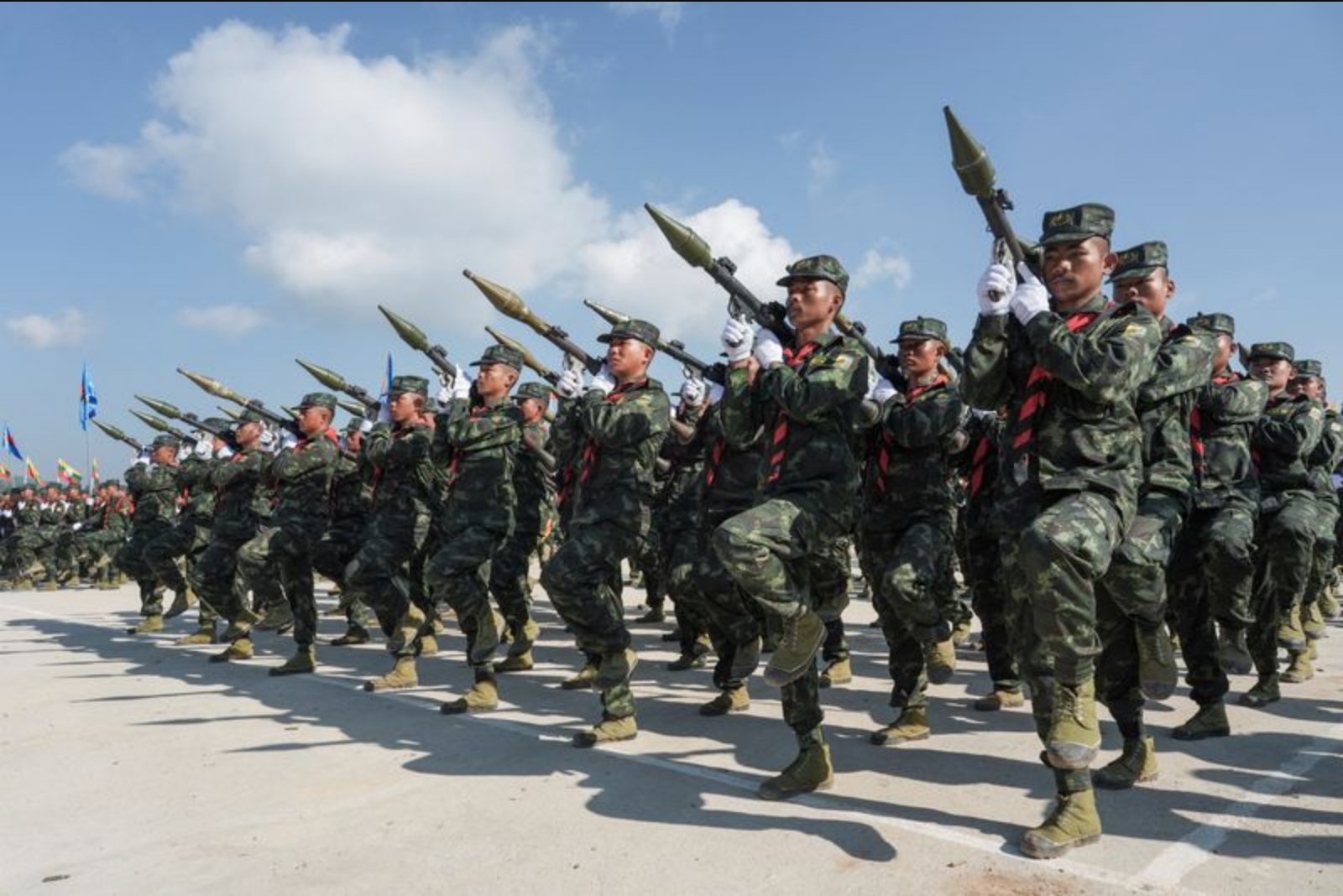
The Shan National Day event at the RCSS border headquarters drew thousands of people and featured a parade of about 1,000 soldiers armed with rifles and rocket-propelled grenade launchers. The display was attended by representatives of multiple groups, including longtime RCSS rivals, and followed a pattern in which Yawd Serk, long regarded as a pragmatic actor who maintains a ceasefire with the junta, struck a sharp tone in criticising the military leadership.
He praised the ousted administration led by Aung San Suu Kyi and levelled a pointed critique at Min Aung Hlaing. Yawd Serk blamed Myanmar's turmoil on what he described as a leadership driven by "excessive ego, pride, and greed - placing the will of one individual above the desires of the public." In response, Min Aung Hlaing issued a statement calling on ethnic and so-called "terrorist" groups to abandon armed struggle and participate in peace talks. Yawd Serk dismissed that message as familiar and noted it was "no one has accepted" but said his forces would judge the new government by its actions.
China's role and regional dynamics
Yawd Serk said only one country has intervened in Myanmar's crisis - China - though he declined to elaborate. The leader's comments echoed broader observations about Beijing's influence in the region. His group controls strategic territory between China and Thailand and is headquartered at Loi Tai Leng, an isolated town on the Thai border that sits amid the complex terrain of Shan State.
China has said it has "long played a constructive role in the domestic peace and reconciliation process," adding that it backed parties strengthening dialogue and reconciliation. The ministry's statement framed Beijing as a powerbroker that has engaged with multiple armed groups to press for a halt in offensives and to stabilise the junta - a posture Beijing says is tied to protection of Belt and Road infrastructure projects it views as vital to its interests.
Shan State is a hub for both legal and illegal business in the Golden Triangle and is home to armed groups with competing interests and shifting alliances. The coup in 2021 reshaped local balances of power as some non-Shan factions seized territory, and rival forces have pushed the RCSS out of areas near the Chinese frontier. Analysts have said the result is a fractured landscape that risks deepening grievances and destabilising a state key to Myanmar's future.
Efforts at unity and federalism
At the gathering, Yawd Serk said he aimed to build trust, resolve disputes through talks and work toward the creation of a federal army - a long-standing demand of forces opposing the military. He said a diverse array of Shan groups had met and agreed on principles for a future federal state. The event included representatives from several groups, even those who have rival histories with the RCSS.
Saw Taw Nee, spokesperson for the Karen National Union, one of the most powerful groups fighting the junta, did not attend the event but sent a letter and spoke by telephone. He described the moment as "a critical time for us to build unity," expressing pride that "our Shan brothers are trying to pave the way," and said his group would work closely with them.
Communications from the junta
A spokesperson for the ruling junta did not immediately answer telephone calls seeking comment on the RCSS leader's remarks. When pressed publicly on the need for participation in talks, the junta's senior general urged ethnic and "terrorist" groups to lay down arms and join negotiations. Yawd Serk indicated that requires more than rhetoric and that the RCSS would evaluate the new government's behaviour before making judgments.
Implications
The statements from Yawd Serk highlight persistent fragmentation in Myanmar's armed landscape and underline the humanitarian toll from intensified air operations. The comments also underscore the centrality of Shan State to both legitimate and illicit cross-border economic activity and to the strategic calculations of external actors engaged with Myanmar.