
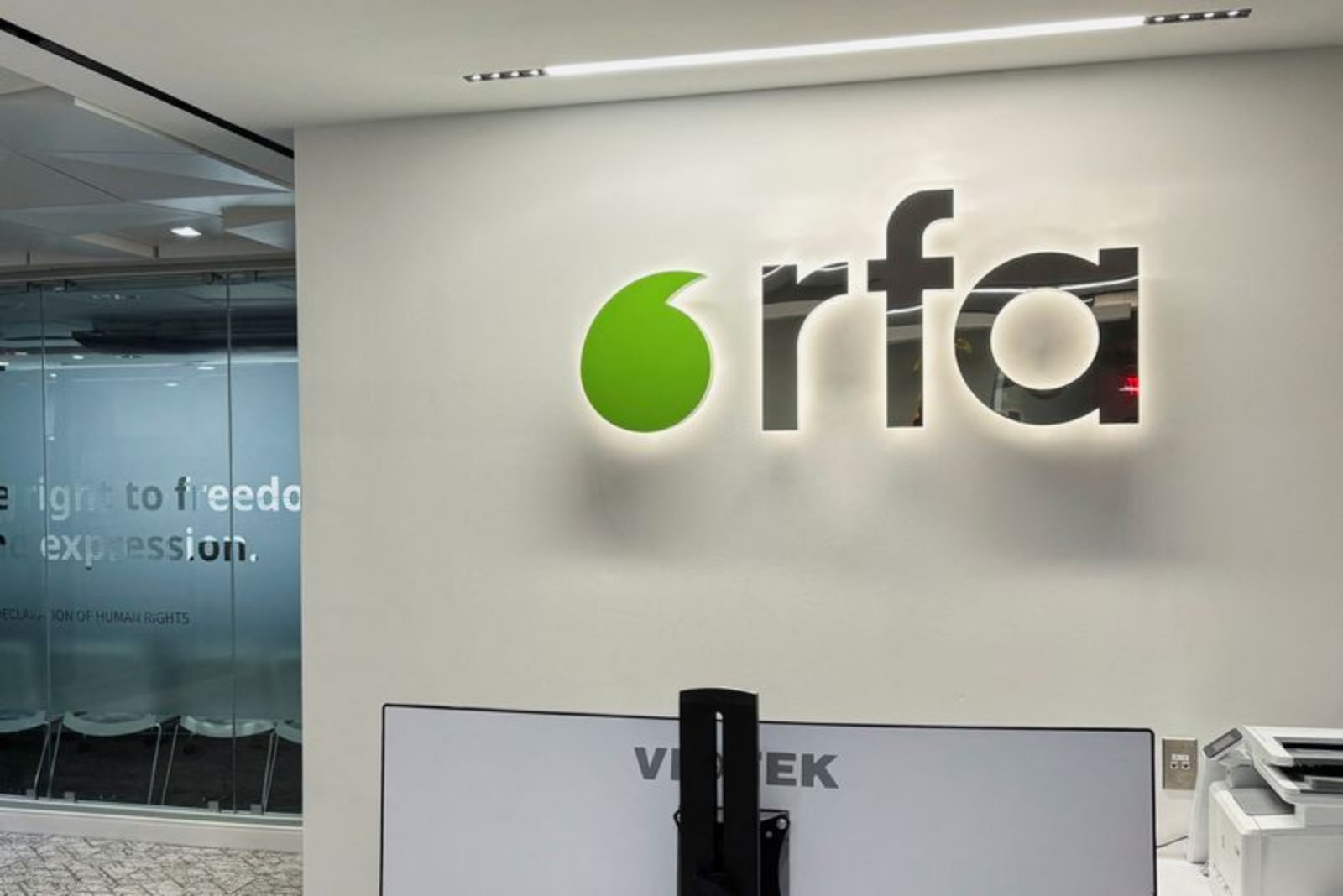
WASHINGTON, Feb 17 - Radio Free Asia announced it has resumed broadcasting to audiences in China, the outlet's chief executive said, reversing a near-total halt in operations that followed funding changes last year.
For years RFA and several related outlets, notably Voice of America, received congressional funding and operated under the oversight of the U.S. Agency for Global Media (USAGM). Last year, Kari Lake - a former news anchor appointed by President Donald Trump as acting CEO of USAGM - terminated those grants, saying they represented wasteful spending and exhibited anti-Trump bias. Critics said the decision, which prompted widespread layoffs, amounted to ceding information space to China and other U.S. adversaries.
Bay Fang, president and CEO of RFA, wrote on LinkedIn that the outlet had "resumed broadcasting to audiences in China in Mandarin, Tibetan, and Uyghur, providing some of the world’s only independent reporting on these regions in the local languages." She linked the ability to restart transmissions to private contracting with transmission services but did not provide operational details.
Fang also emphasized that while private contracts made a restart possible, rebuilding a full network will depend on consistent receipt of newly approved congressional funding. A bipartisan spending bill signed into law earlier in February included $653 million for USAGM, the agency that oversees RFA, VOA and other government-funded outlets. That allocation is lower than the $867 million appropriated for the agency in each of the two prior years, but markedly higher than the $153 million requested by President Trump to effectively close USAGM.
The Chinese embassy in Washington did not immediately reply to a request for comment on RFA's resumption of service. Last year, Chinese state media praised the funding cuts. Lawmakers from both major U.S. parties had criticized the Trump administration's effort to dismantle the outlets, saying it weakened Washington’s international influence at a time when Beijing is expanding its own reach.
Human rights advocates have long argued that RFA has exposed abuses by China and other authoritarian governments and helped publicize the situation of persecuted groups, including China’s Uyghur Muslim population.
Providing further operational detail on Friday, RFA spokesperson Rohit Mahajan said the outlet had engaged private companies to transmit to audiences in Tibet, North Korea and Myanmar. He said Mandarin audio content is currently available online only, with plans to resume regular airwave broadcasts in the near future. By contrast, RFA's Tibetan, Uyghur, Korean and Burmese radio shows are airing over short- and medium-wave frequencies. Mahajan added that previous satellite transmissions run through USAGM have not yet been restored.
The relaunch underscores a reliance on a mix of private-sector transmission services and congressional appropriations to sustain independent reporting aimed at populations in China and neighboring regions. RFA’s leadership framed the return of broadcasts as a partial restoration dependent on continued financial support and infrastructure rebuilding.
As RFA works to rebuild its distribution network, questions remain about the durability of its restored services and how quickly satellite and other longer-range transmission channels can be reactivated.