
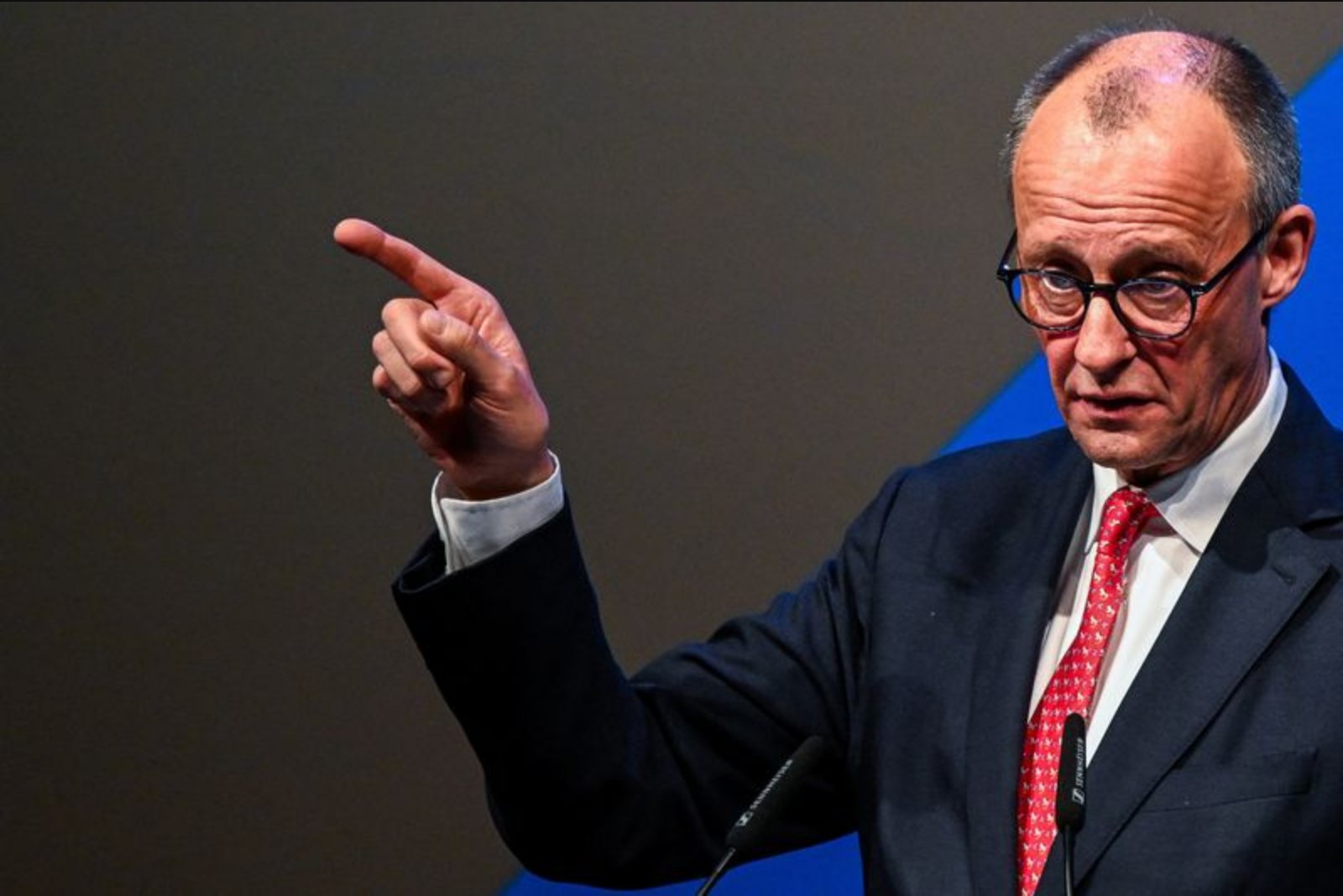
German Chancellor Friedrich Merz announced on Wednesday that he will pursue "strategic partnerships" with China during a trip scheduled for next week, framing the outreach as part of a broader effort to secure long-term cooperation with the world's second-largest economy.
Delivering remarks at his party's Ash Wednesday event in Passau, Bavaria, Merz stressed the importance of aligning with international partners who share similar values and a willingness to jointly shape the future. He said such partnerships are essential to ensure Germany remains "a country with prosperity and a high level of social security."
Merz argued that foreign policy and economic policy can no longer be considered separately. In that context he criticised the tariff strategy pursued by the United States, saying:
"If the Americans believe that, with their tariff policy, they should exert influence around the world - if they believe that tariffs are more important than taxes at home - then that is something Americans can, of course, decide for themselves. But it is not our policy."
He described U.S. President Donald Trump's tariff push as placing strain on allied relations, noting it threatens bilateral trade and increases the risk of additional harm to Germany's already struggling economy. On the prospect of following U.S. tariff actions, Merz was explicit: "You can do it, but we will not go along with it."
Merz added that Europe has the capacity to defend itself against measures it does not welcome and pointed to a recent episode connected to Greenland as an example of Europeans acting in concert. He warned that the European Union would react should Washington raise tariffs again.
Summarising his approach, Merz said the government's strategy is twofold: to extend a hand toward partnership and renewed cooperation at any time, while maintaining the cohesion and unity within the European Union necessary to defend Europe's interests when required.
The chancellor's comments signal an emphasis on forging economic and strategic relationships beyond the Atlantic, while keeping open the option of a unified European response to external trade pressures.
Contextual note: The remarks were made at a party Ash Wednesday event in Passau, Bavaria. Merz said he would seek strategic partnerships with China during a trip next week and criticised U.S. tariff policy as a matter of divergent international approaches to trade and taxation.