
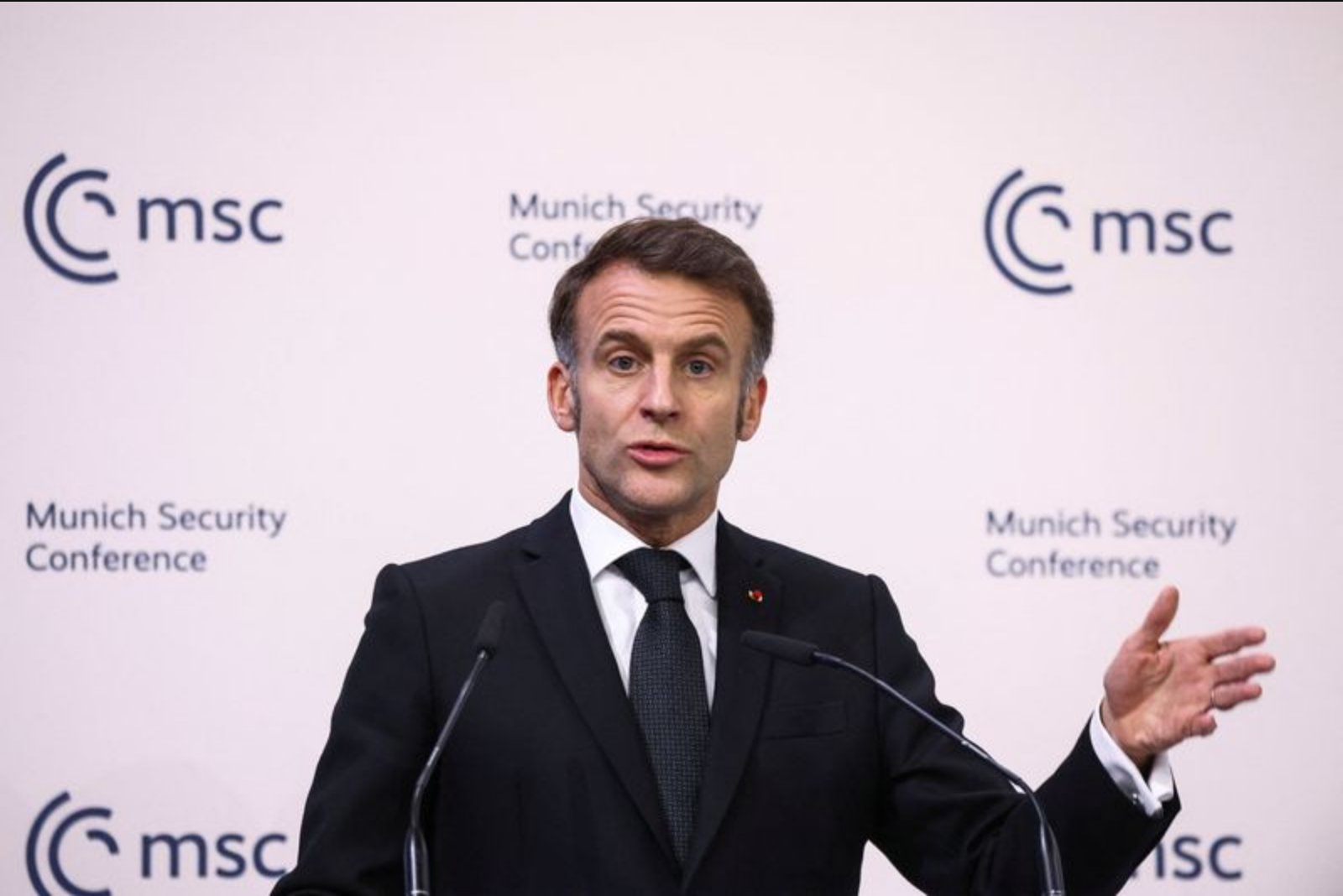
At the Munich Security Conference, France’s president set out a case for Europe to sharpen its long-term strategic thinking and to consider how national deterrents could be reframed within a broader continental security design. Addressing an audience of political and security figures, he argued that Europe must commit to building capabilities that can strike deep and help deter future threats, and that Paris will press partners to engage in a structured conversation about the role of its nuclear forces within Europe.
"This is the right time for audacity. This is the right time for a strong Europe," the president said, urging a decisive shift in approach. He added: "Europe has to learn to become a geopolitical power. It was not part of our DNA." The remarks framed a push to move European defence planning from reactive, short-term measures to a strategic posture with enduring capacity.
He rejected assertions that Europe was in decline and defended measures to curb disinformation and the "excesses of social media" that he said were damaging Western democracies. The comments linked the resilience of democratic systems to the broader security calculus and underlined his view that technological and informational threats deserve strategic attention alongside conventional military planning.
With his presidency approaching its final year in office, he stressed that even a negotiated settlement over the Ukraine war would not remove the risk posed by an "aggressive Russia" and cautioned against conceding to demands that would leave core issues unresolved. "The Europeans must start this work with their own thinking and their own interests. So my proposal today is to launch a series of consultations on this important issue, which we have started to flesh out with our British and German colleagues, but in the broader European consultation with all the colleagues here, with a lot of capacities, a lot of strategic thinking," he said, indicating consultations are already underway with key partners.
He said he would deliver a speech later this month setting out his view on how France's nuclear deterrent could be positioned within a European security context and that those consultations had already begun. "We have to reshuffle and reorganise our architecture of security in Europe. Because the past architecture of security was totally designed and framed during Cold War times. So it's no longer adapted," he said, arguing the foundations of European security require modernisation to meet current threats.
The president also emphasised the need to "rearticulate nuclear deterrence in this approach." He said this effort was being developed through a strategic dialogue with other European leaders - naming engagement with Chancellor (Angela) Merkel and several other leaders - with the goal of aligning national doctrine while ensuring compliance with constitutional guarantees and controls. "And this is why we are conceiving, and in a few weeks’ time I will detail that, but we engaged a strategic dialogue, obviously with Chancellor (Angela) Merkel, but with a few European leaders, in order to see how we can articulate our national doctrine, which is guaranteed and controlled by the Constitution," he said.
His remarks underscored a call for coordinated European-level planning on defence capabilities, deterrence posture and resilience to non-kinetic threats, while inviting partners into a consultation process aimed at producing shared strategic thinking and capacity development.