
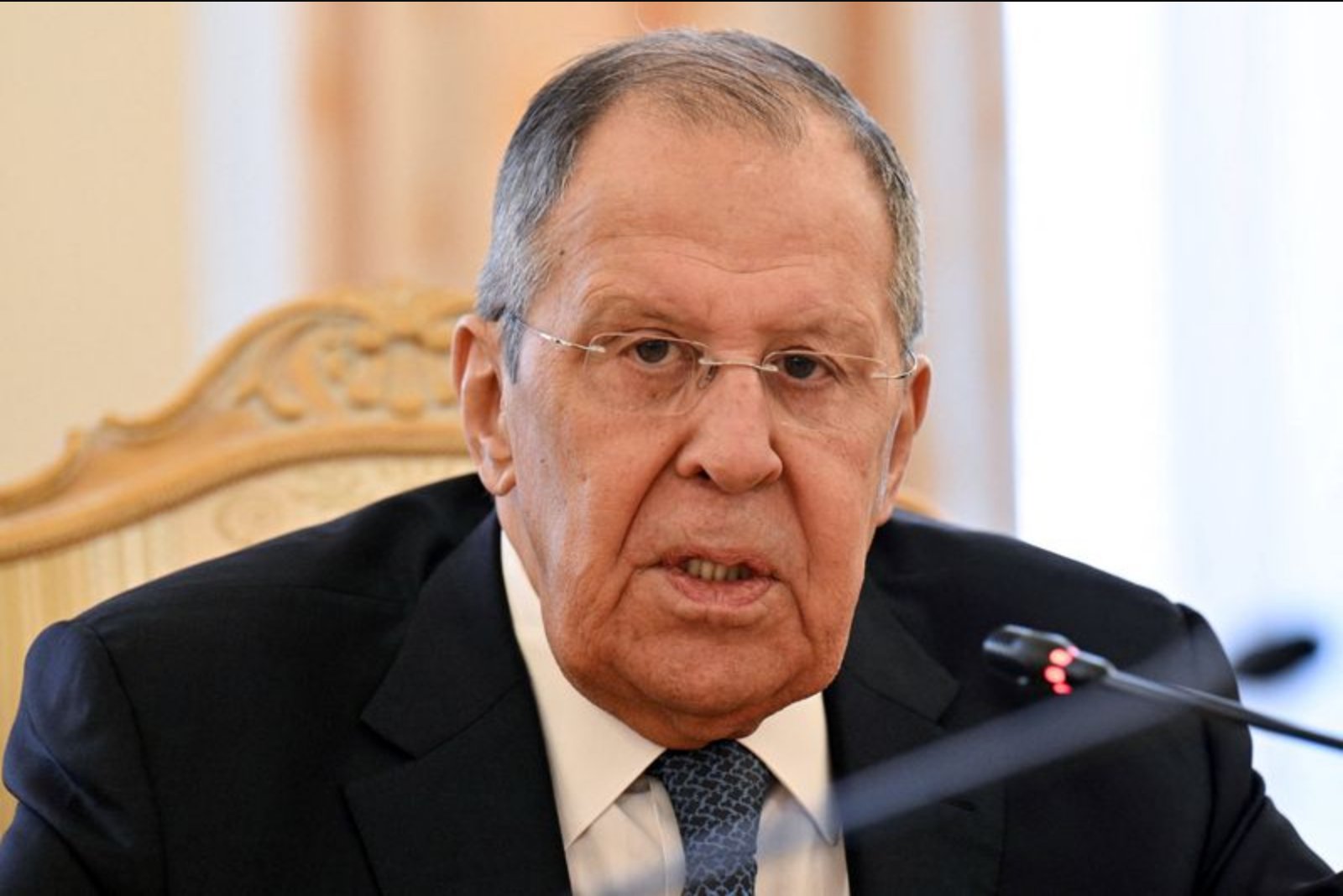
Russian Foreign Minister Sergei Lavrov said any new U.S. military strike on Iran would have grave repercussions and called for restraint to enable a peaceful nuclear outcome for Tehran. The interview, conducted by Saudi Arabia's Al-Arabiya television, was released on the Russian foreign ministry's website and was aired one day after indirect U.S.-Iranian negotiations took place in Geneva.
Lavrov warned that previous strikes on Iranian nuclear sites "under the control of the International Atomic Energy Agency" had posed "real risks of a nuclear incident." He framed further military action as dangerous to regional stability and urged a cautious approach from outside powers.
"The consequences are not good. There have already been strikes on Iran on nuclear sites under the control of the International Atomic Energy Agency. From what we can judge there were real risks of a nuclear incident," Lavrov said.
Highlighting regional sentiment, Lavrov said he was monitoring how Arab states and Gulf monarchies were reacting to the situation and suggested these countries broadly want to avoid an escalation. "No one wants an increase in tension. Everyone understands this is playing with fire," he added, indicating concern that rising tensions could reverse recent diplomatic progress in the region.
He specifically cautioned that increasing pressure could negate positive developments of recent years, pointing to improved ties between Iran and neighbouring states, most notably Saudi Arabia.
Separately, a senior U.S. official told Reuters that Iran was expected to present a written proposal following the Geneva talks outlining how it could resolve its standoff with the United States. That official also said U.S. national security advisers met at the White House and were briefed that all U.S. military forces assigned to the region should be in place by mid-March.
The United States maintains that it seeks the end of Iran's nuclear programme, while Iran has consistently refused to accede to that demand and denies any attempt to build an atomic weapon.
Lavrov said Arab governments were signalling to Washington a clear desire for restraint and for the pursuit of an agreement that would respect what he described as Iran's lawful rights while ensuring its nuclear enrichment remained exclusively peaceful.
"Arab countries were sending signals to Washington 'clearly calling for restraint and a search for an agreement that will not infringe on Iran's lawful rights and ... guarantee that Iran has a purely peaceful nuclear enrichment programme'," Lavrov said.
Lavrov also emphasised that Russia continues frequent, close contact with Iran's leadership and that Moscow had "no reason to doubt that Iran sincerely wants to resolve this problem on the basis of observing the Nuclear Non-Proliferation Treaty."
His remarks came amid diplomatic activity intended to reduce tensions between Washington and Tehran, including the indirect Geneva talks, and in the context of reported U.S. force posture adjustments in the region. Lavrov framed the need for de-escalation as both a regional and international imperative, citing the potential for severe consequences should military strikes resume.
Context summary
The interview underscores Moscow's public stance asking for restraint from the United States, emphasises regional actors' preference for lower tensions, and notes ongoing diplomatic contacts after Geneva meetings intended to defuse the U.S.-Iran impasse.