
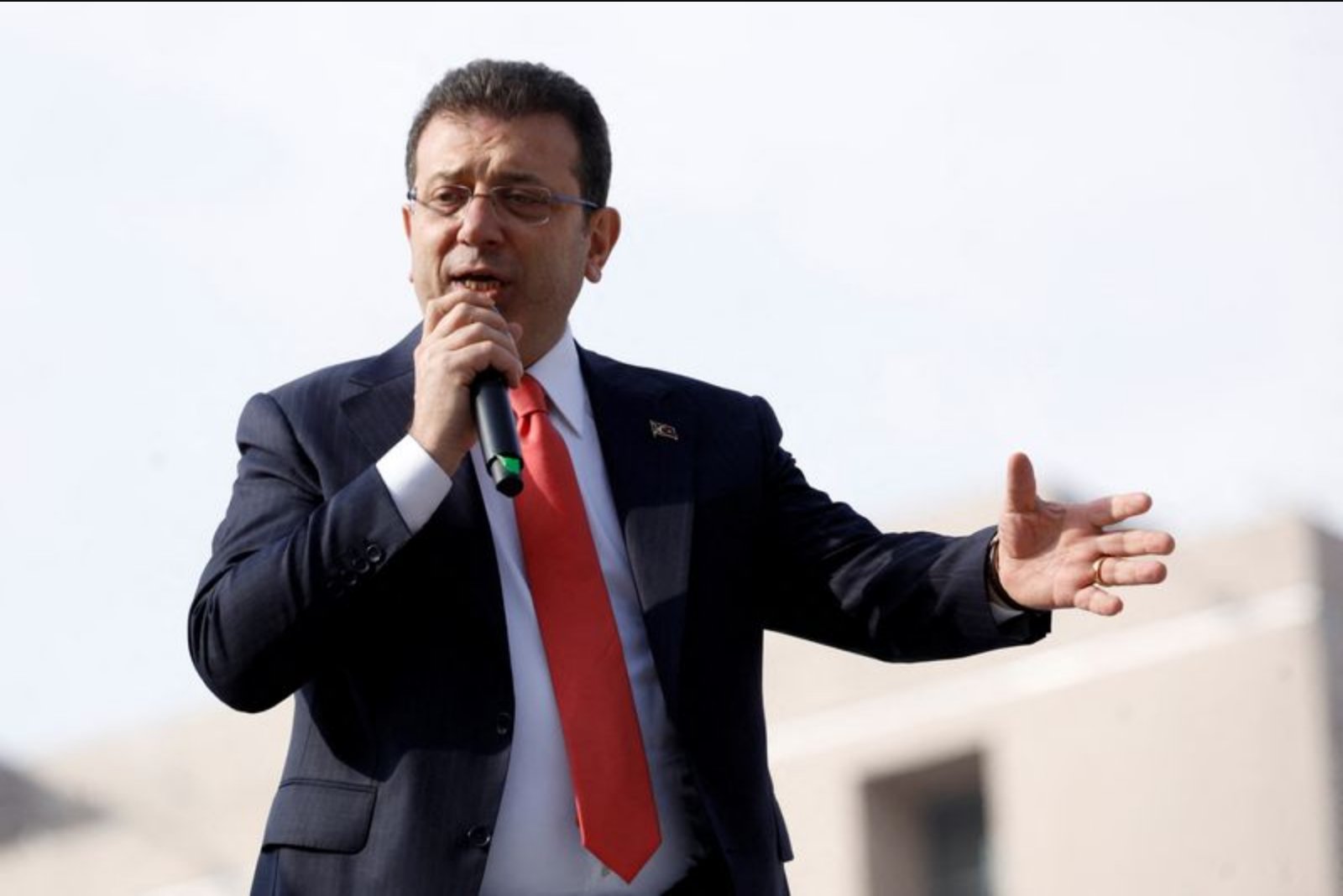
ISTANBUL - Almost a year after his incarceration, Istanbul mayor Ekrem Imamoglu has publicly challenged President Tayyip Erdogan to hold elections now, saying in responses relayed by his legal team that Erdogan would lose if he stood again. Imamoglu, 55, has been behind bars since March 2025 and faces a series of corruption-related charges that he denies.
"We want early elections now. But the current president sees the coming defeat and shies away from elections," Imamoglu said in answers to questions conveyed from the prison at Silivri, west of Istanbul. "He will run and he will lose. And Turkey will be the winner," he added.
The Republican People’s Party (CHP) has been pressing for a snap vote for months, arguing that a fresh mandate would allow it to restore rule-of-law governance, revive stalled European Union accession talks, and implement a more social-democratic economic model. A presidential vote is not due until 2028, but the constitution requires an early presidential vote if the incumbent seeks another term unless term limits are amended.
Under the rules, Erdogan, 71, would need three-fifths of lawmakers to approve early elections - a threshold that would force him to secure support beyond his governing coalition. Observers and many analysts expect Erdogan to call an election next year rather than immediately.
Keeping his profile
Despite imprisonment, Imamoglu remains the CHP's formal presidential candidate and a prominent symbol for the opposition after beating Erdogan's ruling AK Party in three Istanbul contests. The CHP has kept Imamoglu visible to supporters through weekly rallies in Istanbul, and recent opinion polls point to a tight race between the CHP and the AKP.
Imamoglu described a disciplined daily routine in his seven-page written responses, saying he keeps up roughly an 18-hour working day. He said he spends long hours with his lawyers managing more than 10 separate cases and investigations, reads letters from supporters, and continues to oversee municipal duties where possible. He also reported exercising daily in a 24-square-metre courtyard enclosed by high walls.
Legal onslaught and trial timeline
Imamoglu’s prospects of standing in a presidential contest have been clouded by an intensifying legal campaign that will culminate next month when he goes on trial. He said the government has ramped up pressure as an electoral defeat for those in power appears closer.
"As the day of their defeat approaches, the government is increasing the level of pressure and hostility directed towards us," Imamoglu said.
The lead prosecutor in the cases against him, Akin Gurlek, has sought a jail term in excess of 2,000 years for charges alleging Imamoglu ran a criminal organisation at the Istanbul municipality involved in corruption. Gurlek was appointed justice minister on Wednesday, a move that drew sharp criticism from the CHP and sparked a brawl in parliament with AKP lawmakers.
President Erdogan described the parliamentary clash by accusing the CHP of "displaying every kind of thuggery". Political commentator Murat Yetkin commented that the appointment of Gurlek was not solely intended to sideline Imamoglu but formed part of efforts to restructure the justice ministry and the wider judicial mechanisms.
Accusations, denials and judicial rulings
Imamoglu characterised the barrage of cases against him as a politically motivated attempt to prevent him mounting a presidential campaign. "Those in power, having realised they would lose, see their remedy in keeping me in prison on false allegations and by ordering the judiciary around," he said.
The government rejects allegations of directing the judiciary and insists the justice system operates independently. Erdogan has largely refrained from commenting extensively on Imamoglu’s situation, saying the investigations "have nothing to do with me".
In another legal setback for Imamoglu, a court last month dismissed his lawsuit challenging the cancellation of his university degree - a credential required for presidential candidates. Nacho Sanchez Amor, the European Parliament’s Turkey rapporteur, said that ruling made the judiciary appear "ridiculously biased".
Asked whether he believed he could still run for president, Imamoglu said he continued to trust the legal process and intended to pursue all available legal remedies. "No pressure and no obstacle will keep me from working to make this country more just, freer, and more prosperous," he said.
Political context and outlook
Imamoglu’s detention and the cascade of charges against him have become focal points in a broader contest over Turkey’s political direction, the independence of its judiciary, and its relationship with the EU and NATO. The CHP’s platform, as stated publicly, centers on restoring rule-of-law practices, re-engaging with the EU accession process, and adopting a more social-democratic approach to the economy.
Whether Erdogan opts to call early elections depends on political calculations including the ability to marshal the parliamentary support required for a snap presidential ballot. For now, both sides remain mobilised - the CHP through public rallies and vocal criticism of judicial developments, and the government by pressing ahead with investigations and appointments that have fuelled controversy.
As the March trial approaches, Imamoglu remains confined yet defiant, asserting that he will continue to fight legally and politically for what he describes as a fairer and more prosperous Turkey.