
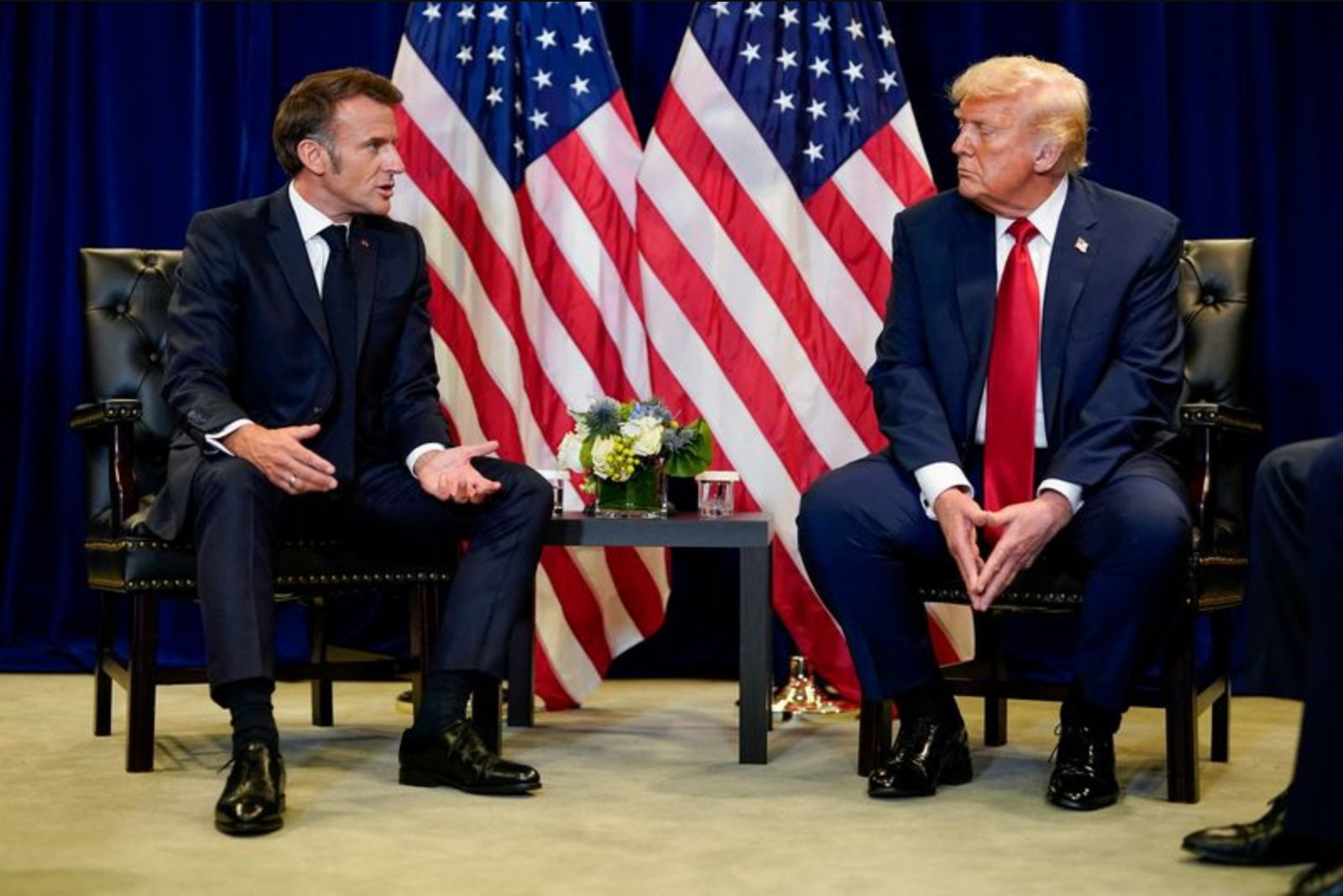
U.S. President Donald Trump will chair the first convening of his newly created "Board of Peace," a body he proposed last September as part of a plan to end the conflict in Gaza. The board was initially presented as a mechanism to administer Gaza on a temporary basis and coordinate reconstruction, but Trump has indicated its remit could expand beyond Gaza to address other conflicts worldwide.
The board's charter sets out membership rules that limit most members to three-year terms, while allowing countries that contribute at least $1 billion each to fund the board's activities to obtain permanent status. The White House announced an initial executive lineup in January that included U.S. Secretary of State Marco Rubio, Trump's special envoy Steve Witkoff, former British prime minister Tony Blair and Jared Kushner as members of the founding Executive Board.
Membership and who has signed up
The board's official account on X has published a list of more than two dozen founding member countries. The roster includes several of Washington's principal Middle Eastern partners: Israel and Saudi Arabia, along with Egypt and Qatar, the latter two of which played mediation roles in ceasefire discussions between Israel and Hamas. Other Middle Eastern states listed as founding members are Bahrain, Jordan, Kuwait, Morocco, Turkey and the United Arab Emirates.
Outside the region, the list includes Albania, Argentina, Armenia, Azerbaijan, Belarus, Bulgaria, Cambodia, El Salvador, Hungary, Indonesia, Kazakhstan, Kosovo, Mongolia, Pakistan, Paraguay, Uzbekistan and Vietnam.
Notable absences
Several significant Western allies and major Global South powers declined to join. Leaders from Britain, the European Union, France, Germany, Norway and Sweden have said they will not be members. Brazil, India, Mexico and South Africa also have not accepted offers to join.
An invitation to Canada was rescinded last month after President Trump objected to a speech by Prime Minister Mark Carney in Davos. Brazil and Mexico explicitly cited the absence of Palestinian representation on the board as a reason for refusing to participate. The Vatican likewise chose not to join, maintaining that crisis response efforts should remain under United Nations management. China and Russia, both permanent members of the U.N. Security Council with veto power, have not joined the initiative.
Powers envisaged for the board and U.N. engagement
The U.N. Security Council adopted a U.S.-drafted resolution in November that recognized the board and welcomed it as a transitional and temporary administration that would establish the framework and coordinate funding for Gaza's redevelopment under the U.S. plan. The resolution authorized the board to field a temporary International Stabilization Force in Gaza, while specifying that the board's mandate in Gaza would run only through 2027.
That Security Council resolution requires the board to report its progress to the council every six months. China and Russia abstained on the resolution, saying it did not clarify the U.N.'s future role in Gaza. Beyond the limited Gaza mandate spelled out by the council, the board's legal authority, enforcement tools and the precise modalities for cooperation with the U.N. and other international organizations remain unclear.
According to the board's charter, it will undertake "peace-building functions in accordance with international law." The charter also grants its chairman, President Trump, wide executive powers, including the ability to veto board decisions and to remove members, subject to certain constraints specified in the charter.
Criticism and human rights concerns
The board has drawn vocal criticism from human rights experts and other observers. Critics say the structure - with an external body overseeing a territory devastated by conflict - evokes colonial arrangements, particularly given that the board does not include a Palestinian representative while it is intended to supervise temporary governance of Palestinian territory.
Observers have also highlighted the inclusion of Tony Blair on the founding executive body, citing his past role in the Iraq war and criticisms linked to British actions in the Middle East. The composition of the board has been questioned for including countries whose human rights records have been criticized by rights groups - examples cited by critics in public commentary include several Middle Eastern states as well as Belarus and El Salvador.
There has been pointed controversy over Israel's membership on a board charged with overseeing Gaza's temporary administration. Critics note that Gaza was left devastated by a recent Israeli military campaign that resulted in tens of thousands of deaths, a severe hunger crisis, mass internal displacement and allegations of war crimes and genocide. Israel has defended its actions as self-defense after a Hamas-led attack in 2023 that killed 1,200 people and resulted in the capture of more than 250 hostages.
Who will attend the first meeting
Officials say nearly all nations that have joined the board are expected to attend the inaugural session. In addition, a senior U.S. official confirmed that more than 20 countries will participate as observers. The observer list named by U.S. officials includes close Asian partners Japan and South Korea, as well as India and Thailand.
Observers from Europe and other regions will include Britain and the European Union, and individual states such as Austria, Croatia, Cyprus, the Czech Republic, Finland, Germany, Greece, Italy, the Netherlands, Poland, Romania and Slovakia. Norway and Switzerland have said they will participate in observer roles, as will Mexico and Oman.
Agenda items for the meeting are expected to focus on Gaza's reconstruction, the coordination of humanitarian assistance and plans for the deployment of a stabilization force.