
An Israeli military assessment and accounts from Gaza-based sources describe a systematic effort by Hamas to entrench its influence inside the Gaza Strip by staffing key government posts, resuming revenue collection and continuing salary payments to public servants and fighters. Those developments are taking place as a U.S.-backed technocratic body and an international Board of Peace begin their roles in Washington, raising questions about how governance in Gaza will be transferred - and whether the militant group will give up its weapons as required by the U.S. plan.
Hamas’ administrative moves
The military document, presented to the Israeli prime minister in late January, states that "Hamas is advancing steps on the ground meant to preserve its influence and grip in the Gaza Strip 'from the bottom up' by means of integrating its supporters in government offices, security apparatuses and local authorities." Gaza sources corroborate the picture of replacements and appointments across several ministries and municipal posts.
According to two Palestinian figures with direct knowledge of Hamas operations, the group has named five district governors who have ties to its armed wing, the al-Qassam Brigades. They say senior posts in the economy and interior ministries - ministries that oversee taxation and security - have also been filled with individuals linked to the movement. A newly identified deputy health minister has appeared in a ministry video visiting Gaza hospitals this month, signaling activity in public health administration.
One Gaza source commented on the technocratic transition by saying: "Shaath may have the key to the car, and he may even be allowed to drive, but it is a Hamas car." That observation underscores local skepticism about whether outside-appointed administrators can operate independently if Hamas retains an entrenched presence in administrative and security structures.
Technocratic committee and access limits
Hamas has publicly stated it is prepared to hand over administration to a U.S.-backed committee of Palestinian technocrats led by Ali Shaath, a former Palestinian Authority official in the occupied West Bank. But the movement says Israel has not permitted committee members to enter Gaza and assume their responsibilities. A source close to the 15-member National Committee for the Administration of Gaza (NCAG) said the committee was aware of Hamas’ internal moves and expressed dissatisfaction, adding that the committee would be unable to fulfill its remit "without the full administrative, civilian, and police powers necessary to implement its mandate effectively."
The U.S.-organized Board of Peace held its first meeting in Washington to receive reports on the NCAG’s work. The board also expected to hear details about countries that would provide personnel for a U.N.-authorized stabilization force and assist in training a new Palestinian police force - a force that the NCAG is intended to manage. The committee has reportedly proposed incorporating as many as 10,000 existing Hamas police officers into the new police force, a number that includes members of a powerful internal security service that has effectively merged with the police.
Israeli response and assessment
An Israeli government official, speaking on condition of anonymity, dismissed the idea of any future role for Hamas as "twisted fantasy," asserting that "Hamas is finished as a governing authority in the Gaza Strip." Israeli military officials, however, say the group has used the October ceasefire to reassert control in areas left by withdrawing Israeli troops. The military document notes that, looking ahead, "without Hamas disarmament and under the auspices of the technocrat committee, Hamas will succeed, in our view, to preserve influence and control in the Gaza Strip."
Israel still controls more than half of Gaza geographically, the assessment says, but almost the entirety of the territory's 2 million residents live in areas held by Hamas. Israeli military spokespeople declined to comment on Hamas’ public claims about readiness to transfer administration, and Israeli officials did not respond to questions about Hamas’ growing control.
Scope of restored services
The military document says that at least 14 of Gaza’s 17 ministries are now functioning, up from five during the height of the conflict, and that 13 of 25 municipalities have resumed operations. Hamas’ media office, led by Ismail al-Thawabta, disputed characterizations of the appointments as permanent, saying the replacements were temporary measures to "prevent any administrative vacuum" and to keep vital services running while negotiations continue.
Sources in Gaza told Reuters that Hamas appointed the five governors and four mayors to replace those killed or removed during the war. The selection of individuals with links to the armed wing for governor roles was described by those sources as a step intended to combat armed gangs. Those same sources also said that some of the newly appointed local officials had received weapons and financing from Israel, a claim that echoes statements Israeli leaders have sometimes acknowledged in the past.
Public order, taxation and the economy
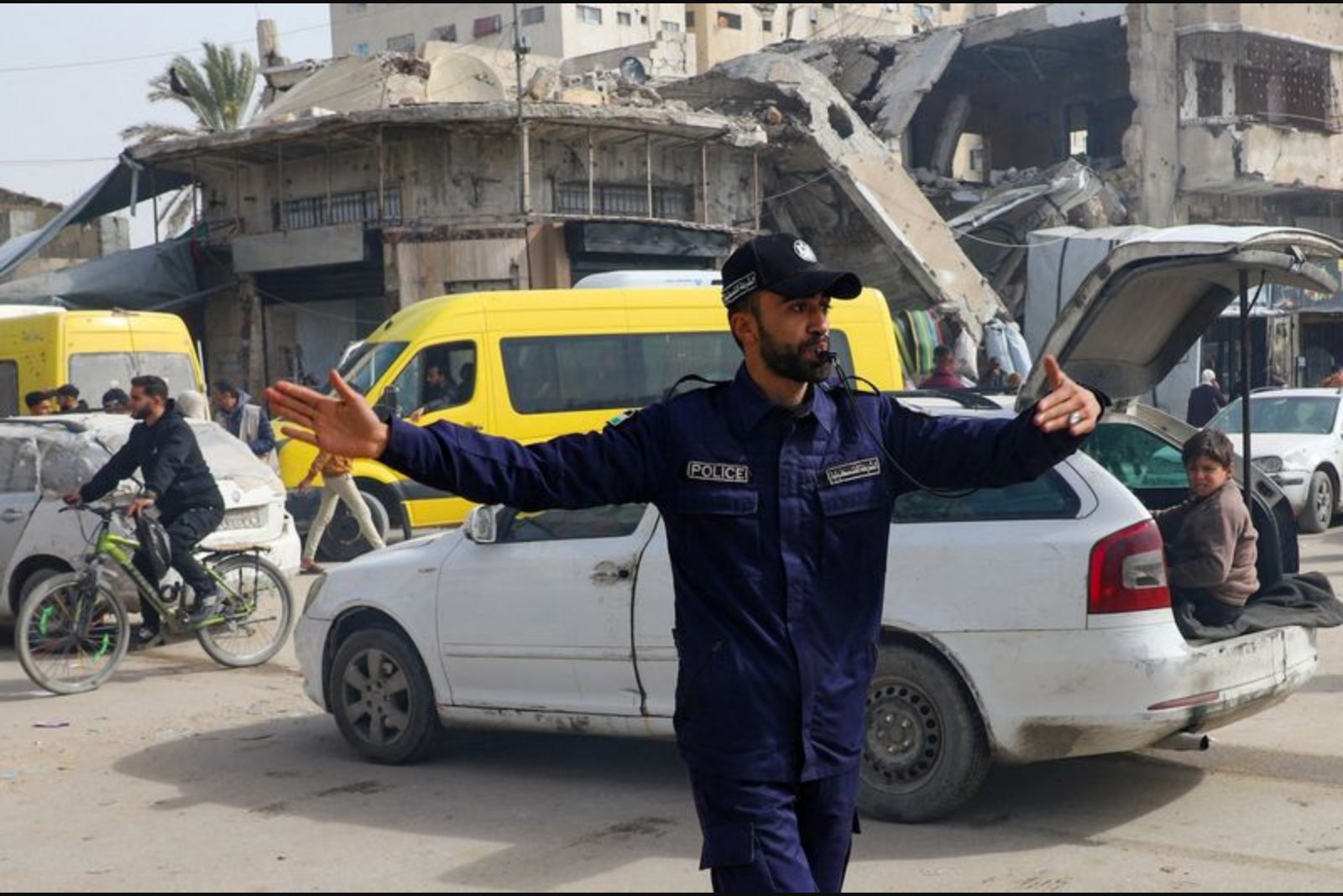
Since an early campaign against its opponents in the first weeks of the truce, Hamas has focused on re-establishing public order and resuming revenue collection within its side of the "yellow line" that delineates Israeli- and Hamas-controlled zones. An Israeli military official told Reuters that "there is no opposition to Hamas within the yellow line now, and it is taking over all economic aspects of daily life." A Gaza political commentator, Mustafa Ibrahim, said that looting and robbery had ceased and that civic functions such as the traffic police and reopened police stations were helping to organize markets and streets.
Hamas is reported to be collecting taxes primarily from the private sector, applying fees on merchants who bring smuggled goods into Gaza. Three sources, including a merchant, said those levies target smuggled items such as cigarettes, batteries, solar panels and mobile phones. An Israeli indictment filed this month in a suspected smuggling case - which names a ring that allegedly includes Israeli reservists serving in Gaza - asserts Hamas has earned hundreds of millions of shekels by taxing smuggled cigarettes since the war began.
The movement has also continued to pay salaries to both public servants and fighters. At least four Hamas sources said average payments were around 1,500 shekels (around $500) per month.
Political implications for the U.S. plan
Hamas’ consolidation of administrative functions within Gaza has fed widespread skepticism about the viability of the U.S. peace plan, which is contingent on Hamas disarming in return for an Israeli troop withdrawal. The appointment in January of Ali Shaath’s committee was intended to signal the transition to the next phase of that plan even as fundamental elements of the first phase - including a full cessation of hostilities between Israel and Hamas - remain incomplete.
Reham Owda, a Palestinian political analyst, warned that every delay in allowing the technocratic committee into Gaza "leads to the imposition of a de facto reality," strengthening Hamas’ administrative and security control. The NCAG itself has cautioned that without full powers it cannot effectively implement its mandate.
Asked whether Israel would raise concerns about Hamas’ apparent entrenchment at the Board of Peace meeting, officials did not comment. Israel has consistently opposed any role for Hamas in Gaza following the October assault on southern Israel, which killed more than 1,200 people by Israeli tallies. The Palestinian health ministry reports that Israel’s military campaign in Gaza has killed more than 72,000 people. One declared aim of the Israeli operation was the "dismantling [of] Hamas governing capabilities" in the enclave.
Historical governance and the current civil service
Hamas first gained control of Gaza after a brief civil war with the rival Fatah movement in 2007. Since that time, appointments to government ministries and municipal offices have been made by Hamas’ political wing, and the movement has established its own civil service that employs tens of thousands of people. The recent restoration of ministries and municipalities marks a partial revival of that administrative architecture amid ongoing negotiation and limited external access.
Statements and denials
Ismail al-Thawabta, director of the Hamas-run government's media office, said that the apparent recovery of services "was not a product of political considerations" and framed the measures as necessary steps to prevent the collapse of civic services. He insisted the organisational moves do not contradict any future arrangements that might be agreed.
The U.S. State Department and Ali Shaath’s NCAG did not provide immediate comment on the reports. Hamas did not immediately reply to a request for comment about plans to integrate police officers into a new force. Israeli Prime Minister Netanyahu did not respond to Reuters’ questions about Hamas’ control over Gaza, and his office did not comment on whether the issue would be raised at the Board of Peace meeting.
What remains uncertain
While sources and a military assessment point to a clear trend of Hamas regaining administrative space - from ministries and municipalities to revenue collection and salaries - the full scope of appointments, the balance of power on the ground, and the long-term implications for the U.S.-backed transition remain unclear. The NCAG says it cannot carry out responsibilities without being granted comprehensive administrative, civilian and police powers, and Hamas says some access restrictions imposed by Israel have prevented committee members from taking up their posts.
Those constraints leave open major unknowns about whether the technocratic committee will be able to operate independently of Hamas influence and whether the U.S.-led mechanism can achieve its stated objective of replacing armed control with civilian-led governance.
This report synthesizes details from an Israeli military assessment and reporting by sources inside Gaza who have direct knowledge of the described appointments and activities. It reflects statements made by officials and sources cited in those assessments.