
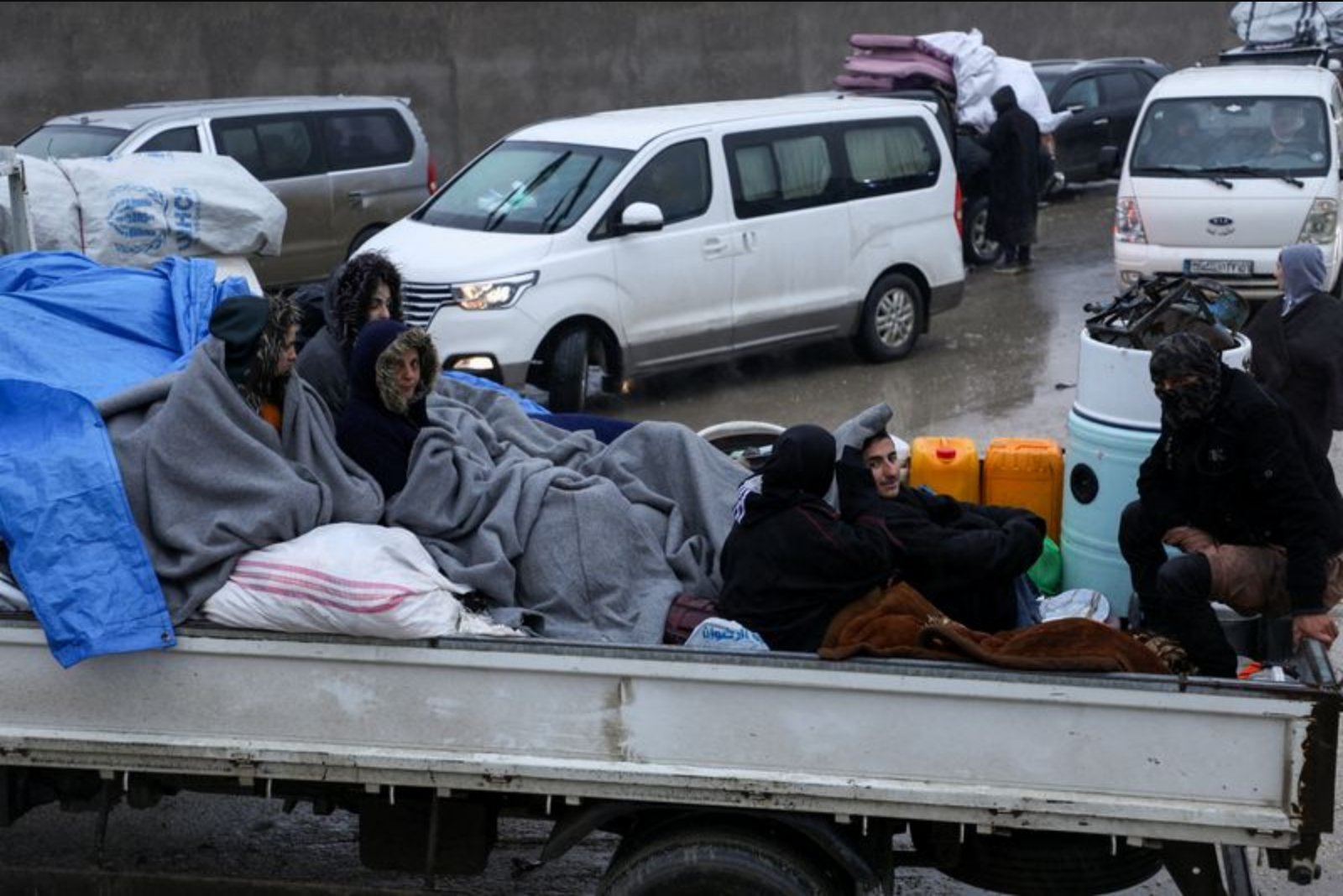
Diplomatic momentum behind a U.S.-backed ceasefire in northeastern Syria has produced early, visible steps toward bringing formerly autonomous Kurdish-held territory under Damascus control, but fundamental elements of the arrangement are still in flux.
Kurds in the northeast are attempting to preserve elements of local authority even as their leverage has been reduced by a rapid advance by central government forces. The progress of the agreement offers a test of Syria's new leadership and its capacity to reassert central authority over a country fragmented by 14 years of war and repeated bouts of violence between the state and minority populations wary of an Islamist-led government.
The struggle for control of Syria's northeast marked what officials describe as the largest redistribution of territory since the ouster of former leader Bashar al-Assad in December 2024. After a prolonged impasse, Syrian government forces moved swiftly to seize wide areas from the Kurdish-led Syrian Democratic Forces, or SDF, before accepting a plan to integrate the enclave into the state.
Since the agreement signed on January 29, some preliminary actions have proceeded without major incident: small contingents of government personnel have entered two cities formerly run by Kurdish authorities, combatants have pulled back from frontline positions, and Damascus announced on Friday the selection of a regional governor put forward by Kurdish representatives.
Despite this headway, a number of critical matters cited by a dozen government and Kurdish officials remain unsettled. Those include the exact mechanisms for incorporating SDF fighters into state forces, the disposition of SDF heavy weapons, and arrangements for control and operation of a border crossing to Iraq that has been a lifeline for the SDF-held enclave.
For now, the SDF continues to exercise firm control over the areas it still holds. But observers say the extent of the force's future authority is unclear. Noah Bonsey of the International Crisis Group said the question of how much autonomy the SDF will keep has not been answered. He added that while further progress on implementing the agreement currently appears the most likely outcome, "the risk ... of missteps, and thus ultimately the risk of renewed escalation is still high."
President Ahmed al-Sharaa's forces have now re-established central control over almost all of Syria, a development noted by both diplomats and regional officials. A Western official speaking on condition of anonymity said Washington - which undertook a partial withdrawal of some forces from Syria this week - is encouraged by the movement toward integration and has urged Sharaa to remain flexible when responding to SDF demands.
According to that Western official, U.S. advice has been to avoid a hard-line posture as a gesture of goodwill. The guidance frames a degree of Kurdish autonomy as acceptable so long as it does not undermine the fundamental requirement of central authority in Damascus.
When asked for comment, the U.S. State Department pointed to a statement from Syria envoy Tom Barrack, who said the agreement created a pathway to lasting peace for all Syrians. Syria's information ministry and the SDF did not respond immediately to requests for comment.
The text of the agreement, a copy of which was seen by Reuters, envisions defense ministry structures being established for the northeast and the formal integration of SDF personnel into three brigades. It also stipulates that 15 government security vehicles would be deployed into each of the SDF-held cities of Qamishli and Hasakah, and that the "integration of SDF security forces" would commence.
Deployments undertaken this month were largely incident-free, a contrast to the government's attempt to enter the Druze-majority city of Sweida last July, which escalated into deadly clashes. Separately, U.S. forces have transferred thousands of Islamic State detainees, formerly guarded by the SDF, into Iraqi custody.
Nonetheless, tensions persist on the ground. The SDF has accused government forces of imposing a siege on Kobani, a Kurdish-administered town that is cut off from the main SDF enclave. At the same time, Arab residents within SDF-governed zones have expressed resentment over continued SDF control, especially in the ethnically mixed city of Hasakah, according to two Syrian security officials.
SDF commander Mazloum Abdi has stated that the three brigades composed of former SDF fighters will be based in Qamishli, Hasakah and Derik, the latter close to the Iraqi border. Officials on both sides said there is only a tentative understanding about a location near Qamishli; the other placements have yet to be finalized.
The SDF wants one brigade to be stationed on Mount Abdelaziz, a position near Hasakah city that overlooks southern approaches and a substantial network of tunnels, according to Syrian military sources. Damascus has objected to that placement.
Arab-majority districts fell swiftly to the government advance, including Deir al-Zor province and its oil fields. Under the terms of the deal the SDF is to cede control of two oilfields near Qamishli - Rmeilan and Sweidiya - as well as Qamishli airport. Transfer of those assets has not yet occurred.
A regional intelligence officer characterized the concessions made by the SDF to date as largely symbolic. Abdulkarim Omar, a senior Kurdish official, told Reuters that government security forces would withdraw after coordination and the finalization of "integration mechanisms." He said Asayish, the Kurdish internal security force, would be incorporated into the interior ministry and would be responsible for protecting the region from within. He added that "lengthy discussions" are required to work through the details of implementation.
Regional actors remain wary. Turkey has signaled persistent doubts, viewing the YPG militia - the SDF's backbone - as linked to the Kurdistan Workers' Party, or PKK, which fought an insurgency in Turkey before entering a peace process. Turkish Foreign Minister Hakan Fidan said the YPG's withdrawal created a "healthier" security map, but cautioned that Turkey's security concerns would only be fully addressed if the YPG severed ties to the PKK and underwent what he called a "historic transformation."
The deal has calmed frontlines and enabled limited reintegration steps, but a range of unresolved political, military and logistical issues - from the future status of SDF fighters and heavy weapons to the control of key border crossings and oil assets - leaves the outcome uncertain. Observers and officials alike say that, while implementation so far has been orderly, the potential for setbacks that could reignite conflict remains significant.
Summary
The U.S.-backed agreement has reduced immediate hostilities and allowed government forces to enter Kurdish-run cities, yet crucial questions about SDF integration, heavy weapons, and control of a key Iraq border crossing are unresolved. The situation remains fragile and could still deteriorate if negotiations falter.
Key points
- Initial phases of the January 29 agreement have been implemented without major incidents - government contingents entered Qamishli and Hasakah and a regional governor nominated by Kurds was appointed.
- Unresolved issues include the integration process for SDF fighters into three brigades, the disposition of heavy weapons, and the status of a border crossing to Iraq; these have implications for security, transport and energy sectors.
- Regional actors including the United States and Turkey are watching closely - Washington has urged flexibility while Turkey demands that YPG sever ties to the PKK for its security concerns to be fully addressed.
Risks and uncertainties
- Risk of implementation missteps that could lead to renewed escalation - this threatens regional security and could disrupt logistics and trade flows through border crossings.
- Uncertainty over control of oilfields and Qamishli airport - delayed transfers could affect local energy production and related economic activity.
- Potential for friction between different communities in mixed cities such as Hasakah and between the SDF and Damascus over brigade locations and heavy weapons - this could complicate security arrangements and governance.