
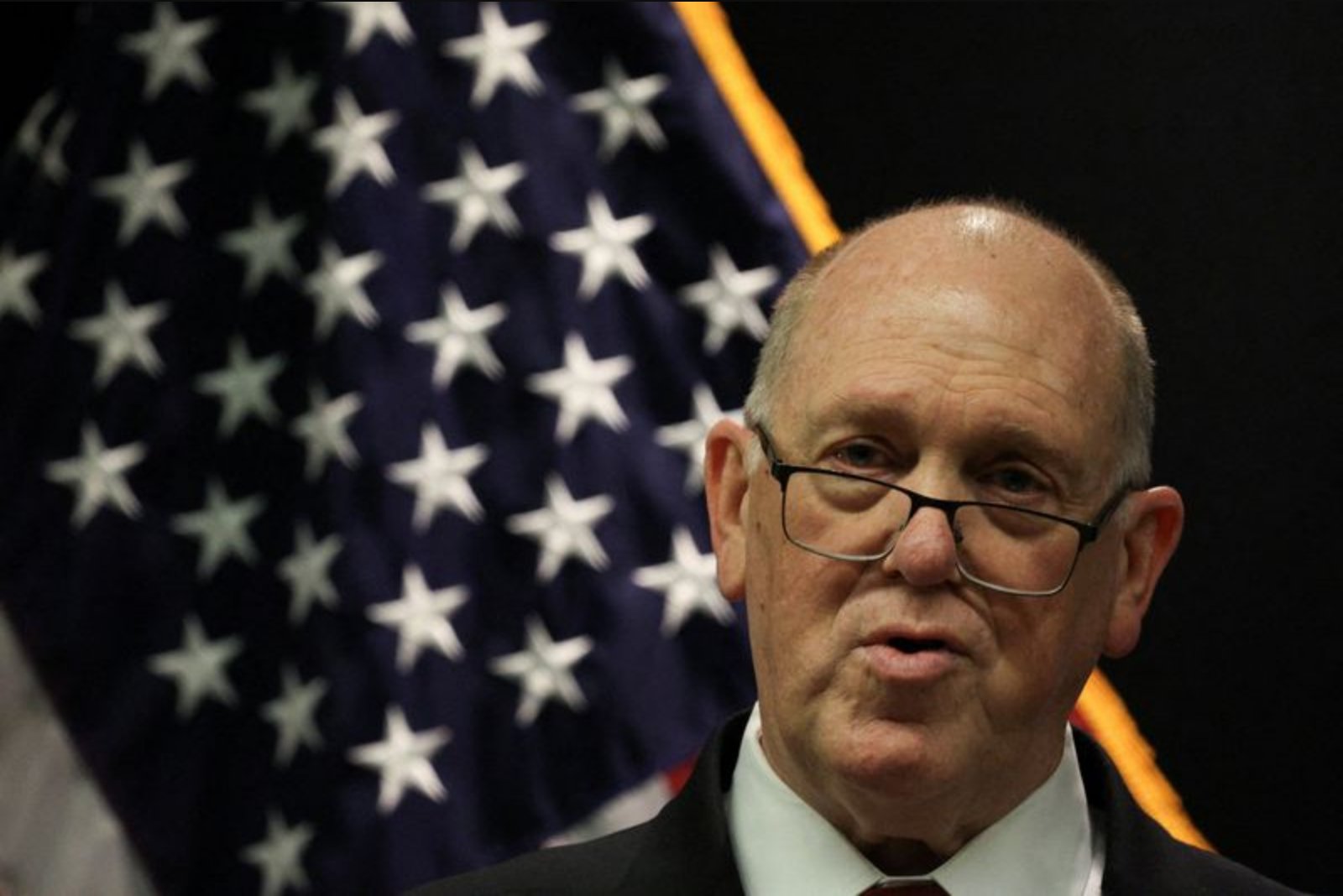
WASHINGTON, Feb 12 - A significant reduction of immigration enforcement agents currently operating in Minnesota is underway, and the federal government has agreed the broader deployment should be brought to a close, U.S. immigration official Tom Homan said on Thursday.
Under an operation known as Metro Surge, roughly 3,000 armed immigration agents had been sent to Minnesota by late January to carry out deportation sweeps. The presence of those agents has sparked intense public demonstrations in Minneapolis, where residents have taken to the streets to protest masked officers in military-style gear - with some protesters using whistles to signal their opposition.
Two U.S. citizens, who had come out to observe or protest the sweeps, were fatally shot by immigration agents on separate days in January. The deaths have intensified scrutiny of the operation.
"I have proposed and President Trump has concurred that this surge operation conclude," Homan told reporters at a briefing. He said the drawdown had already begun. A week earlier Homan had announced that about 700 of the roughly 3,000 agents would be withdrawn. On Thursday he added that many of the remaining agents who had been deployed from other states would be sent home in the coming week.
Homan attributed the decision in part to what he described as "unprecedented" coordination with local law enforcement in Minnesota. Prior to the surge, roughly 150 immigration agents were routinely stationed in the state.
The federal deployment has been met with strong opposition from Minnesota political leaders. Governor Tim Walz, a Democrat, and other elected officials have criticized the deportation sweeps. Walz's office did not immediately respond to a request for comment on Homan's announcement.
Minneapolis Mayor Jacob Frey, who joined Governor Walz in suing the federal government last month and asked a court to restrain the surge, said the deployment had been devastating for the city. In a statement welcoming Homan's remarks, Frey said the community's resilience and compassion had outlasted what he characterized as an "occupation."
Federal judges also have taken issue with the conduct of U.S. Immigration and Customs Enforcement. The chief federal judge in Minnesota reprimanded administration officials for what the judge described as ICE's failure to comply with dozens of court orders to release migrants who had been wrongly arrested.
Some Republicans have voiced criticism as well, focusing both on the administration's execution of the deportation operation and on the handling of the two killings of U.S. citizens, Renee Good and Alex Pretti. At the center of that criticism was the administration's initial public characterization of those two victims.
As Homan announced the drawdown, Minnesota Attorney General Keith Ellison was in Washington providing testimony to a Senate committee that oversees homeland security issues. The panel's Republican chairman, Senator Rand Paul of Kentucky, criticized language used by administration officials in describing Good and Pretti after their deaths. Homeland Security Secretary Kristi Noem and other officials had initially labeled the two as "domestic terrorists," language that drew Paul's rebuke.
"The First and Second Amendment are not suspended during periods of unrest or during protests," Paul said, referencing constitutional protections for free speech and the right to bear arms. He added that when officials speak imprecisely or rashly about constitutional limits in volatile moments, they risk inflaming tensions rather than calming them.
The federal announcement signals a change in posture after weeks of heightened enforcement activity and sustained pushback from local leaders, residents and the judiciary. Officials say the reduction of agents will proceed in the coming days as coordination with local authorities continues.