
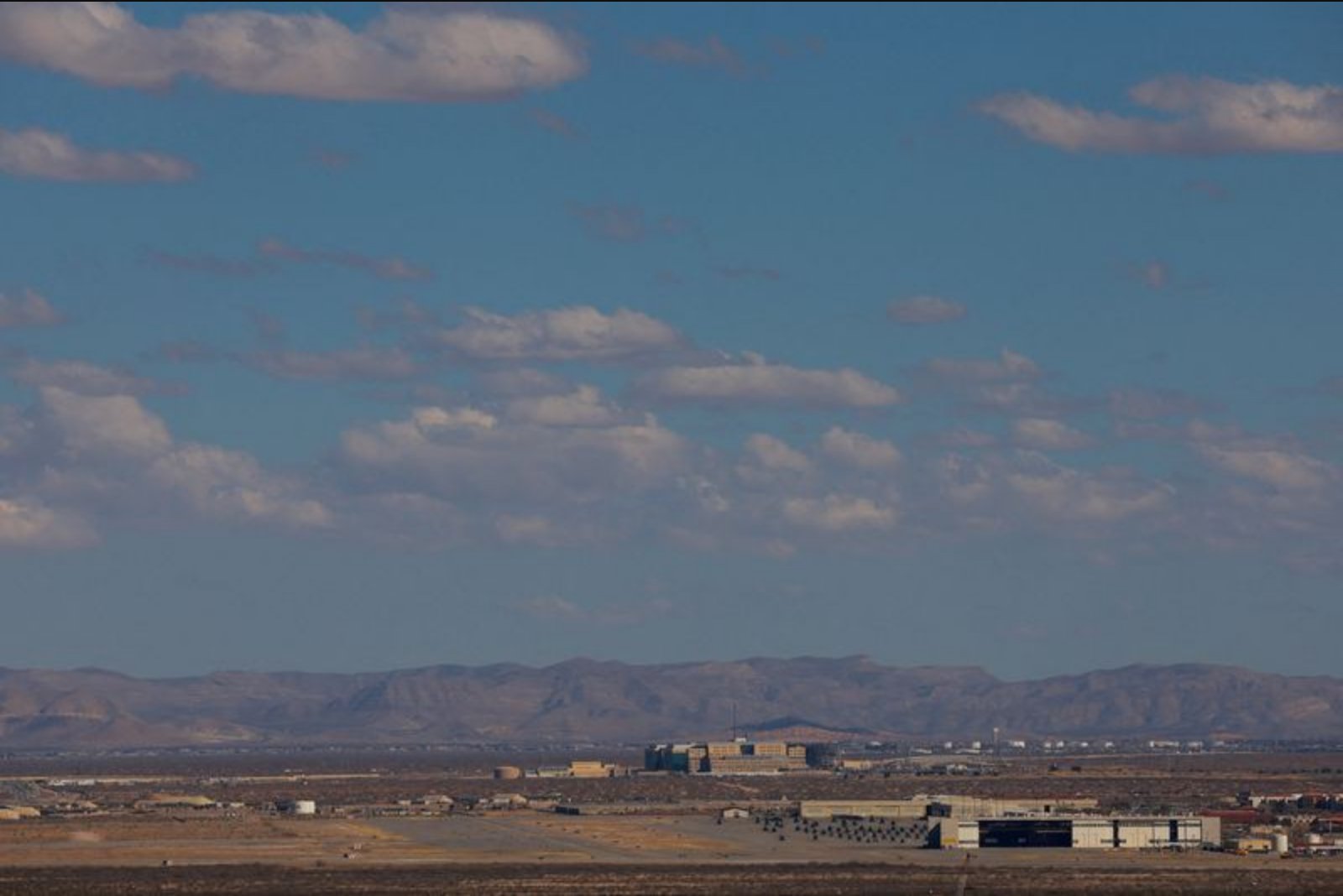
The abrupt suspension of operations at El Paso airport overnight brought the growing presence of cartel-operated unmanned aircraft into sharp relief and sharpened an already tense policy debate between the United States and Mexico.
U.S. Transportation Secretary Sean Duffy said the airport closure was prompted by the presence of a Mexican drug cartel's drone in U.S. airspace. The shutdown was initially announced as a planned restriction lasting 10 days, but officials later reduced that to about seven hours.
However, that account was challenged by a number of government and airline sources who spoke on condition of anonymity. Those officials said the Federal Aviation Administration closed the airspace because of safety concerns tied to a laser-based counter-drone system the U.S. Army was testing nearby - a system that, they argued, could pose hazards to aircraft. Aviation specialists also observed that a drone sighting close to an airport would normally produce only a brief suspension of traffic and not an extended closure.
On Mexico's side, the presidential office did not immediately provide comment on the escalating tensions related to cartel drones. President Claudia Sheinbaum stated on Wednesday morning that her administration did not have information on drone traffic along the border.
At the White House, Press Secretary Ana Kelly said President Donald Trump has "left all options on the table" when asked about the potential bilateral implications of the drone activity. That phrasing has become part of a broader and increasingly public exchange on how to confront cartel capabilities along the border.
How cartels use drones
Security analysts and law enforcement officials have described a pattern in which Mexican criminal groups repurpose inexpensive, commercially available drones for illicit activity. Vanda Felbab-Brown, a security expert, noted that cartels have used these devices for more than a decade to scout routes and to transport contraband.
In central regions of Mexico, certain large organizations - notably the New Generation Jalisco Cartel - have adapted commercial models to carry crude explosive devices and have used them in attacks on security forces and civilians, including incidents in Michoacan, according to those experts. Along the border, the principal employment of these aircraft is to airdrop narcotics or to surveil U.S. border agents to improve smuggling operations.
The Pentagon has estimated there are more than 1,000 drone incursions along the U.S.-Mexico border each month. Despite that frequency, experts and officials consulted for this report said there has not been a documented case of a Mexican cartel using a drone to attack U.S. soil or to target U.S. law enforcement.
"It's an incursion, not an attack," said Scott Brown, a former special agent in charge at Homeland Security Investigations in Arizona, where he worked on counter-drone efforts along the border. "There's a marked difference."
Diplomatic friction and domestic rhetoric
The airport incident comes amid repeated public statements by President Trump advocating the use of U.S. military force against Mexican cartels, comments that have heightened Mexican concern about unilateral action. President Sheinbaum has warned that any U.S. military operation carried out on Mexican territory would be a serious violation of national sovereignty and a red line.
Sheinbaum referenced prior historical conflict in expressing the gravity of such a breach, and the comment has shaped a hardline posture from Mexican leadership vis-a-vis possible U.S. interventions.
Some U.S. law enforcement and homeland security officials have portrayed the drone threat as an escalating risk to Americans and to law enforcement personnel operating in the border region. Steven Willoughby, director of the counter-drone program at the Department of Homeland Security, told Congress in July that it is "only a matter of time before Americans or law enforcement are targeted in the border region."
Not all analysts agree that cartels would use drones to attack the United States. Carlos Perez Ricart, a Mexican security expert, questioned the premise that the cartels would mount cross-border drone attacks, arguing there is no evidence to support that characterization and suggesting that the narrative could be used to justify military action.
Cooperation and countermeasures
Despite the political heat surrounding the issue, officials on both sides of the border continue to engage on the operational challenges posed by drones. Representatives from New Mexico and the Mexican state of Chihuahua met earlier in the week to discuss the risks and the methods of response. U.S. and Mexican authorities are working together on counter-drone measures in the border region, even as public statements by national leaders have underscored points of disagreement.
The El Paso airspace episode laid bare the practical difficulties of distinguishing between a criminal incursion and the potential hazards created by countermeasures themselves. The divergent official explanations for the closure highlight how rapid technological change, operational secrecy around defensive measures, and high political stakes can combine to produce confusion and strain bilateral relations.
As cheap, commercially available drone technology continues to be adapted for illicit purposes, the challenge for policymakers and security officials will be to reconcile immediate public safety concerns with the diplomatic and legal limits that govern cross-border action.