
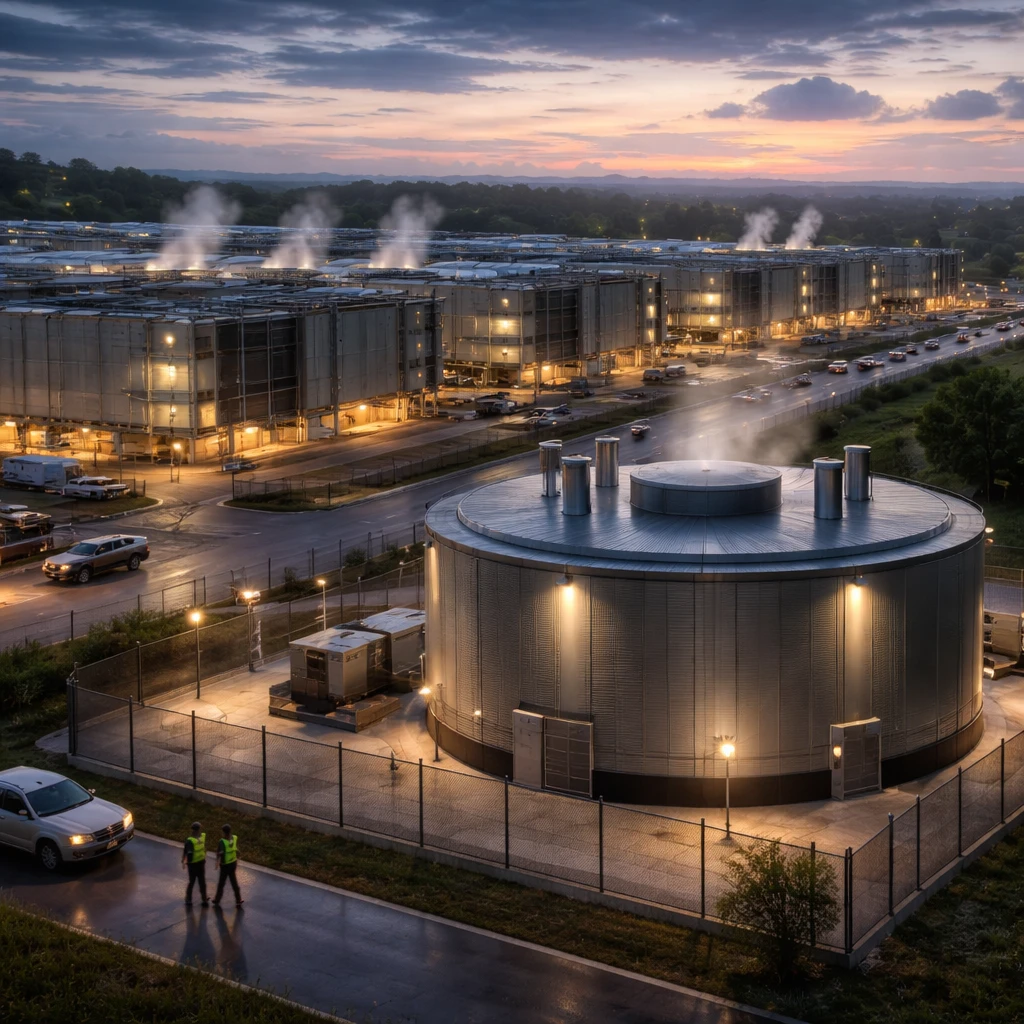
James Walker, chief executive officer of Nano Nuclear Energy Inc (NASDAQ:NNE), warns that accelerating electricity demand is already shifting power from a manageable expense to a fundamental constraint for large infrastructure projects. Walker says the shift is happening now, with consequences for siting, timelines, and business models for energy-intensive facilities such as hyperscale AI campuses.
Walker outlined the companys view that sustained demand growth is tightening supply-side flexibility and turning electricity into a gating factor for development. For campuses that require hundreds of megawatts and high uptime, he said, power is no longer just another input to be optimized; it now shapes where projects can be located and whether they can be built within commercially acceptable timeframes.
"It is not a five- or ten-year problem," Walker said. "It is a near-term constraint that will only get tighter as AI demand compounds." He added that the bottleneck is likely to be power rather than technological limitations in AI engineering.
Advancing KRONOS MMR and commercial discussions
Nano Nuclear is progressing its lead reactor program, the KRONOS micro modular reactor (MMR), toward licensing and construction. The company is also in discussions with potential commercial customers and strategic partners in the United States and abroad. Walker positioned these efforts as part of a strategy to move from concept to deployed systems that can serve large, predictable loads.
Licensing, manufacturing and deployment timelines
On the question of whether microreactors can be licensed, financed, and deployed at scale in the near term, Walker said the answer is technically affirmative but practically complex. He identified several bottlenecks: regulatory approval for new advanced designs, the need to establish manufacturing capacity for repeatable production, and supply chain constraints. While all of these are surmountable, Walker cautioned that developers pursuing unconventional designs, fuels, or coolants may encounter greater delays compared with firms relying on more established technologies.
Walker observed that many existing frameworks for licensing, financing, and procurement were designed for large, bespoke nuclear plants, not for standardized systems intended for serial manufacture and deployment. He suggested that initial projects will take longer than stakeholders would prefer, but that once early deployments occur, subsequent rollouts could accelerate markedly.
Commercial model: partnering with private enterprise
Walker described a commercial pathway in which microreactors are paired directly with large private loads rather than following a traditional utility-centric model. In this model, a company with a predictable, high power demand - for example, a data center operator or industrial campus - would host or co-locate a microreactor and contract for long-term power directly. That arrangement, Walker said, would provide the customer with price stability and reliability while relieving pressure on stressed grids. The change he described is one of planning power supply alongside facility development, rather than relying exclusively on grid availability.
How microreactors compare with renewables, batteries and gas
Walker contrasted microreactors with renewables paired with storage and with natural gas. He noted that wind and solar are inexpensive when they are generating, but lack the firm, continuous output required by facilities demanding high availability. Batteries can smooth intermittent generation but are not suited to provide multi-day or multi-week reliability, and adding large-scale storage to renewable systems can reduce their cost competitiveness.
Natural gas offers dependable dispatchable power but carries emissions, fuel-price volatility, and potential pipeline constraints. By contrast, Walker said, microreactors can deliver steady, carbon-free on-site power with minimal downtime and consistent output, attributes that align with the uptime priorities of high-availability infrastructure. He framed microreactors not as a wholesale replacement for renewables, but as a firming technology that enables operators to underwrite uptime guarantees.
Investor milestones and primary risks
For investors tracking progress in the microreactor space, Walker identified clear milestones that would indicate movement from concept toward execution. These include filing for construction permits, building a research or demonstration prototype reactor, gaining regulatory approval for a design, operating an integrated system in the field, and signing power purchase or service agreements with customers that intend to take power rather than only study options. When these elements begin to accumulate, Walker said, it signals practical advancement.
He emphasized that the primary risks are not technical physics issues but regulatory delays, readiness of fuel supply, and the time required to normalize public acceptance of siting nuclear systems near industrial users. These risks could affect timelines and the ability to finance and scale deployments.
Nano Nuclear Energy is advancing the KRONOS MMR toward licensing and construction while engaging potential customers and strategic partners to address rising electricity demand and grid reliability challenges affecting energy-intensive sectors.