
The White House on Tuesday removed a social media post from Vice President JD Vance's official account that referred to the 1915 killings of Armenians as a "genocide," attributing the publication to an error by staffers who were not part of the traveling delegation.
Vance was on a two-day visit to Armenia, the first by a U.S. vice president to the South Caucasus republic, and paid a visit to the Tsitsernakaberd Armenian Genocide Memorial in Yerevan. The now-deleted post on X described the trip as intended "to honor the victims of the 1915 Armenian genocide." The White House later removed the message.
An aide to the vice president, who declined to be named, said the post was mistakenly published by staff members not accompanying Vance. A spokesperson for the vice president said the account is "managed by staff that primarily exists to share photos and videos of the vice president's activities," and added that Vance's positions are best represented by his own public remarks.
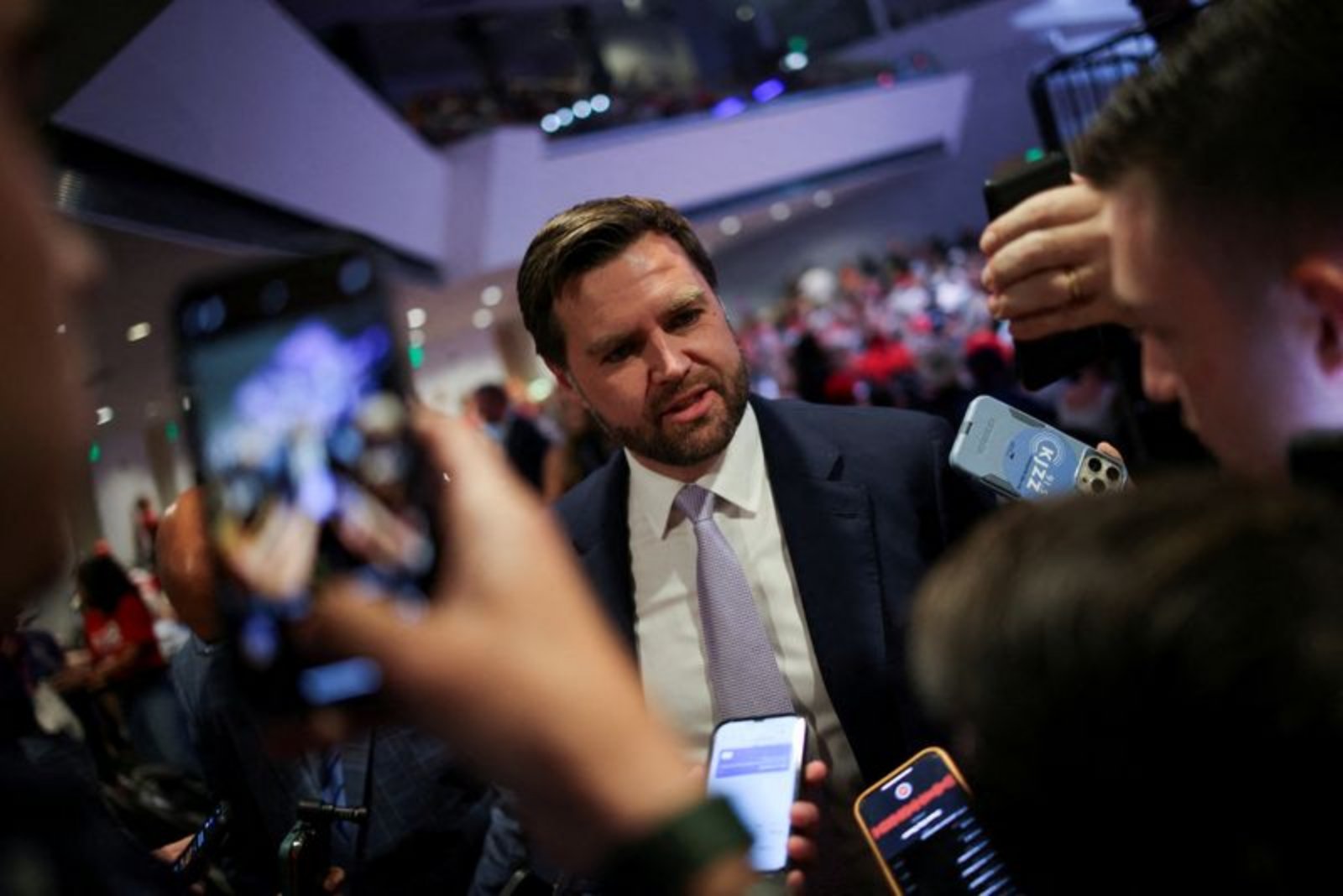
In his comments to reporters during the trip, Vance did not use the word "genocide." Asked whether his visit to the memorial was intended as an acknowledgment of a genocide, he said:
"Obviously, it’s a very terrible thing that happened little over 100 years ago, and something that was just very, very important to them culturally. So I thought out of a sign of respect, both for the victims, but also for the Armenian government that’s been a very important partner for us in the region, to Prime Minister Pashinyan, I wanted to go and pay a visit and pay my respects."
The social media post reflected Vance and his wife Usha participating in a ceremonial wreath-laying of carnations, chrysanthemums and roses at the memorial site, which commemorates the roughly 1.5 million Armenians who died in the final years of the Turkish-led Ottoman Empire.
The deletion of the post is the second recent removal of a social message by the administration. Last week the White House defended, then deleted, a post to President Donald Trump's Truth Social account that included a racist depiction of former President Barack Obama and former first lady Michelle Obama as apes. The White House has said Trump told reporters he had not watched the entire video before a White House aide posted it to his account.
The handling of Vance's X post drew immediate criticism from members of the Armenian diaspora and some Democratic lawmakers. Alex Galitsky, policy director for the Armenian National Committee of America, called the deletion an "insult to the memory" of those who died and said on X that "Vance is a coward for deleting this post."
Officials in Washington stressed there has been no shift in U.S. policy. The White House said there had been "no change of policy at this time" since President Trump's 2025 statement on the historical incident, which did not include the word "genocide." When asked whether the White House had a wider problem with social media protocols, spokeswoman Karoline Leavitt replied, "no."
Turkey's stance on the 1915 events differs markedly from the characterization used in the deleted post. Turkish authorities accept that many Armenians in the Ottoman Empire were killed in clashes with Ottoman forces during World War One, but dispute the death toll and deny that the killings were the result of a systematic campaign that would constitute a genocide. The article notes that the U.S. Congress and President Joe Biden have recognized the 1915 massacres as a genocide, while President Trump did not use that language in his own statement last year. The Turkish foreign ministry and the Armenian embassy in Washington did not respond to requests for comment.
The vice president's trip included separate diplomatic engagements aimed at advancing agreements brokered by the Trump administration between Armenia and Azerbaijan intended to move toward peace after decades of conflict. During the visit to Yerevan, Vance signed an agreement with Armenian Prime Minister Nikol Pashinyan that could open the path for the United States to build a nuclear power plant in Armenia.
On Tuesday Vance traveled onward to Azerbaijan, where he signed a strategic partnership deal covering economic and security cooperation. U.S. officials framed the visits as efforts to expand American influence in a region where Russia has historically been the dominant external power broker.
The juxtaposition of the memorial visit and the deleted social media post underscores the sensitivities that surround official language on historical events and how those sensitivities intersect with present-day diplomacy. Administration officials and the vice president's office emphasized that the post did not represent a change in U.S. policy and that Vance's own public statements are the authoritative record of his views.